. 2021 Dec 4;12(1):64.
doi: 10.1186/s13293-021-00406-y.

Prognostic value of immune-related genes and comparative analysis of immune cell infiltration in lung adenocarcinoma: sex differences

Affiliations

Prognostic value of immune-related genes and comparative analysis of immune cell infiltration in lung adenocarcinoma: sex differences

Tao Fan et al. Biol Sex Differ. .

Abstract

Background: Lung adenocarcinoma (LUAD) is one of the most important subtypes of lung cancer. Compared with male LUAD patients, female patients have a higher incidence, but better long-term survival rate, with unknown reasons. In this study, we aimed to explore the effect of sex differences on immune cell infiltration in lung tumor microenvironment (TME), and tried to clarify the reasons for the different clinical characteristics of male and female LUAD patients, by conducting a comparative analysis of the TME.

Methods: Using ESTIMATE algorithm, we calculated immune and stromal scores of tumor samples downloaded from TCGA database according to immune or stromal components in TME. GO and KEGG enrichment analysis were conducted to reveal biological processes of these intersecting genes of high- and low-score groups. Cox regression analysis and protein-protein interaction (PPI) network analysis were performed to screen immune-related prognostic genes in female (CCR2, LCP2, and PTPRC) and male (BTK and CCR2) patients. Kaplan-Meier survival analysis was used to evaluate prognostic value of these identified genes. Mann-Whitney test was used to compare various indicators of male patients and female patients. The main results were subsequently validated in 420 cases from GSE72094.

Results: 304 and 368 intersecting genes were identified in female and male patients, respectively. The immune score ranged from -943.17 to 3229.35 among female patients and from -541.75 to 3441.78 among male patients. The stromal score ranged from -1790.23 to 2097.27 among female patients and from -1786.94 to 1722.70 among male patients. The immune and stromal scores of women were higher than those of men (p < 0.05). CCR2, LCP2 and PTPRC were identified as the most important immune-related prognostic genes in female LUAD patients. BTK and CCR2 were identified as the most important immune-related prognostic genes in male LUAD patients. Female patients had a higher proportion of memory B cells than that of male patients, while the percentage of T cells CD4 naïve and resting NK cells was lower in female patients (p < 0.05).

Conclusions: This study comprehensively compared the differences in tumor immune microenvironment between male and female LUAD patients, and identified prognosis-related genes for patients of different sexes.

Keywords: ESTIMATE algorithm; Lung adenocarcinoma; Sex differences; Tumor microenvironment; Tumor-infiltrating immune cells.


Conflict of interest statement

The authors declare that they have no competing interests.

Figures
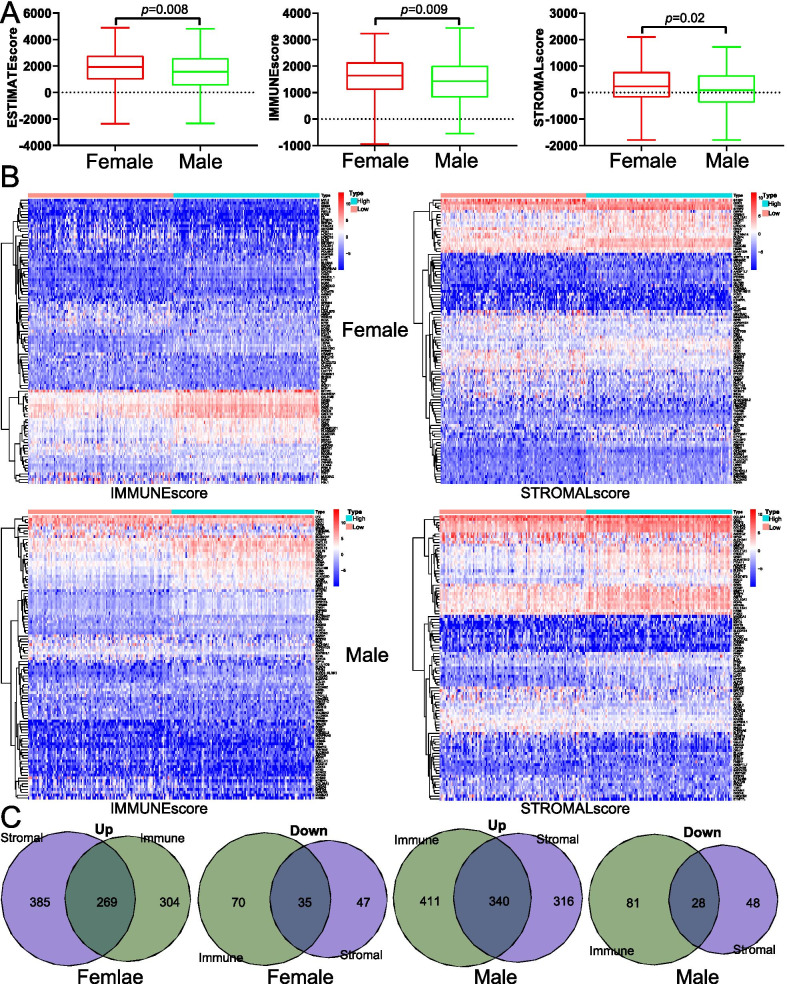
Fig. 1
Fig. 1
Comparison of tumor microenvironment scores and gene expression profiles in patients with lung adenocarcinoma (LUAD) of different sexes. A Box-plot comparing the levels of estimate score, immune score, and stromal score of female patients with male patients. B Heatmaps of differentially expressed genes (GEGs) between high- and low-estimate, immune and stromal scores in LUAD. Red represented high expression, and blue represented low expression. C Venn diagram analysis of DEGs in female and male patients
Fig. 2
Fig. 2
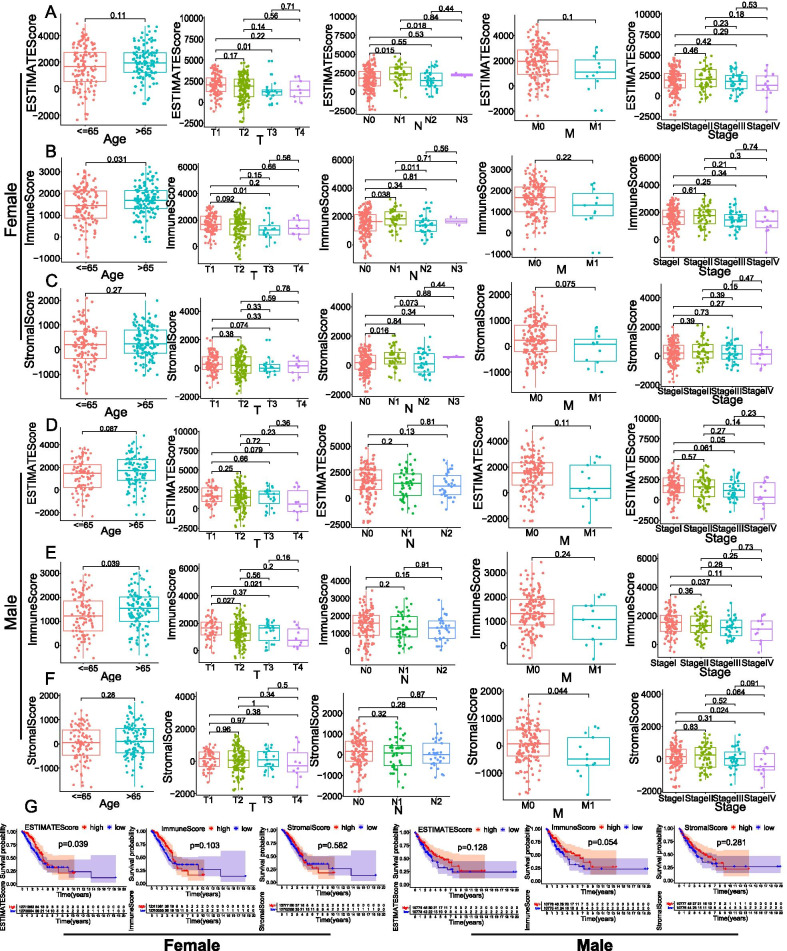
Associations of tumor microenvironment scores with age, TNM stage and prognosis in LUAD patients of different sexes. All the female and male LUAD cases were divided into high or low score groups based on a median score. Box-plots depicting the relationship of estimate score (A), immune score (B), and stromal score (C) with age and TNM stage in female patients. Box-plots depicting the relationship of estimate score (D), immune score (E), and stromal score (F) with age and TNM stage in male patients. G Kaplan–Meier plots of different estimate score, immune score, and stromal score in female and male patients. A p < 0.05 was considered to be statistically significant
Fig. 3
Fig. 3
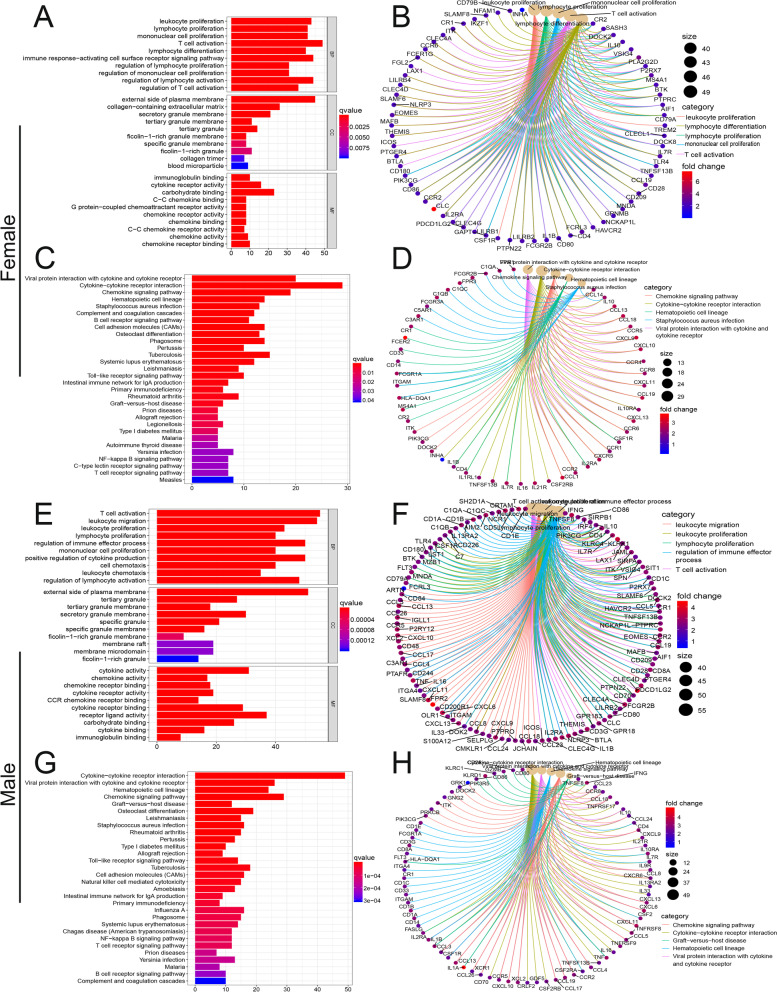
GO and KEGG analysis of immune-related DEGs based on estimate score, immune score, and stromal score in female and male patients. A, C GO analysis of DEGs in female patients. B, D Circular plot demonstrating that the functional interactions between the BP, CC or MF pathways and genes extracted from GO in female patients. E, G GO analysis of DEGs in male patients. F, H Circular plot demonstrating the functional interactions between the BP, CC or MF pathways and genes extracted from GO in male patients. GO, Gene Ontology; KEGG, Kyoto Encyclopedia of Genes and Genomes; BP, biological process; CC, cellular component; MF, molecular function
Fig. 4
Fig. 4
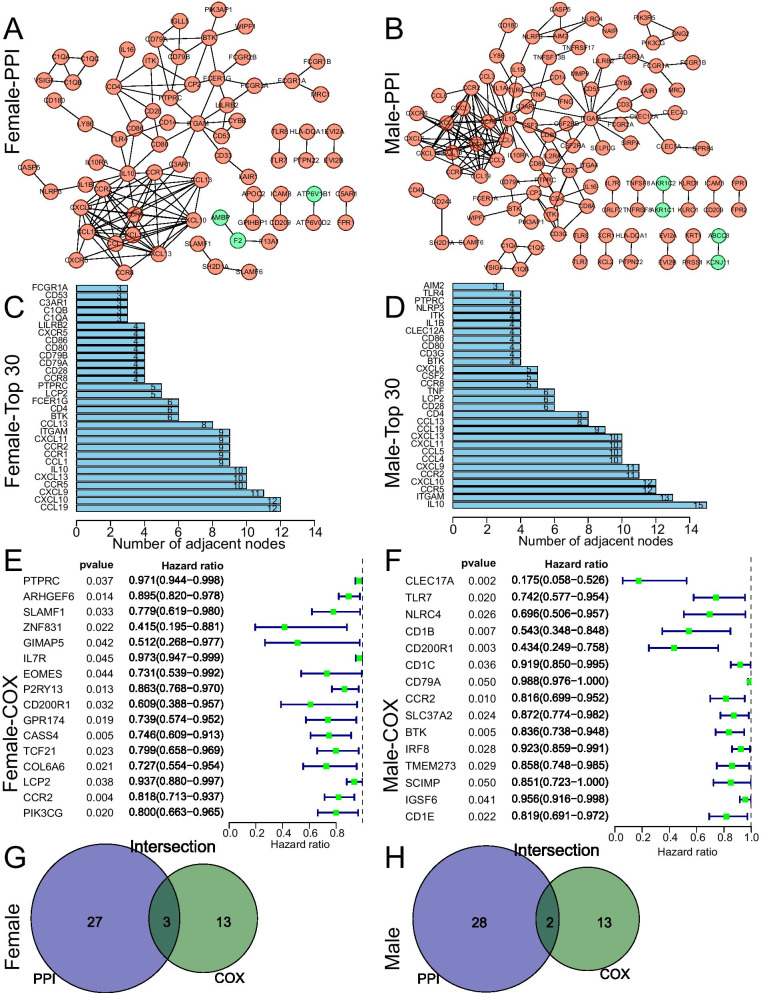
PPI network and Cox regression analysis of immune-related DEGs. A, B PPI networks of the immune-related DEGs plotted by Cytoscape in female and male patients with LUAD. C, D Top 30 genes with most number of adjacent nodes in female and male patients with LUAD. E, F Univariate Cox analysis of the immune-related DEGs in female and male patients with LUAD, and genes with p < 0.05 displayed in forest plots. G, H Two-way Venn diagram comparing the key genes in female and male groups. CCR2, LCP2, and PTPRC were selected as prognostic factors of female patients with LUAD. BTK and CCR2 were screened as prognostic factors of male patients with LUAD. A p < 0.05 was considered to be statistically significant
Fig. 5
Fig. 5
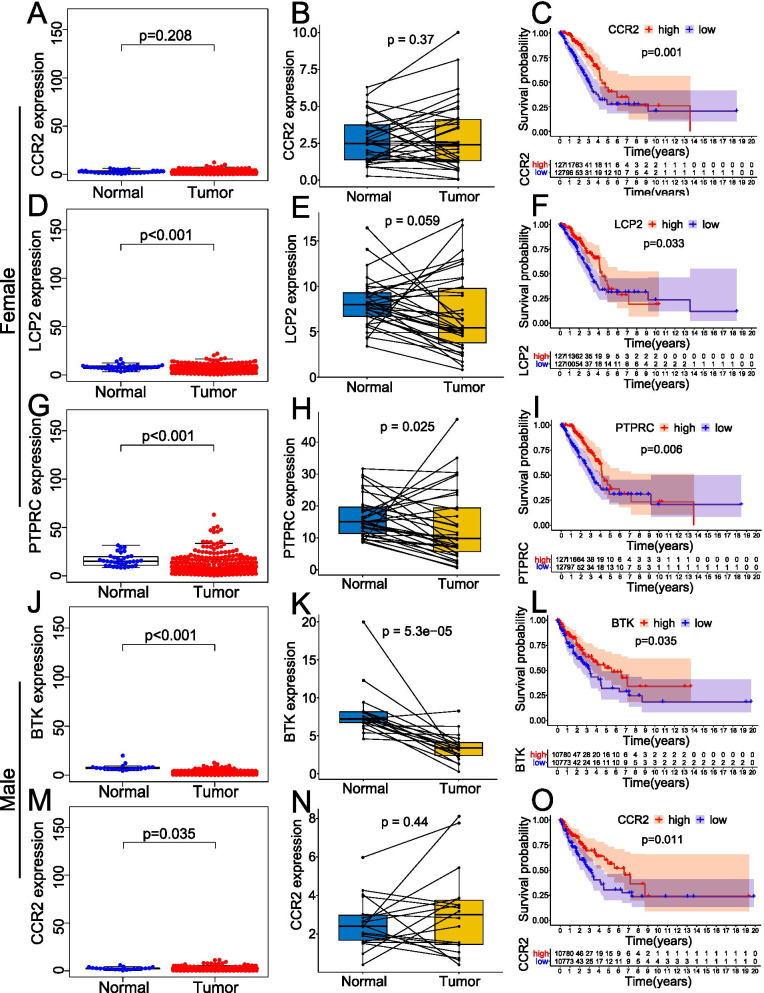
Expression level of these key TIICs-related genes and their prognostic value in LUAD patients. Box-plots comparing the expression differences of CCR2 (A), LCP2 (D), and PTPRC (G) in normal tissues and LUAD tissues of female patients. Box-plots comparing the expression differences of CCR2 (B), LCP2 (E), and PTPRC (H) in paired tumor and adjacent normal tissues of female patients. Kaplan–Meier plots of different CCR2 (C), LCP2 (F), and PTPRC (I) expression levels in female patients. Box-plots comparing the expression differences of BTK (J) and CCR2 (M) in normal tissues and LUAD tissues of male patients. Box-plots comparing the expression differences of BTK (K) and CCR2 (N) in paired tumor and adjacent normal tissues of male patients. Kaplan–Meier plots of different BTK (L) and CCR2 (O) expression levels in male patients. A p < 0.05 was considered to be statistically significant
Fig. 6
Fig. 6
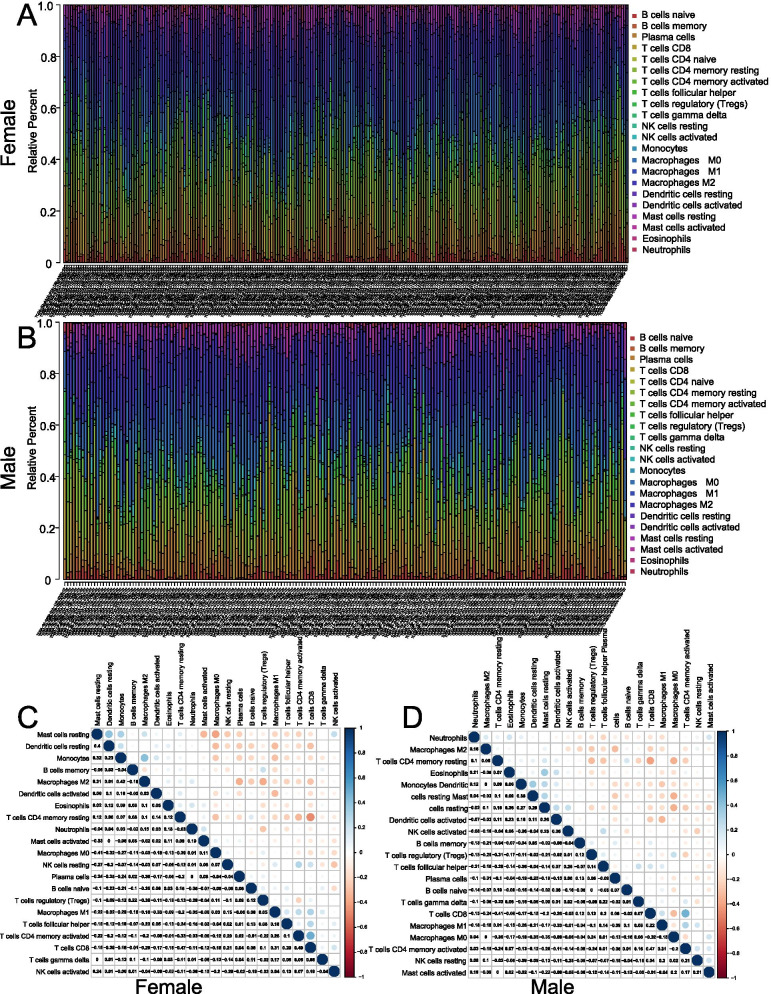
CIBERSORT for estimating TIICs components in TME of female and male LUAD. Stacked bar chart revealing the components of TIICs in female (A) and male (B) LUAD samples. Correlation matrix indicating the correlation of TIICs in female (C) and male (D) LUAD samples. A p < 0.05 was considered to be statistically significant
Fig. 7
Fig. 7
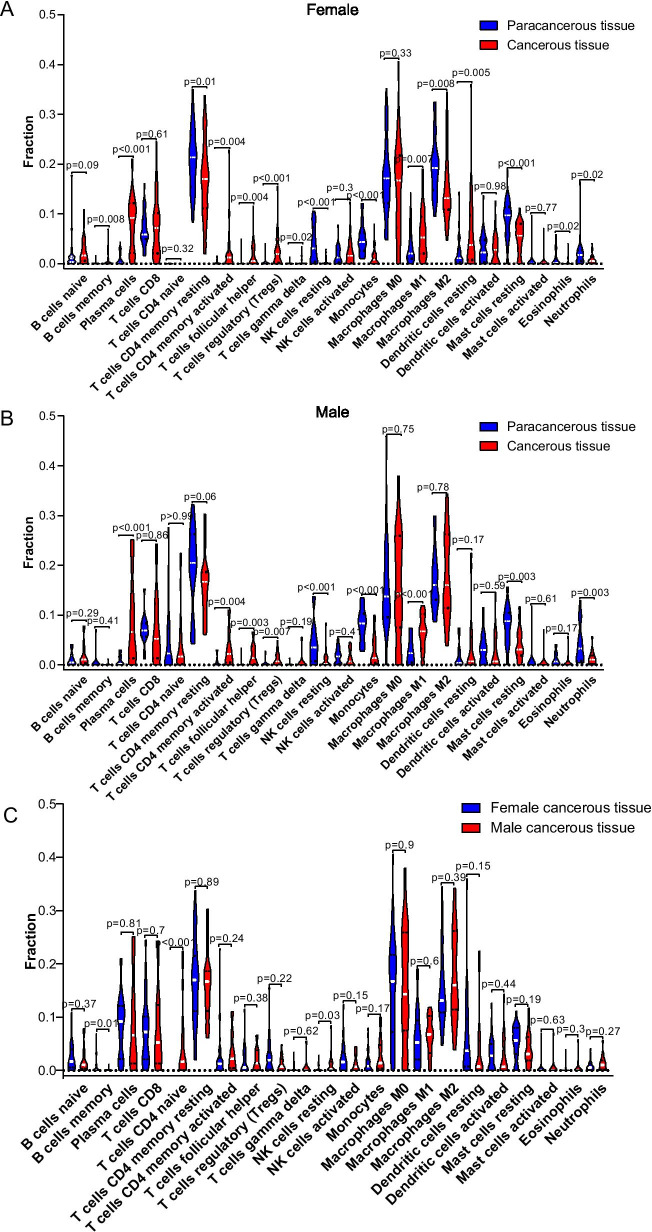
Difference analysis of TIICs in LUAD tumor and adjacent normal tissues. A Violin plot showing the proportion of 22 types of TIICs in paracancerous tissues and cancerous tissues in female patients with LUAD. B Violin plot showing the proportion of 22 types of TIICs in paracancerous tissues and cancerous tissues in male patients with LUAD. C Comparison of the proportion of immune infiltrating cells between female and male patients with LUAD. A p < 0.05 was considered to be statistically significant
Fig. 8
Fig. 8
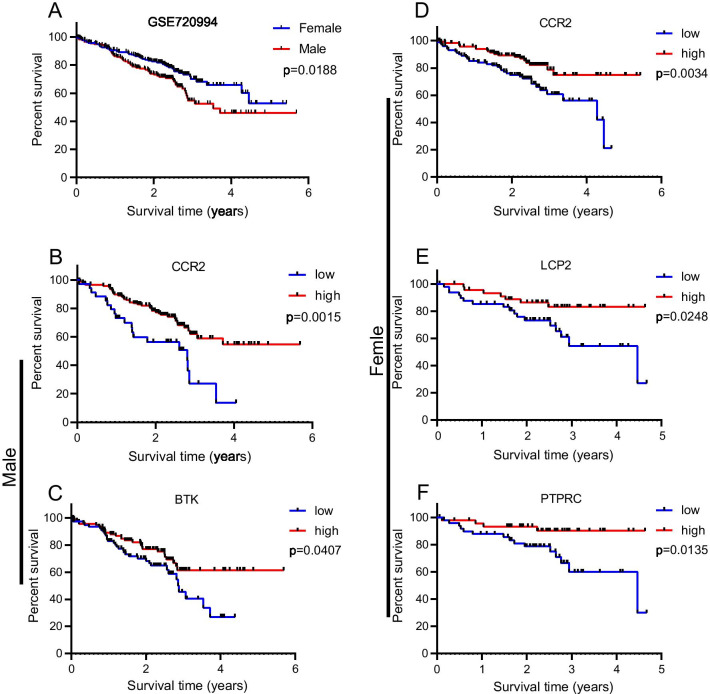
Validation of TCGA results with GEO database. A Kaplan–Meier survival curves for female and male patients with LUAD. B, C Kaplan–Meier plots generated from GEO database to validate the prognosis-related genes (CCR2 and BTK) for male patients in TCGA. DF Kaplan–Meier plots generated from GEO database to validate the prognosis-related genes (CCR2, LCP2 and PTPRC) for female patients in TCGA

References

    1. Siegel RL, Miller KD, Jemal A. Cancer statistics, 2020. CA Cancer J Clin. 2020;70(1):7–30. doi: 10.3322/caac.21590. - DOI - PubMed
    1. Baldwin DR. Improving outcomes in lung cancer patients. Practitioner. 2011;255(1745):19–22. - PubMed
    1. Shi J, Hua X, Zhu B, Ravichandran S, Wang M, Nguyen C, et al. Somatic genomics and clinical features of lung adenocarcinoma: a retrospective study. PLoS Med. 2016;13(12):e1002162. doi: 10.1371/journal.pmed.1002162. - DOI - PMC - PubMed
    1. Rubin JB, Lagas JS, Broestl L, Sponagel J, Rockwell N, Rhee G, et al. Sex differences in cancer mechanisms. Biol Sex Differ. 2020;11(1):17. doi: 10.1186/s13293-020-00291-x. - DOI - PMC - PubMed
    1. Bello-Alvarez C, Camacho-Arroyo I. Impact of sex in the prevalence and progression of glioblastomas: the role of gonadal steroid hormones. Biol Sex Differ. 2021;12(1):28. doi: 10.1186/s13293-021-00372-5. - DOI - PMC - PubMed

Publication types

Substances