Comparative Study
. 2022 Feb 15:419:113703.
doi: 10.1016/j.bbr.2021.113703. Epub 2021 Dec 3.

Comparing behavior following binge ethanol in adolescent and adult DBA/2 J mice

Affiliations
Comparative Study

Comparing behavior following binge ethanol in adolescent and adult DBA/2 J mice

Maria Alexis M Bent et al. Behav Brain Res. .

Abstract

The adolescent brain undergoes maturation in areas critically involved in reward, addiction, and memory. Adolescents consume alcohol more than any other drug, typically in a binge-like manner. While adults also binge on alcohol, the adolescent brain is more susceptible to ethanol-related damages due to its ongoing development, which may result in persistent behavioral and physical changes, including differences in myelination in the frontal cortex. Sex also impacts ethanol metabolism and addiction progression, suggesting females are more sensitive than males. This study addressed memory, sociability, ethanol sensitivity, and myelin gene expression changes due to binge ethanol, sex, and age. DBA/2 J males and females were exposed to intermittent binge ethanol (4 g/kg, i.g.) from postnatal day (PND) 29-42 or as adults from PND 64-77. Age groups were tested for behaviors at the early phase (24 h - 7 days) and late phase (starting 3 weeks) after the last dose. Adult prefrontal cortex was collected at both phases. Adolescent ethanol impaired late phase memory while adult ethanol showed no impairment. Meanwhile, adolescent males showed early phase tolerance to ethanol-induced locomotor activation, while adult females showed tolerance at both phases. Adult-treated mice displayed reductions in social interaction. Adult ethanol decreased Mal expression, a gene involved in myelin integrity, at the early phase. No differences in myelin gene expression were observed at the late phase. Thus, adolescent binge ethanol more severely impacts memory and myelin gene expression compared to adult exposure, while adult mice display ethanol-induced reductions in social interaction and tolerance to ethanol's locomotor activation.

Keywords: Adolescence; Age differences; Ethanol; Memory; Myelin.


Conflict of interest statement

Declarations of interest: none

Figures

Figure 1
Figure 1. Timeline of experimental procedure.
Adolescent (ae) and adult (AB) DBA/2J mice underwent the same intermittent ethanol dosing paradigm from either postnatal (PND) 29–42 or PND 64–77. Following binge ethanol, mice were assessed for behavioral changes in the social interaction (SI), novel object recognition (NOR), ethanol-induced locomotion (Et-Loc), and loss of righting reflex (LORR) tasks. Changes in myelin-related genes were assessed in PFC tissue using qPCR in a behaviorally naïve cohort. Separate groups of mice were used for the early and late behavioral time points. No mice were re-tested in any task. Figure created in Biorender.
Figure 2
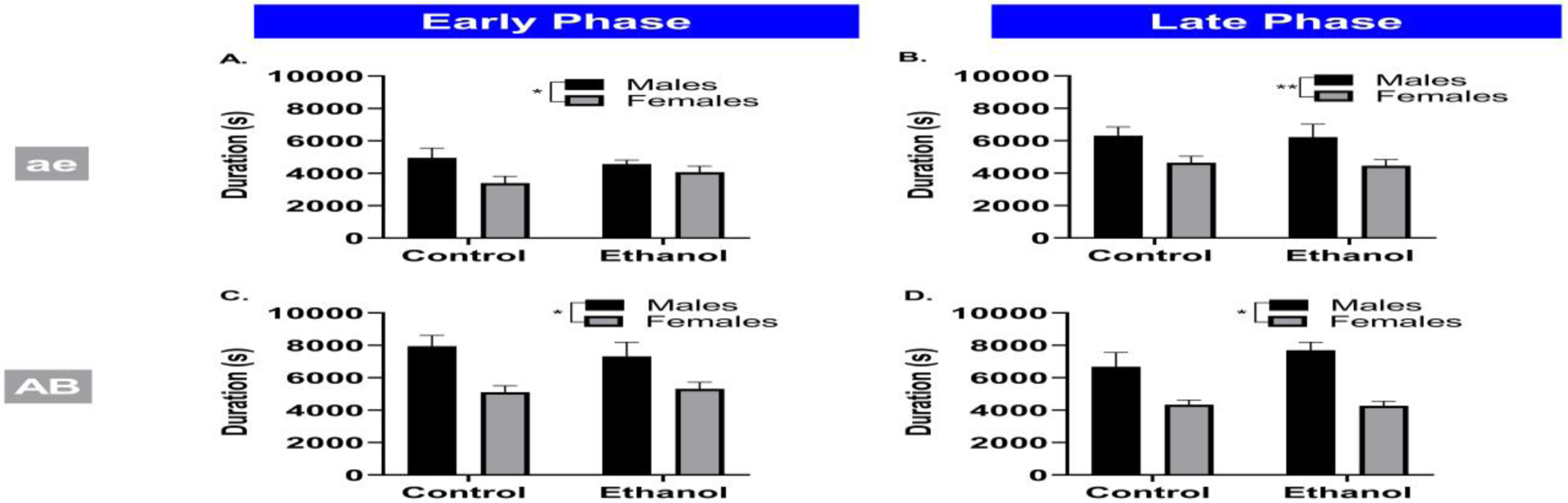
Figure 2. Social interactions differed between adolescent and adult-treated mice.
In adolescent mice, duration in the A) interaction zone and B) corner zone was unchanged 24 hours after the last dose (n: CM=10, EM=11, CF=10, EF=11). Three-weeks after the last dose, duration in the C) interaction zone and D) corner zone duration remained similar between treatment groups (n: CM=12, EM=6, CF=9, EF=10). Meanwhile, ethanol treatment in adulthood impacted social interaction at the early phase with E) decreased interaction time and F) increased duration in the corners (n: CM=10, EM=9, CF=10, EF=10). At the late phase, adult mice showed no sex or treatment differences in the G) interaction duration or the H) corner duration (n: CM=9, EM=8, CF=9, EF=9). Data is presented as mean +/− SEM. (* p<0.05, *** p<0.001)
Figure 3
Figure 3. Adolescent binge ethanol alters adult recognition memory.
Novel object recognition memory was unchanged at the early phase by either sex or treatment in the A) adolescent-treated cohort (n: CM=10, EM=12, CF=10, EF=12) or B) adult-treated cohort (n: CM=10, EM=9, CF=10, EF=9). However, at the late phase when all mice were adults, recognition memory was impaired in C) adolescent-treated mice given ethanol (n: CM=12, EM=7, CF=11, EF=10). No difference was observed in D) adult-treated mice due to sex or treatment (n: 9/group). Data is presented as mean +/− SEM. (* p<0.05)
Figure 4
Figure 4. Adolescent males and adult females show locomotor tolerance at the early phase.
At the early phase ethanol-induced cumulative distance was impacted by A) adolescent treatment in males and test-day treatment (n: CM=5, EM=6). B) Females also showed locomotor differences due to test-day treatment (n: CF=5, EF=6). Adult mice revealed that test-day treatment impacted C) male distance (n: CM=10, EM=9). D) Adult female distance (CF=10, EF=10) was significantly impacted by adult treatment and test-day treatment. Data is presented as mean +/− SEM. (**p<0.01, *** p<0.001, ****p<0.0001)
Figure 5
Figure 5. Adult females with a history of binge ethanol display locomotor tolerance.
Adolescent-treated mice at the late phase were revealed test-day treatment impacted cumulative distance in A) males (n: CM=12, EM=8) and B) females (CF=11, EF=10). C) Male locomotor distance (n: CM=10, EM=9) was increased by acute test-day ethanol. D) Adult females previously exposed to ethanol displayed locomotor tolerance to acute ethanol. Test-day treatment also impacted female cumulative distance (CF=10, EF=8). Data is presented as mean +/− SEM. (**p<0.01, *** p<0.001, ****p<0.0001)
Figure 6
Figure 6. Ethanol sedation is altered by sex, but not history of ethanol.
At the early phase, LORR duration was impacted by sex in A) adolescent-treated (n: CM=8, EM=11, CF=10, EF=11) and C) adult-treated mice with females waking earlier than males (n: CM=9, EM=9, CF=9, EF=8). The late phase also revealed sex differences in LORR duration in B) adolescent-treated (n: CM=12, EM=8, CF=11, EF=8) and D) adult-treated mice (n: CM=9, EM=8, CF=9, EF=7). Data is presented as mean +/− SEM. (*p<0.05, ** p<0.01).
Figure 7
Figure 7. Binge ethanol in adulthood did not alter myelin-related gene expression.
A) Twenty-four hours after the last ethanol dose, only Mal showed significant decreased mRNA expression due to ethanol (n: CM=8, EM=6, CF=8, EF=7, *p <0.05). Meanwhile Mag showed lower expression in females compared to males regardless of treatment (*p<0.05). B) Three weeks after the last dose, no differences in mRNA expression were observed between control and ethanol treated mice or between sexes (n: CM=8, EM=8, CF=8, EF=6). Data is presented as mean +/− SEM.

References

    1. Johnston LD, Miech RA, O’Malley PM, Bachman JG, Schulenberg JE, Patrick ME, Key Findings on Adolescent Drug Use, Ann Arbor, 2018. http://monitoringthefuture.org/pubs/monographs/mtf-overview2017.pdf.
    1. Hedden SL, Kennet J, Lipari R, Medley G, Tice P, Behavioral health trends in the United States: Results from the 2014 National Survey on Drug Use and Health, Rockville, 2015. https://www.samhsa.gov/data/sites/default/files/NSDUH-FRR1-2014/NSDUHFRR....
    1. Crews FT, Vetreno RP, Broadwater MA, Robinson DL, Adolescent alcohol exposure persistently impacts adult neurobiology and behavior, Pharmacol. Rev 68 (2016) 1074–1109. 10.1124/pr.115.012138. - DOI - PMC - PubMed
    1. Spear L, The adolescent brain and age-related behavioral manifestations, Neurosci. Biobehav. Rev 24 (2000) 417–463. 10.1016/S0149-7634(00)00014-2. - DOI - PubMed
    1. Wolstenholme JT, Mahmood T, Harris GM, Abbas S, Miles MF, Intermittent Ethanol during Adolescence Leads to Lasting Behavioral Changes in Adulthood and Alters Gene Expression and Histone Methylation in the PFC, Front. Mol. Neurosci 10 (2017) 1–14. 10.3389/fnmol.2017.00307. - DOI - PMC - PubMed

Publication types

MeSH terms