


Risk of Breast Cancer With Prolactin Elevating Antipsychotic Drugs: An Observational Study of US Women (Ages 18-64 Years)
- PMID: 34864772
- PMCID: PMC8688205
- DOI: 10.1097/JCP.0000000000001513
Risk of Breast Cancer With Prolactin Elevating Antipsychotic Drugs: An Observational Study of US Women (Ages 18-64 Years)
Abstract
Purpose/background: Antipsychotic drugs are well established to alter circulating prolactin levels by blocking dopamine D2 receptors in the pituitary. Prolactin activates many genes important in the development of breast cancer. Prior studies have found an association with antipsychotic use and risk of breast cancer.
Methods/procedures: The IBM MarketScan Commercial and Medicaid Databases were used to establish a large, observational cohort of women taking antipsychotics drugs compared with anticonvulsants or lithium. A new user design was used that required 12 months of insurance enrollment before the first antipsychotic or anticonvulsant/lithium prescription. Invasive breast cancer was identified using diagnostic codes. Multivariable Cox proportional hazards models were used to evaluate the risk of breast cancer with antipsychotic drug exposure controlling for age and other risk factors.
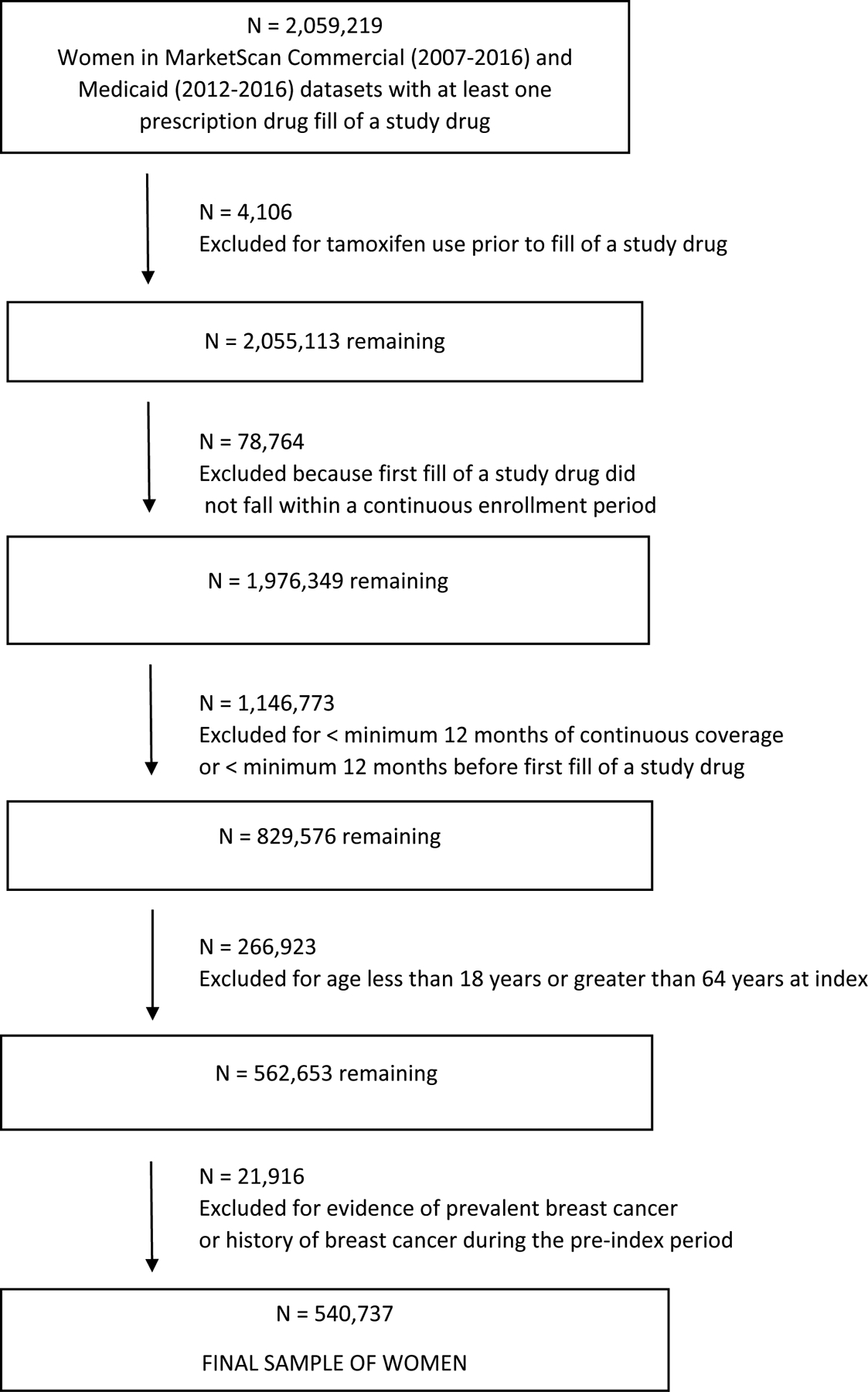
Findings/results: A total of 914 cases (0.16%) of invasive breast cancer were identified among 540,737 women. Exposure to all antipsychotics was independently associated with a 35% increased risk of breast cancer (aHR [adjusted hazard ratio], 1.35; 95% confidence interval, 1.14-1.61). Category 1 drugs (high prolactin) were associated with a 62% increased risk (aHR, 1.62; 95% CI, 1.30-2.03), category 2 drugs a 54% increased risk (aHR, 1.54; 95% CI, 1.19-1.99), and category 3 drugs were not associated with breast cancer risk.
Implications/conclusions: In the largest study of antipsychotics taken by US women, a higher risk between antipsychotic drug use and increased risk for breast cancer was observed, with a differential higher association with antipsychotic categories that elevate prolactin. Our study confirms other recent observational studies of increased breast cancer risk with antipsychotics that elevate prolactin.
Copyright © 2021 Wolters Kluwer Health, Inc. All rights reserved.
Figures


References
-
- American Cancer Society. Breast Cancer Facts & Figures 2019–2020. Atlanta: American Cancer Society, Inc. 2019.
-
- Rahman T, Clevenger CV, Kaklamani V, et al. Antipsychotic treatment in breast cancer patients. Am J Psychiatry. 2014;171:616–621. - PubMed
-
- Wang PS, Walker AM, Tsuang MT, et al. Dopamine antagonists and the development of breast cancer. Arch Gen Psychiatry. 2002;59:1147–1154. - PubMed
-
- Tworoger SS, Eliassen AH, Sluss P, et al. A prospective study of plasma prolactin concentrations and risk of premenopausal and postmenopausal breast cancer. J Clin Oncol. 2007;25:1482–1488. - PubMed
Publication types
MeSH terms
Substances
Grants and funding
LinkOut - more resources
Full Text Sources
Medical
