


Phytochemical analysis and anticancer activity of Falcaria vulgaris Bernh growing in Moghan plain, northwest of Iran
- PMID: 34865625
- PMCID: PMC8645078
- DOI: 10.1186/s12906-021-03464-2
Phytochemical analysis and anticancer activity of Falcaria vulgaris Bernh growing in Moghan plain, northwest of Iran
Abstract
Background: Falcaria vulgaris Bernh among the most important member of Apiaceae family has been used for medical investigation in Iran and some regions in the world. This plant possesses a range of coumarin and flavonoids compounds that have many therapeutic properties such as gastrointestinal and liver diseases, skin ulcers, gastric ulcers, and intestinal inflammation. It has also been found that these compounds lead to cytotoxic effects.
Objective: This study contains concentrates on the cytotoxic effect and induction of apoptosis on cancerous cells (SW-872) through various extracts and essential oil of Falcaria vulgaris Bernh. It considers the volatile compounds of effective samples.
Methods: The shoot of the plant was extracted by the Soxhlet apparatus and its essential oil was taken by the Clevenger apparatus. The cytotoxicity of the samples was evaluated by the MTT method and the mechanism of cancer cell death by flow cytometry and finally, the volatile compounds of essential oils and effective extracts were identified by GC-MS.
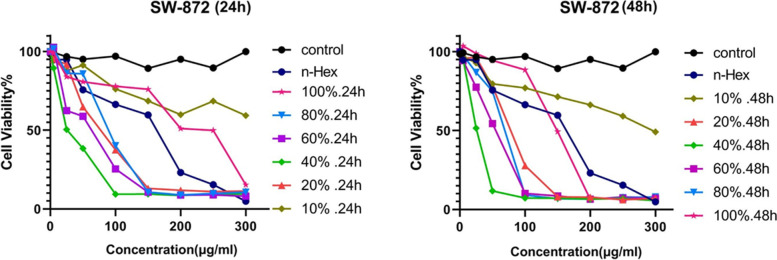
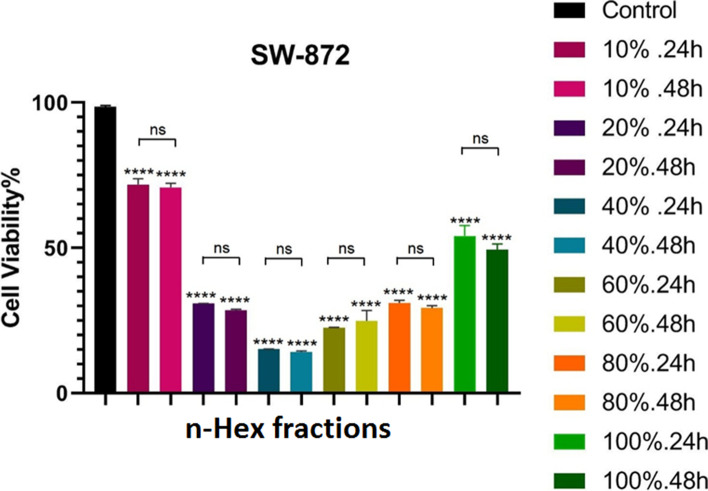
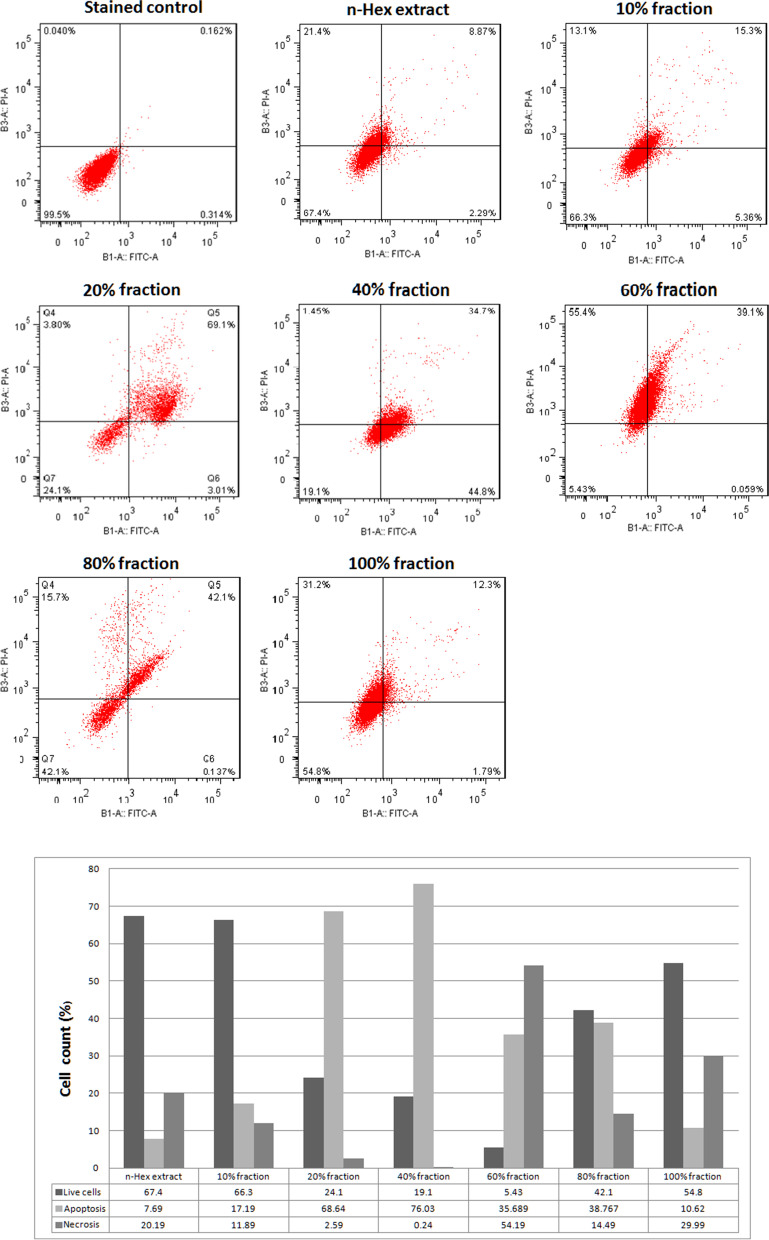
Results: The results demonstrated that n-Hexane extract and 40% VLC fraction had the greatest cytotoxic effect on SW-872 cells. While, the most abundant volatile compounds in essential oil and 40% VLC fraction of n-Hexane extract were terpenoid compounds like (+) spathulenol and caryophyllene oxide, in n-Hexane extract tetradecan, and spathulenol were the most, respectively.
Conclusion: The fraction of 40% n-Hexane was in a concentration-dependent manner and significantly with controlling cells inhibited the growth of cancer cells. A plausible explanation could be made to account for this effect. This inhibition was made through induction of apoptosis and due to the presence of effective volatile compounds such as terpenoids and non-terpenoids which could be considered as valuable natural sources for the isolation of anti-cancer compounds.
Keywords: Apoptosis; Cancerous cells; Cytotoxicity; Falcaria vulgaris Bernh; GC-MS; Volatile compounds.
© 2021. The Author(s).
Conflict of interest statement
The authors declare that they have no competing interests.
Figures
References
-
- Organization WH. cancer. December 2018.
-
- Saunders FR, Wallace HM. On the natural chemoprevention of cancer. Plant Physiol Biochem. 2010;48(7):621–626. - PubMed
-
- Prakash O, Kumar A, Kumar P. Anticancer potential of plants and natural products. Am J Pharmacol Sci. 2013;1(6):104–115.
MeSH terms
Substances
LinkOut - more resources
Full Text Sources
Miscellaneous
