


Hair Growth-Promoting Effect of Resveratrol in Mice, Human Hair Follicles and Dermal Papilla Cells
- PMID: 34866922
- PMCID: PMC8637427
- DOI: 10.2147/CCID.S335963
Hair Growth-Promoting Effect of Resveratrol in Mice, Human Hair Follicles and Dermal Papilla Cells
Abstract
Background: Oxidative damage has been found in various types of hair loss. As a polyphenolic phytoalexin, resveratrol (RSV) is known as an antioxidant, anti-inflammatory and anti-apoptotic agent.
Objective: Thus, we aim to examine the effects of RSV on hair growth.
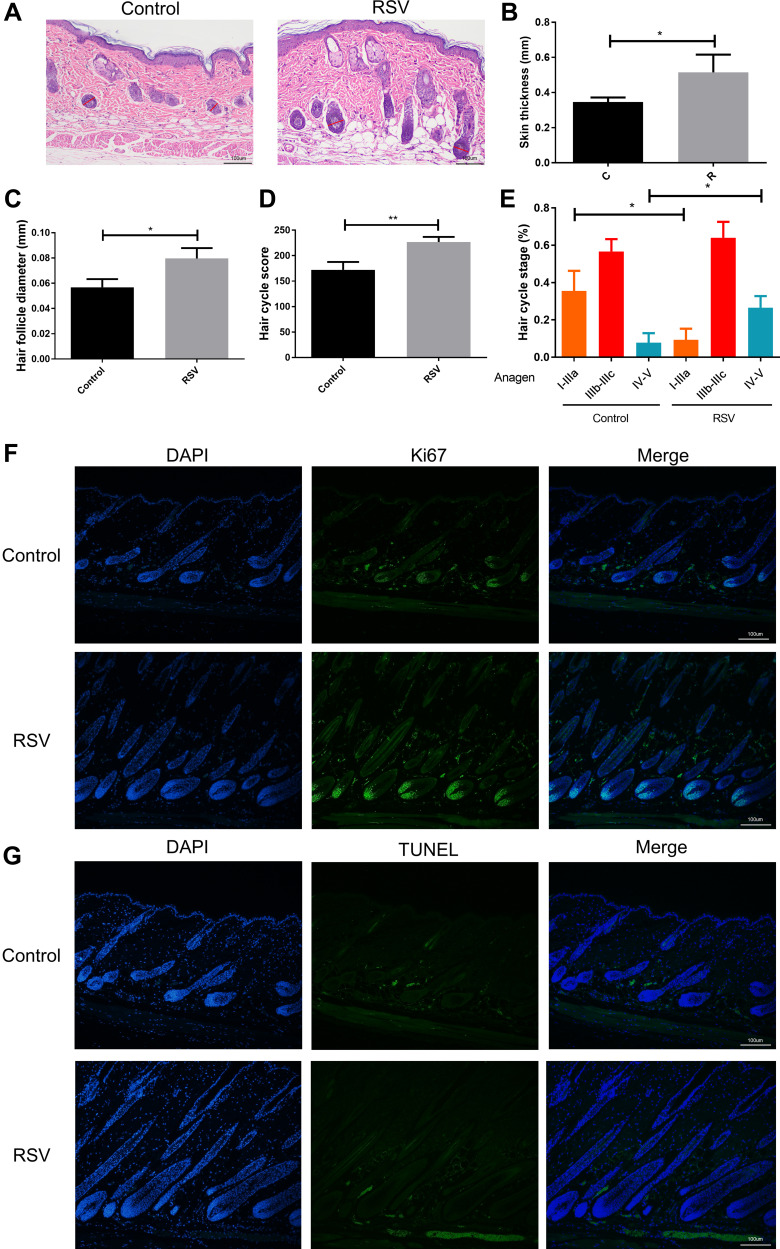
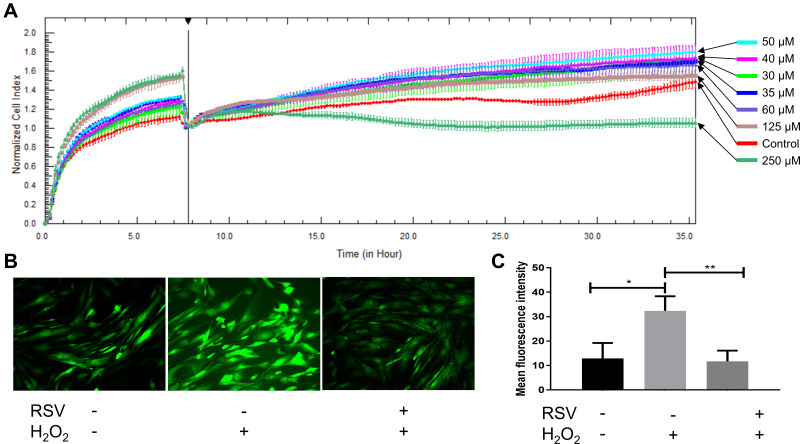
Methods: In vivo C57BL/6 mice were used to evaluate the effects of RSV on hair cycle, hair length, skin thickness, hair follicle diameter, hair cycle score and the percentage of hair cycle stage. Then hair shaft length and hair cycle were evaluated by human hair follicles (HFs) ex vivo. The proliferative activities of human dermal papilla cells (hDPCs) cultured in vitro with RSV were assessed using RTCA. The ability of RSV to protect hDPCs against H2O2-induced oxidative damage is examined by a ROS assay kit.
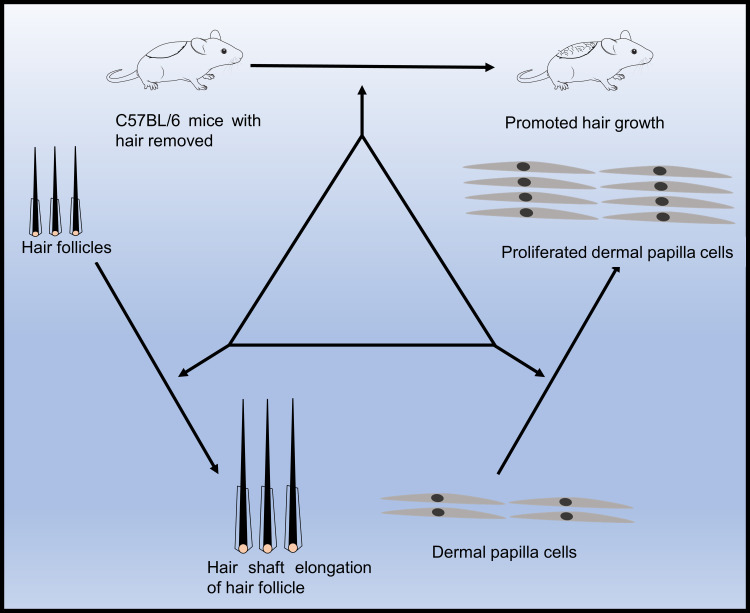
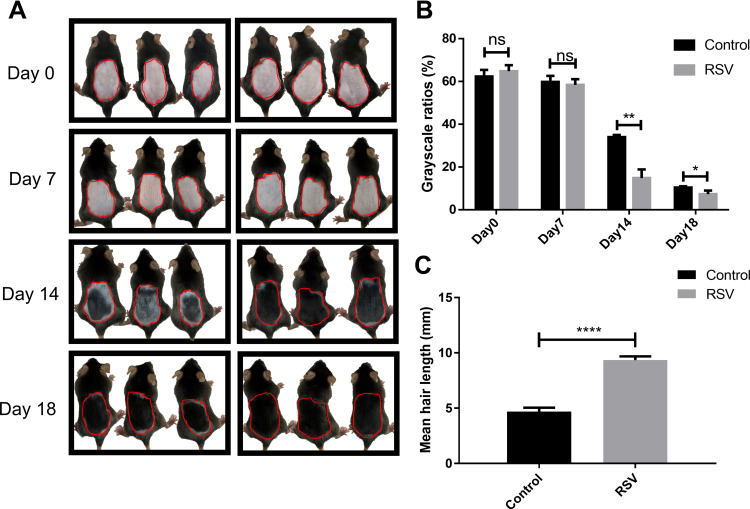
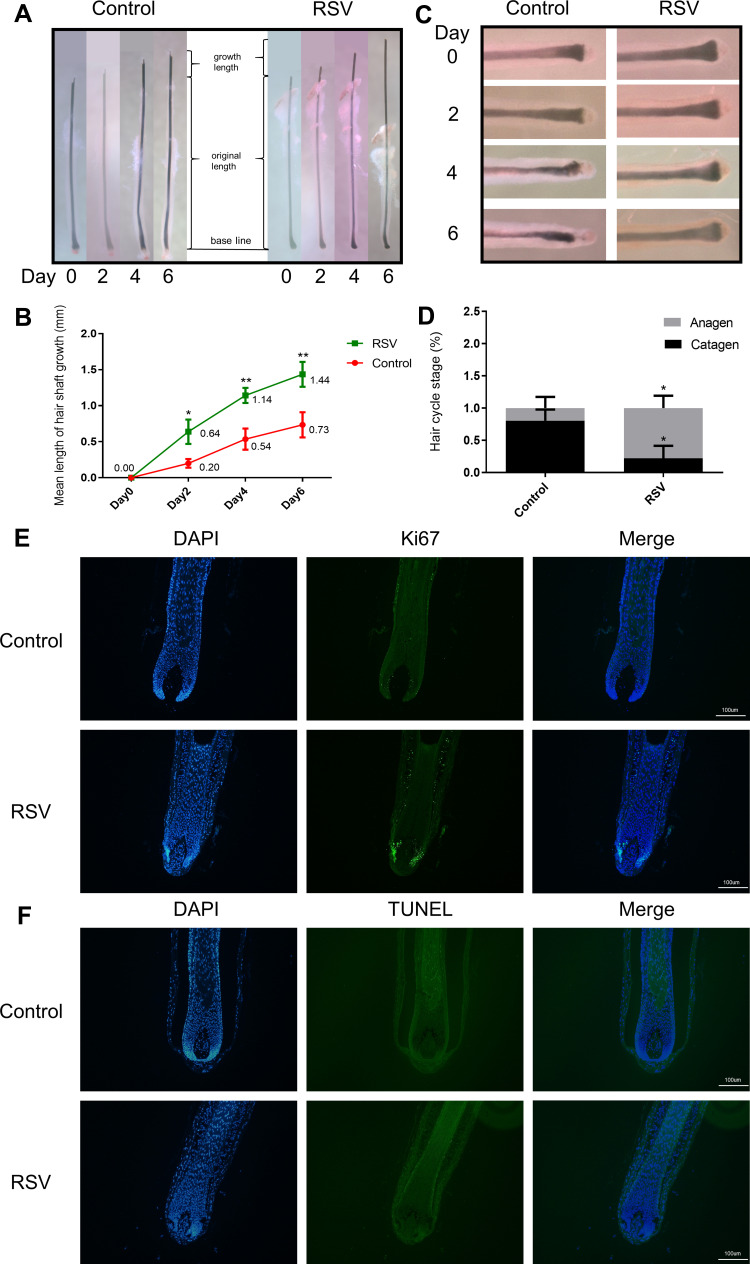
Results: Topical application of RSV significantly promoted hair growth and stimulated the transition of hair cycle from telogen into the anagen phase on shaved C57BL/6 mice. Ex vivo experiments showed that RSV increased the hair shaft length of HFs and delayed the entry into catagen. In vitro experiments indicated that RSV proliferated hDPCs and prevented hDPCs from oxidative damage caused by H2O2.
Conclusion: RSV can promote hair growth and may be a potential candidate for the treatment of hair loss.
Keywords: dermal papilla cells; hair cycle; hair follicle; hair growth; resveratrol.
© 2021 Zhang et al.
Conflict of interest statement
The authors report no conflicts of interest in this work.
Figures
References
-
- Damodaran RG, Gupta R. Hair loss and the applied techniques for identification of novel hair growth promoters for hair re-growth. Pharmacogn J. 2011;3(22):1–5. doi: 10.5530/pj.2011.22.1 - DOI
LinkOut - more resources
Full Text Sources
Research Materials
