


The Correlation Between Hearing Loss, Especially High-Frequency Hearing Loss and Cognitive Decline Among the Elderly
- PMID: 34867162
- PMCID: PMC8634596
- DOI: 10.3389/fnins.2021.750874
The Correlation Between Hearing Loss, Especially High-Frequency Hearing Loss and Cognitive Decline Among the Elderly
Abstract
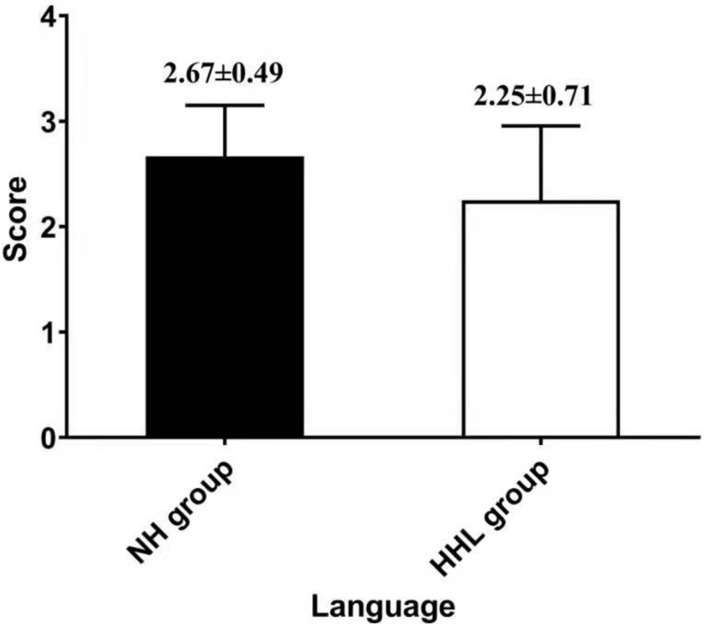
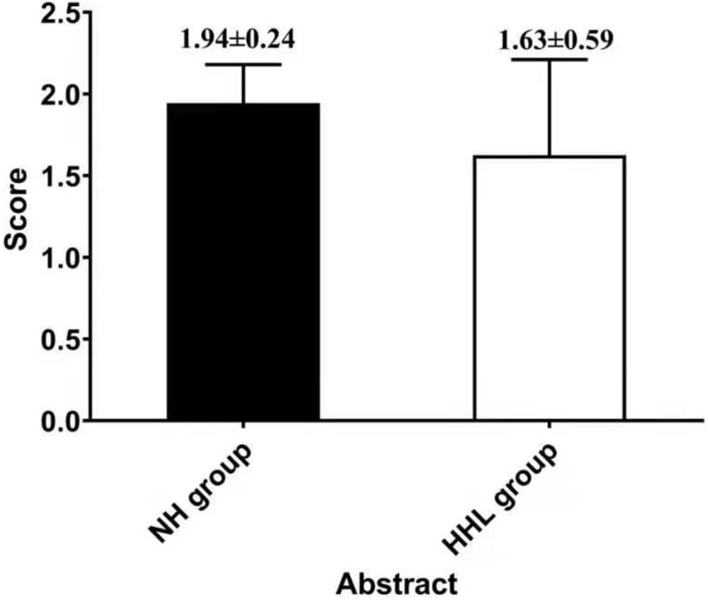
Objective: The relation between cognition and hearing loss has been increasingly paid high attention, however, few studies have focused on the role of high-frequency hearing loss in cognitive decline. This study is oriented to role of hearing loss especially high-frequency hearing loss in cognitive impairment among elderly people (age ≥ 60 years). Methods: The Montreal Cognitive Assessment Scale (MoCA) and pure tone audiometry were used to investigate the hearing loss and cognitive function of 201 elderly people older than 60 years. Factors possibly related to cognitive impairment including age, years of education, occupation, living conditions, history of otologic diseases, and high blood pressure were registered. This study consisted of two parts. First, univariate analysis and multiple linear regressions were performed to analyze the possible influencing factors of cognitive function among the 201 elderly people. Second, average hearing thresholds of low frequencies (250, 500 Hz), intermediate frequencies (1 k, 2 kHz), and high frequencies (4 k, 8 kHz) were calculated to screen out 40 cases with high-frequency hearing loss alone and 18 cases with normal hearing. Univariate analysis was used to compare the general condition, cognitive function, and each cognitive domain between the two groups, analyzing the relation between high-frequency hearing loss and cognitive function. Result: We found that age, years of education, pure tone average (PTA), occupation, living condition, history of otologic diseases, years of self-reported hearing loss, and hypertension history were related to cognitive function. Furthermore, age, education experience, duration of self-reported hearing loss, and hypertension were independent factors (p < 0.05). PTA was negatively related with attention, orientation, and general cognition (p < 0.05). There were only 18 cases (9.0%) with normal hearing, and 40 cases (19.9%) with abnormal high-frequency hearing alone. The overall cognitive function showed no significant difference between them (p > 0.05); in contrast, the speech and abstract ability were significantly decreased in cases with high-frequency hearing loss (p < 0.05). Conclusion: The increase of PTA among the elderly may affect the overall cognition by reducing attention and orientation. High-frequency hearing loss alone can affect the language and abstract ability to a certain extent, which is worthy of more attention.
Keywords: abstract ability; cognition; hearing loss; high-frequency hearing loss; language ability.
Copyright © 2021 Diao, Ma, Zhang, Duan and Yu.
Conflict of interest statement
The authors declare that the research was conducted in the absence of any commercial or financial relationships that could be construed as a potential conflict of interest.
Figures
References
-
- Arlington V. A. (2013). American Psychiatric Association: Diagnostic and Statistical Manual of Mental Disorders, 5th Edn. Washington, DC: American Psychiatric Association.
LinkOut - more resources
Full Text Sources
