


The Chicken Embryo Model: A Novel and Relevant Model for Immune-Based Studies
- PMID: 34868080
- PMCID: PMC8640176
- DOI: 10.3389/fimmu.2021.791081
The Chicken Embryo Model: A Novel and Relevant Model for Immune-Based Studies
Abstract
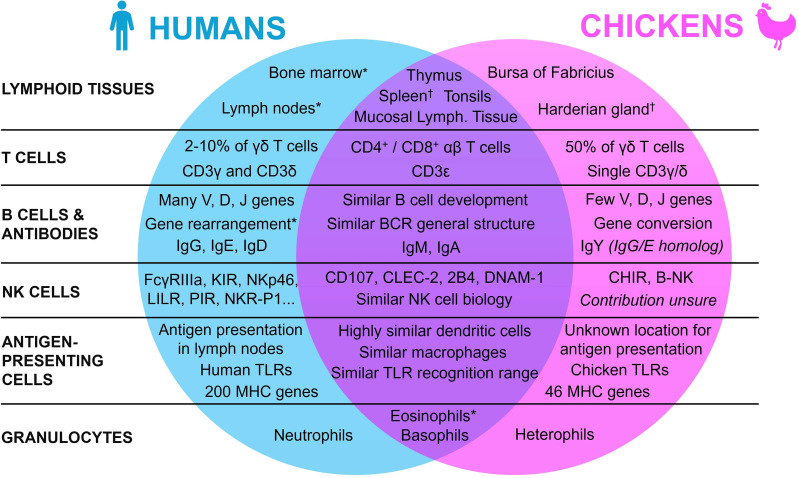
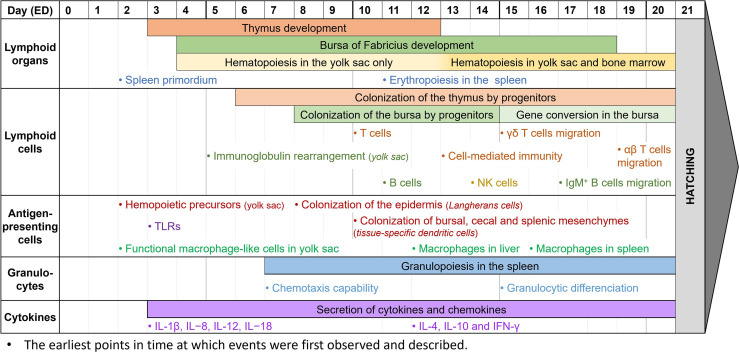
Dysregulation of the immune system is associated with many pathologies, including cardiovascular diseases, diabetes, and cancer. To date, the most commonly used models in biomedical research are rodents, and despite the various advantages they offer, their use also raises numerous drawbacks. Recently, another in vivo model, the chicken embryo and its chorioallantoic membrane, has re-emerged for various applications. This model has many benefits compared to other classical models, as it is cost-effective, time-efficient, and easier to use. In this review, we explain how the chicken embryo can be used as a model for immune-based studies, as it gradually develops an embryonic immune system, yet which is functionally similar to humans'. We mainly aim to describe the avian immune system, highlighting the differences and similarities with the human immune system, including the repertoire of lymphoid tissues, immune cells, and other key features. We also describe the general in ovo immune ontogeny. In conclusion, we expect that this review will help future studies better tailor their use of the chicken embryo model for testing specific experimental hypotheses or performing preclinical testing.
Keywords: chick embryo; chicken; chicken embryo; chorioallantoic membrane; egg; immunology; ontogeny; preclinical model.
Copyright © 2021 Garcia, Wang, Viallet and Macek Jilkova.
Conflict of interest statement
PG, YW, and JV are employees of Inovotion. The remaining author declares that the research was conducted in the absence of any commercial or financial relationships that could be construed as a potential conflict of interest.
Figures
References
Publication types
MeSH terms
Substances
LinkOut - more resources
Full Text Sources
Other Literature Sources
Medical
