


Natamycin: a natural preservative for food applications-a review
- PMID: 34868698
- PMCID: PMC8595390
- DOI: 10.1007/s10068-021-00981-1
Natamycin: a natural preservative for food applications-a review
Abstract
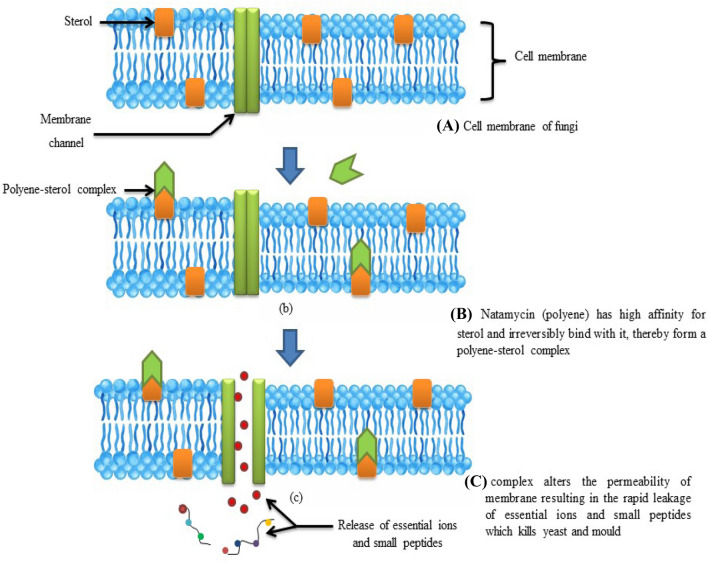
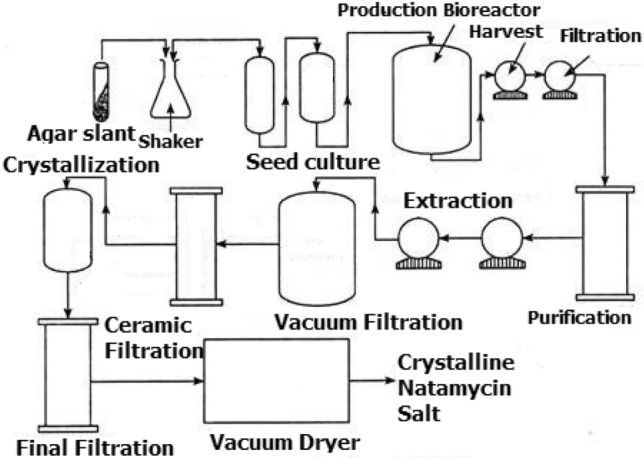
Natamycin is a natural antimicrobial peptide produced by the strains of Streptomyces natalensis. It effectively acts as an antifungal preservative on various food products like yogurt, khoa, sausages, juices, wines, etc. Additionally, it has been used as a bio preservative and is listed as generally recognized as a safe ingredient for various food applications. In this review, natamycin properties, production methods, toxicity, and application as a natural preservative in different foods are emphasized. This review also focuses on optimal condition and process control required in natamycin production. The mode of action and inhibitory effect of natamycin on yeast and molds inhibition and its formulation and dosage to preserve various food products, coating, and hurdle applications are summarized. Understanding the scientific factors in natamycin's production process, its toxicity, and its efficiency as a preservative will open its practical application in various food products.
Supplementary information: The online version contains supplementary material available at 10.1007/s10068-021-00981-1.
Keywords: Food applications; Mode of action; Natamycin; Production; Toxicity.
© The Korean Society of Food Science and Technology 2021.
Conflict of interest statement
Conflict of interestAll authors declare that they have no conflict of interest.
Figures
References
-
- Anonymous. Absorption of pimaricin following oral administration. Unpublished report submitted to WHO by the Royal Netherlands Fermentation Industries Ltd., Delft (1968)
-
- Arima AA, Pavinatto FJ, Oliveira JON, Gonzales ER. The negligible effects of the antifungal natamycin on cholesterol-dipalmitoyl phosphatidylcholine monolayers may explain its low oral and topical toxicity for mammals. Colloids and Surfaces B: Biointerfaces. 122: 202–208. 10.1016/j.colsurfb.2014.06.058 (2014) - PubMed
-
- Atta HM, Selim SM, Zayed MS. Natamycin antibiotic produced by Streptomyces sp.: Fermentation, purification and biological activities. Journal of American Science. 8: 469–475 (2012)
Publication types
LinkOut - more resources
Full Text Sources