Review
. 2021 Mar 31;14(4):1157-1168.
doi: 10.1007/s40617-021-00559-7. eCollection 2021 Dec.

Ethical Considerations of Behavioral Feeding Interventions

Affiliations
Review

Ethical Considerations of Behavioral Feeding Interventions

Lisa Tereshko et al. Behav Anal Pract. .

Abstract

Children with autism spectrum disorder (ASD) often display repetitive and restrictive patterns of behavior, which can be seen in food selectivity and other feeding problems. Feeding problems in children with ASD not only lead to medical complications for the child but also can lead to increased caregiver stress. In order for behavior analysts to ensure adherence to the Professional and Ethical Compliance Code for Behavior Analysts, many factors need to be addressed prior to and during feeding assessments and interventions. The need for interdisciplinary collaboration and ethical situations that may arise are reviewed. The purpose of this article is to assist the behavior analyst in determining best practices for feeding assessments and interventions while maintaining ethical compliance.

Keywords: ethics; feeding assessment; feeding intervention.


Conflict of interest statement

Conflict of interestWe have no known conflicts of interest to disclose.

Figures
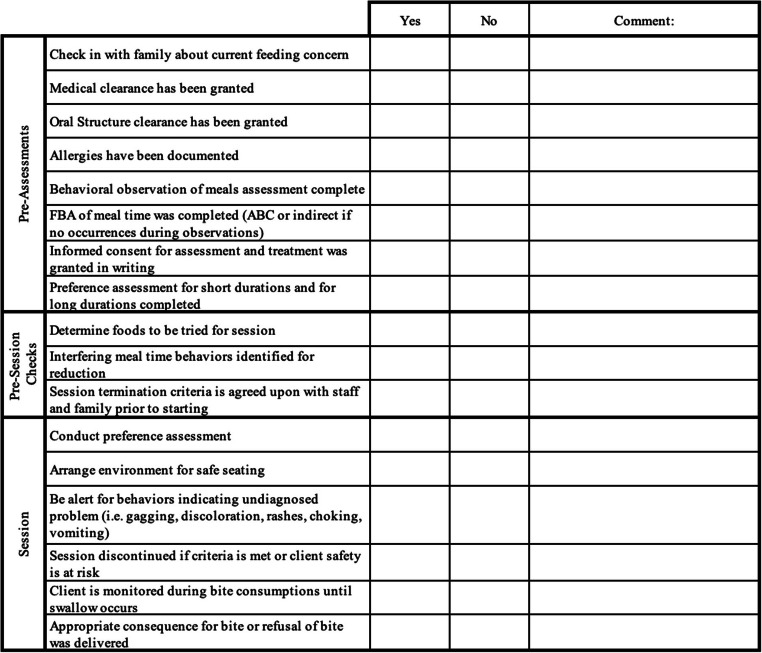
Fig. 1
Fig. 1
Rubric for Assisting Clinicians Prior to Implementing a Feeding Intervention With a Client
Fig. 2
Fig. 2
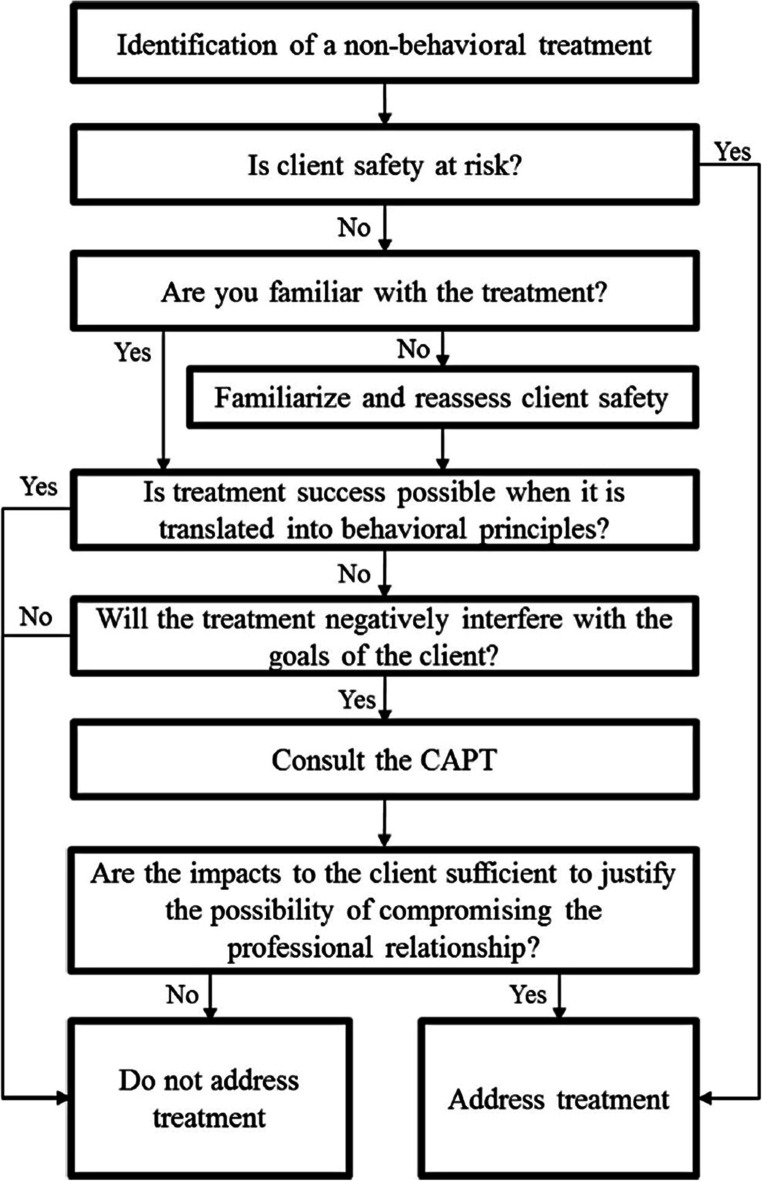
Decision Tree Provided by Brodhead (2015) for Assessing Nonbehavioral Interventions. Note. From “Maintaining Professional Relationships in an Interdisciplinary Setting: Strategies for Navigating Nonbehavioral Treatment Recommendations for Individuals With Autism,” by M. T. Brodhead, , Behavior Analysis in Practice, 8, p. 73 (https://doi.org/10.1007/s40617-015-0042-7). Copyright 2015 by Springer Nature Customer Service Centre GmbH. Reprinted with permission.

References

    1. Addison LR, Piazza CC, Patel MR, Bachmeyer MH, Rivas KM, Milnes SM, Oddo J. A comparison of sensory integrative and behavioral therapies as treatment for pediatric feeding disorders. Journal of Applied Behavior Analysis. 2012;45(3):455–471. doi: 10.1901/jaba.2012.45-455. - DOI - PMC - PubMed
    1. Ahearn WH, Kerwin ME, Eicher PS, Lukens CT. An ABAC comparison of two intensive interventions for food refusal. Behavior Modification. 2001;25(3):385–405. doi: 10.1177/0145445501253002. - DOI - PubMed
    1. Ahearn, W. H., Kerwin, M. E., Eicher, P. S., Shantz, J., & Swearingin, W. (1996). An alternating treatments comparison of two intensive interventions for food refusal. Journal of Applied Behavior Analysis, 29(3), 321–332. 10.1901/jaba.1996.29-321. - PMC - PubMed
    1. American Psychiatric Association. (2013). Diagnostic and statistical manual of mental disorders (5th ed.).
    1. Avni, E., Ben-Itzchak, E., & Zachor, D. A. (2018). The presences of comorbid ADHD and anxiety symptoms in autism spectrum disorder: Clinical presentation and predictors. Frontiers in Psychiatry, 9, 717. 10.3389/fpsyt.2018.00717. - PMC - PubMed

LinkOut - more resources