Expanding the landscape of opportunity: Professional societies support early-career researchers through community programming and peer coaching
- PMID: 34871009
- PMCID: PMC8653985
- DOI: 10.1037/com0000300
Expanding the landscape of opportunity: Professional societies support early-career researchers through community programming and peer coaching
Abstract
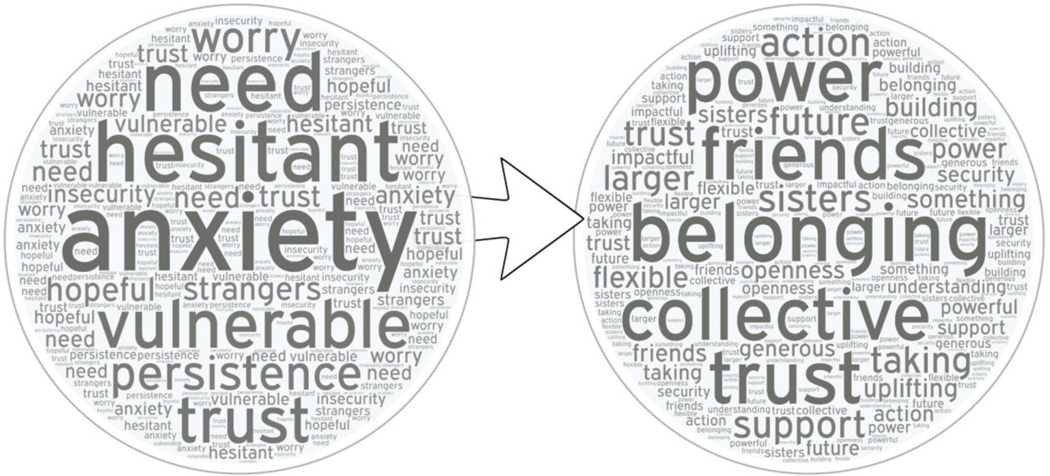
Weaving the future of the field of comparative psychology is dependent on the career advancement of early-career scientists. Despite concerted efforts to increase diversity in science, technology, engineering, and mathematics, scholars from marginalized groups are disproportionately underrepresented in the field-especially at advanced career stages. New approaches to sponsorship, mentoring, and community building are necessary to retain talent from marginalized communities and to create a culture and a system where all individuals can thrive. We describe the unique and supportive role of senior women scientists united through a professional society in initiating peer coaching circles to facilitate the success of a diverse cohort of early-career women scientists. We offer our experiences with the Weaving the Future of Animal Behavior program as a case study that illustrates the cascading impacts of professional societies investing in the success and career development of marginalized scholars. We focus on our peer coaching circle experience and share the products and outcomes after 2 years of meeting. Peer coaching transformed us from a group of loosely organized, anxious individuals into a collective of empowered agents of change with an enhanced sense of belonging. We end by presenting recommendations to institutions seeking to expand the landscape of opportunities to other marginalized scholars. (PsycInfo Database Record (c) 2021 APA, all rights reserved).
Conflict of interest statement
We have no known conflicts of interest to disclose.
Figures
References
-
- Alexander QR, & Hermann MA (2016). African-American women’s experiences in graduate science, technology, engineering, and mathematics education at a predominantly white university: A qualitative investigation. Journal of Diversity in Higher Education, 9(4), 307.
-
- Bozionelos N, & Wang L. (2006). The relationship of mentoring and network resources with career success in the Chinese organizational environment. The International Journal of Human Resource Management, 17(9), 1531–1546.
-
- Brown E. (2017). Retirement: Dollars and sense. Nature, 544(7650), 381–383.
-
- Byars-Winston A, Womack VY, Butz AR, McGee R, Quinn SC, Utzerath E, Saetermoe CL, & Thomas SB (2018). Pilot study of an intervention to increase cultural awareness in research mentoring: Implications for diversifying the scientific workforce. Journal of Clinical and Translational Science, 2(2), 86–94. 10.1017/cts.2018.25 - DOI - PMC - PubMed
-
- Campbell KM, & Rodríguez JE (2019). Addressing the minority tax: Perspectives from two diversity leaders on building minority faculty success in academic medicine. Academic Medicine, 94(12), 1854–1857. - PubMed