


Opportunities and challenges for the application of post-consumer plastic waste pyrolysis oils as steam cracker feedstocks: To decontaminate or not to decontaminate?
- PMID: 34871884
- PMCID: PMC8769047
- DOI: 10.1016/j.wasman.2021.11.009
Opportunities and challenges for the application of post-consumer plastic waste pyrolysis oils as steam cracker feedstocks: To decontaminate or not to decontaminate?
Abstract
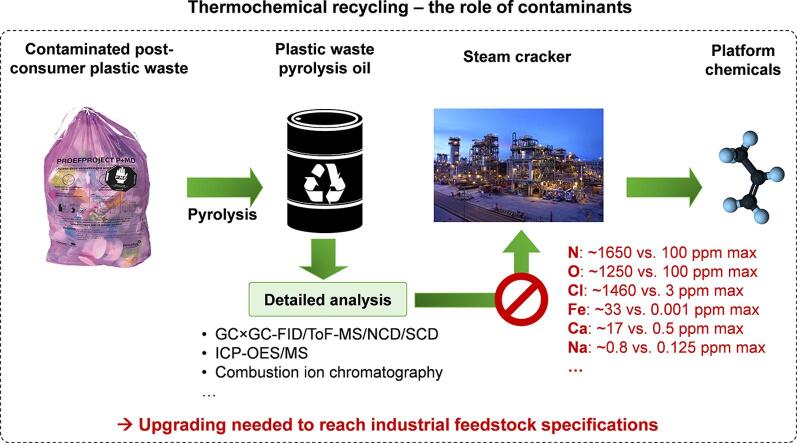
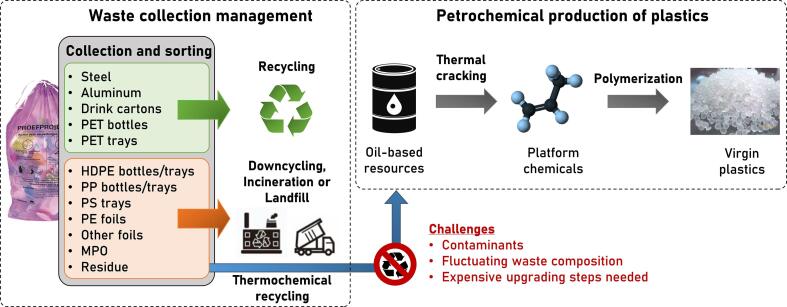
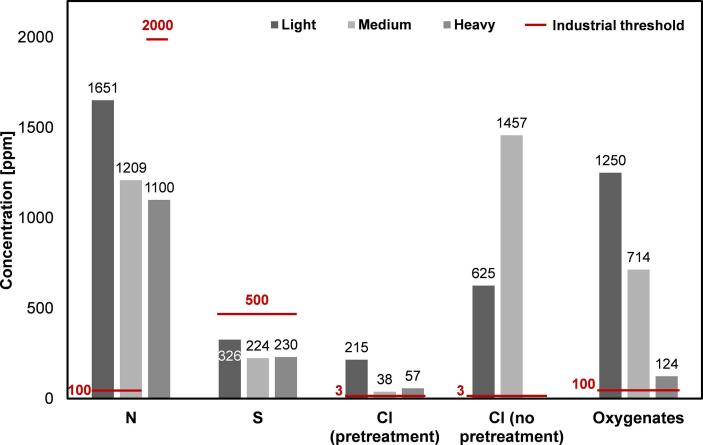
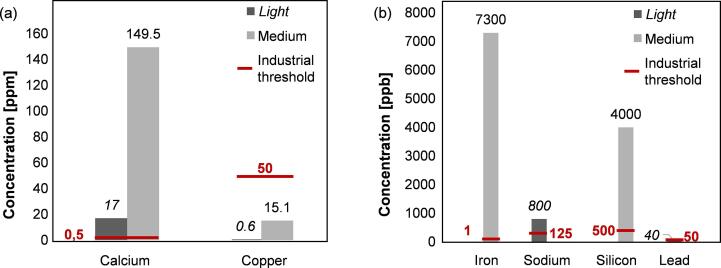
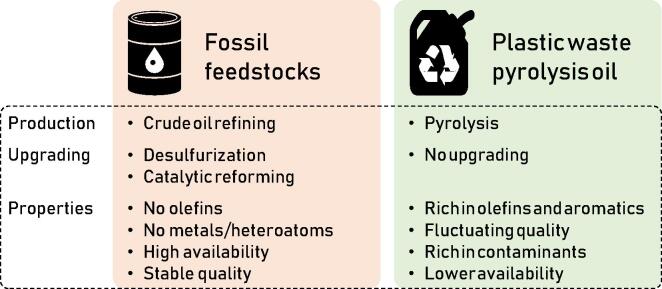
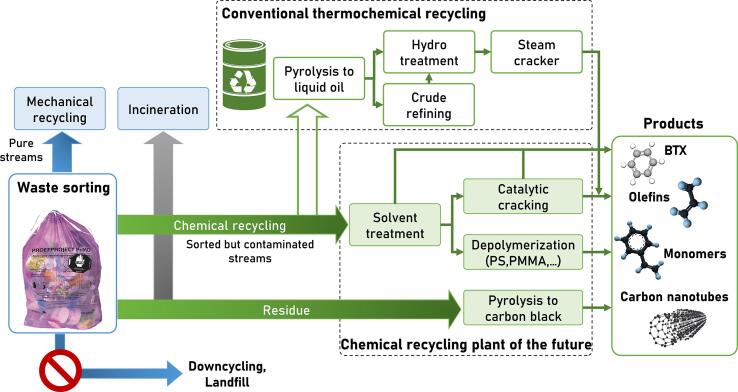
Thermochemical recycling of plastic waste to base chemicals via pyrolysis followed by a minimal amount of upgrading and steam cracking is expected to be the dominant chemical recycling technology in the coming decade. However, there are substantial safety and operational risks when using plastic waste pyrolysis oils instead of conventional fossil-based feedstocks. This is due to the fact that plastic waste pyrolysis oils contain a vast amount of contaminants which are the main drivers for corrosion, fouling and downstream catalyst poisoning in industrial steam cracking plants. Contaminants are therefore crucial to evaluate the steam cracking feasibility of these alternative feedstocks. Indeed, current plastic waste pyrolysis oils exceed typical feedstock specifications for numerous known contaminants, e.g. nitrogen (∼1650 vs. 100 ppm max.), oxygen (∼1250 vs. 100 ppm max.), chlorine (∼1460vs. 3 ppm max.), iron (∼33 vs. 0.001 ppm max.), sodium (∼0.8 vs. 0.125 ppm max.)and calcium (∼17vs. 0.5 ppm max.). Pyrolysis oils produced from post-consumer plastic waste can only meet the current specifications set for industrial steam cracker feedstocks if they are upgraded, with hydrogen based technologies being the most effective, in combination with an effective pre-treatment of the plastic waste such as dehalogenation. Moreover, steam crackers are reliant on a stable and predictable feedstock quality and quantity representing a challenge with plastic waste being largely influenced by consumer behavior, seasonal changes and local sorting efficiencies. Nevertheless, with standardization of sorting plants this is expected to become less problematic in the coming decade.
Keywords: Characterization; Chemical recycling; Contaminants; Steam cracking; Thermochemical conversion; Upgrading.
Copyright © 2021 The Author(s). Published by Elsevier Ltd.. All rights reserved.
Conflict of interest statement
The authors declare that they have no known competing financial interests or personal relationships that could have appeared to influence the work reported in this paper.
Figures

References
-
- Adahchour, M., Beens, J. & Brinkman, U. a. T. 2008. Recent developments in the application of comprehensive two-dimensional gas chromatography. J. Chromatogr A, 1186(1), 67–108, https://doi.org/10.1016/j.chroma.2008.01.002. - PubMed
-
- Adahchour, M., Beens, J., Vreuls, R. J. J. & Brinkman, U. a. T. 2006. Recent developments in comprehensive two-dimensional gas chromatography (GC×GC): I. Introduction and instrumental set-up. TrAC, Trends Anal Chem, 25(5), 438-454, https://doi.org/10.1016/j.trac.2006.03.002.
-
- Adam F., Bertoncini F., Brodusch N., Durand E., Thiébaut D., Espinat D., Hennion M.-C. New benchmark for basic and neutral nitrogen compounds speciation in middle distillates using comprehensive two-dimensional gas chromatography. J. Chromatogr. A. 2007;1148(1):55–64. doi: 10.1016/j.chroma.2007.01.142. - DOI - PubMed
-
- Adam F., Bertoncini F., Dartiguelongue C., Marchand K., Thiébaut D., Hennion M.-C. Comprehensive two-dimensional gas chromatography for basic and neutral nitrogen speciation in middle distillates. Fuel. 2009;88(5):938–946. doi: 10.1016/j.fuel.2008.11.032. - DOI
-
- Aguado R., Olazar M., San José M.J., Gaisán B., Bilbao J. Wax Formation in the Pyrolysis of Polyolefins in a Conical Spouted Bed Reactor. Energy Fuels. 2002;16(6):1429–1437. doi: 10.1021/ef020043w. - DOI
Publication types
MeSH terms
Substances
LinkOut - more resources
Full Text Sources
Other Literature Sources
