


Genetically regulated expression in late-onset Alzheimer's disease implicates risk genes within known and novel loci
- PMID: 34873149
- PMCID: PMC8648734
- DOI: 10.1038/s41398-021-01677-0
Genetically regulated expression in late-onset Alzheimer's disease implicates risk genes within known and novel loci
Abstract
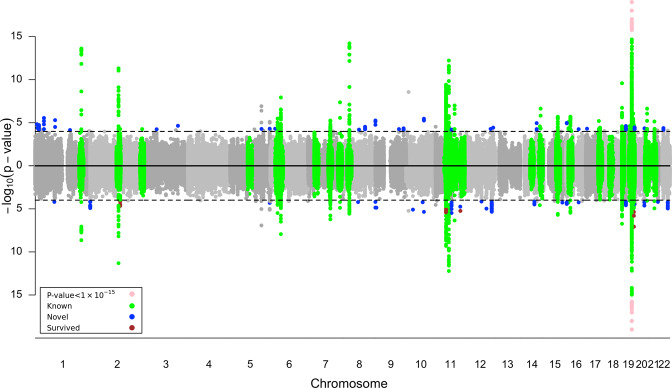
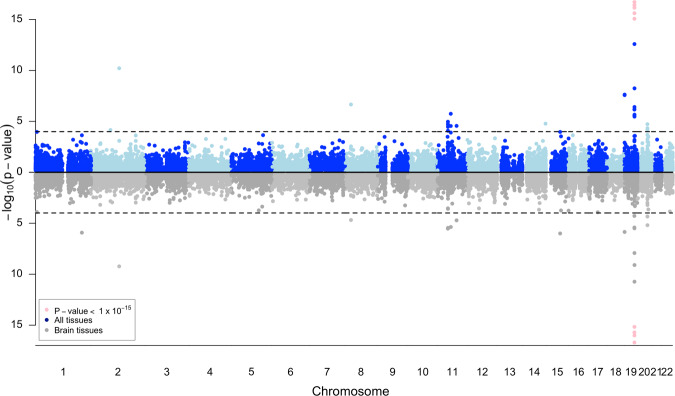
Late-onset Alzheimer disease (LOAD) is highly polygenic, with a heritability estimated between 40 and 80%, yet risk variants identified in genome-wide studies explain only ~8% of phenotypic variance. Due to its increased power and interpretability, genetically regulated expression (GReX) analysis is an emerging approach to investigate the genetic mechanisms of complex diseases. Here, we conducted GReX analysis within and across 51 tissues on 39 LOAD GWAS data sets comprising 58,713 cases and controls from the Alzheimer's Disease Genetics Consortium (ADGC) and the International Genomics of Alzheimer's Project (IGAP). Meta-analysis across studies identified 216 unique significant genes, including 72 with no previously reported LOAD GWAS associations. Cross-brain-tissue and cross-GTEx models revealed eight additional genes significantly associated with LOAD. Conditional analysis of previously reported loci using established LOAD-risk variants identified eight genes reaching genome-wide significance independent of known signals. Moreover, the proportion of SNP-based heritability is highly enriched in genes identified by GReX analysis. In summary, GReX-based meta-analysis in LOAD identifies 216 genes (including 72 novel genes), illuminating the role of gene regulatory models in LOAD.
© 2021. The Author(s).
Conflict of interest statement
The authors declare no competing interests.
Figures
References
-
- Raiha I, Kaprio J, Koskenvuo M, Rajala T, Sourander L. Alzheimer’s disease in Finnish twins. Lancet. 1996;347:573–8. - PubMed
-
- Gatz M, Pedersen NL, Berg S, Johansson B, Johansson K, Mortimer JA, et al. Heritability for Alzheimer’s disease: the study of dementia in Swedish twins. J Gerontol A Biol Sci Med Sci. 1997;52:M117–125. - PubMed
-
- Pedersen NL, Posner SF, Gatz M. Multiple-threshold models for genetic influences on age of onset for Alzheimer disease: findings in Swedish twins. Am J Med Genet. 2001;105:724–8. - PubMed
Publication types
MeSH terms
Grants and funding
LinkOut - more resources
Full Text Sources
Medical
