


Overall survival and prognostic factors prostate cancer in Kurdistan Province-Iran: a population-based study (2011-2018)
- PMID: 34876069
- PMCID: PMC8653556
- DOI: 10.1186/s12885-021-09078-8
Overall survival and prognostic factors prostate cancer in Kurdistan Province-Iran: a population-based study (2011-2018)
Abstract
Background: The population-based survival rate is affected by the quality and effectiveness of health care systems. Overall, the survival of prostate cancer (PC) patients has improved over the past two decades worldwide. This study aimed to determine the overall survival rate and correlate it with the prognostic factors in patients with PC diagnosed in Kurdistan province.
Methods: In a retrospective cohort study, 410 PC patients registered in Kurdistan province population-based cancer registry from March 2011 to 2018 were recruited. Kaplan-Meier method and log-rank test were used to analyze the overall survival rates of PC patients. A Multivariate Cox regression model was used to determine adjusted hazard ratios for different variables.
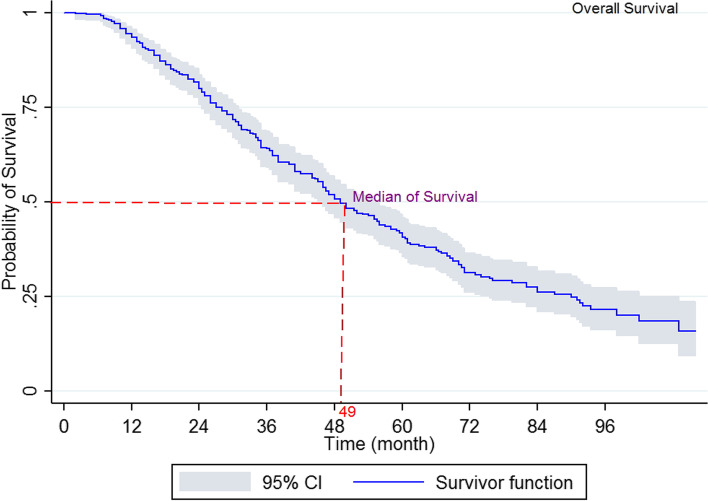
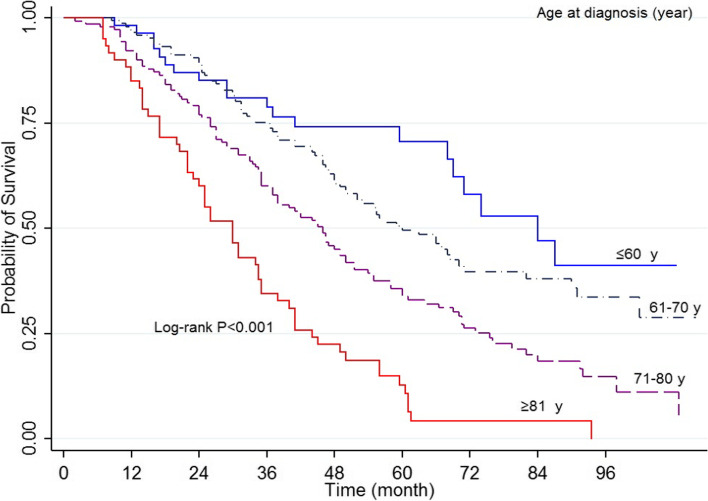
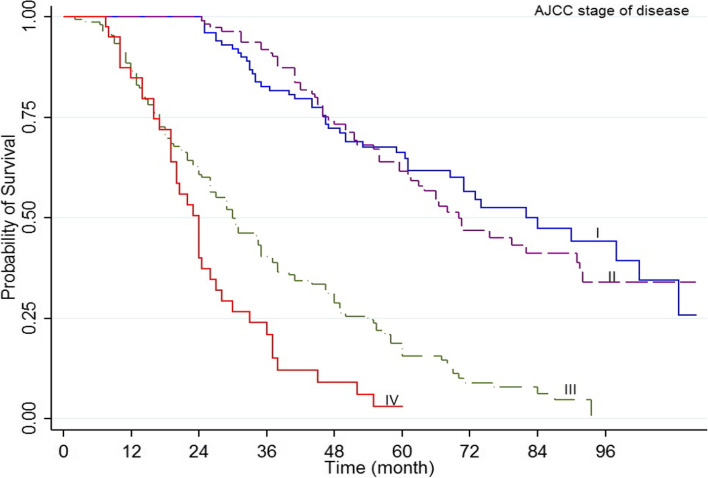
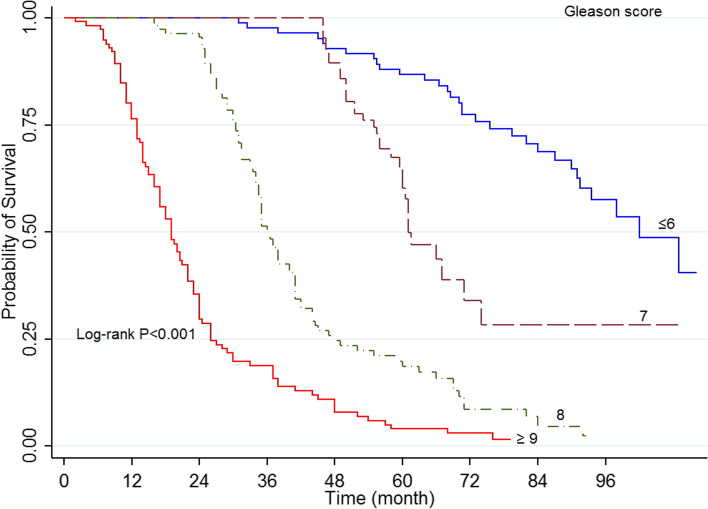
Results: Of 410 patients with PC, 263 (64.1%) died within seven years due to the disease. The 1, 3, and 5 years survival rates were 93, 64.1, and 40.7%, respectively. According to the results of multiple Cox regression, the following factors were significantly related to PC survival: age at diagnosis (≥81-years old) (HR=2.23, 95% CI: 1.23-4.42) and 71-80 years old was (HR=1.26, 95% CI: 1.12-2.31), occupation (employee) (HR=0.42, 95% CI: 0.20-0.87), educational level: academic (HR=0.78, 95% CI: 0.64-0.91), AJCC stage of disease (HR=2.18, 95% CI: 1.9-3.68), Gleason score ≥ 9 (HR=7.12, 95% CI: 5.35-10.28), and Gleason score= 8 (HR=4.16, 95% CI: 2.50-6.93). There was less mortality rate among the patients who had received active care, radical prostatectomy, radiotherapy, combined treatment, and orchiectomy had a lower mortality rate than those who received no treatment (P<0.05).
Conclusions: This study demonstrated that factors such as age at diagnosis, level of education, occupation, AJCC stage of disease, Gleason score, and type of treatments were influential factors in the survival of PC patients in Kurdistan province and needed more attention.
Keywords: Iran; Kurdistan; Population-Based Study; Prostate Cancer; Survival.
© 2021. The Author(s).
Conflict of interest statement
The authors declare that they have no competing interests.
Figures
References
-
- Bray F, Ferlay J, Soerjomataram I, Siegel RL, Torre LA, Jemal A. Global cancer statistics 2018: GLOBOCAN estimates of incidence and mortality worldwide for 36 cancers in 185 countries. CA Cancer J Clin. 2018;68(6):394–424. - PubMed
-
- Culp MB, Soerjomataram I, Efstathiou JA, Bray F, Jemal A. Recent global patterns in prostate cancer incidence and mortality rates. Eur Urol. 2020;77(1):38–52. - PubMed
-
- Mojahedian MM, Toroski M, Keshavarz K, Aghili M, Zeyghami S, Nikfar S. Estimating the cost of illness of prostate cancer in Iran. Clin Ther. 2019;41(1):50–58. - PubMed
MeSH terms
LinkOut - more resources
Full Text Sources
Medical
Miscellaneous
