


Pyroglutamate Aβ cascade as drug target in Alzheimer's disease
- PMID: 34880449
- PMCID: PMC9126800
- DOI: 10.1038/s41380-021-01409-2
Pyroglutamate Aβ cascade as drug target in Alzheimer's disease
Abstract
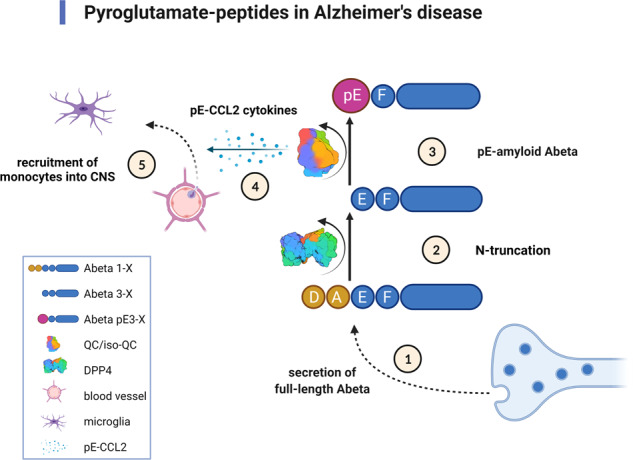
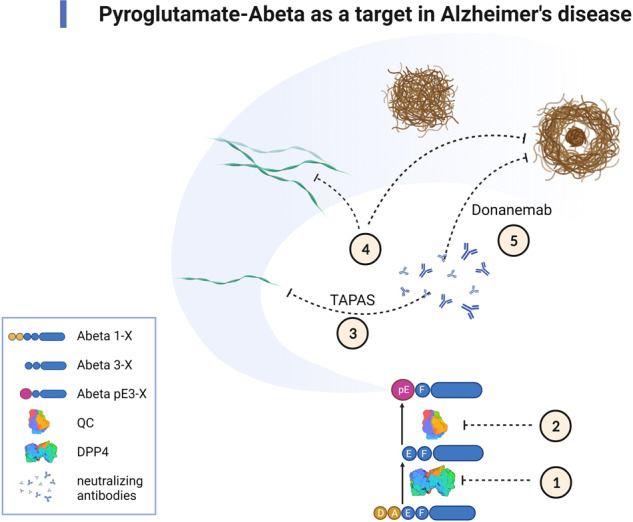
One of the central aims in Alzheimer's disease (AD) research is the identification of clinically relevant drug targets. A plethora of potential molecular targets work very well in preclinical model systems both in vitro and in vivo in AD mouse models. However, the lack of translation into clinical settings in the AD field is a challenging endeavor. Although it is long known that N-terminally truncated and pyroglutamate-modified Abeta (AβpE3) peptides are abundantly present in the brain of AD patients, form stable and soluble low-molecular weight oligomers, and induce neurodegeneration in AD mouse models, their potential as drug target has not been generally accepted in the past. This situation has dramatically changed with the report that passive immunization with donanemab, an AβpE3-specific antibody, cleared aymloid plaques and stabilized cognitive deficits in a group of patients with mild AD in a phase II trial. This review summarizes the current knowledge on the molecular mechanisms of generation of AβpE, its biochemical properties, and the intervention points as a drug target in AD.
© 2021. The Author(s).
Conflict of interest statement
University Medicine Göttingen holds patents on parts of the discussed research.
Figures
References
-
- Hardy JA, Higgins GA. Alzheimer’s disease: the amyloid cascade hypothesis. Science. 1992;256:184–5. - PubMed
-
- Checler F. Processing of the beta-amyloid precursor protein and its regulation in Alzheimer’s disease. J Neurochem. 1995;65:1431–44. - PubMed
-
- Glenner GG, Wong CW. Alzheimer´s disease: initial report of the purification and characterization of a novel cerebrovascular amyloid protein. Biochem Biophys Res Commun. 1984;120:885–90. - PubMed
-
- Mori H, Takio K, Ogawara M, Selkoe DJ. Mass spectrometry of purified amyloid beta protein in Alzheimer’s disease. J Biol Chem. 1992;267:17082–6. - PubMed
Publication types
MeSH terms
Substances
LinkOut - more resources
Full Text Sources
Medical
Miscellaneous
