


Post-acne hyperpigmentation: Evaluation of risk factors and the use of artificial neural network as a predictive classifier
- PMID: 34880967
- PMCID: PMC8611517
- DOI: 10.4081/dr.2021.8223
Post-acne hyperpigmentation: Evaluation of risk factors and the use of artificial neural network as a predictive classifier
Abstract
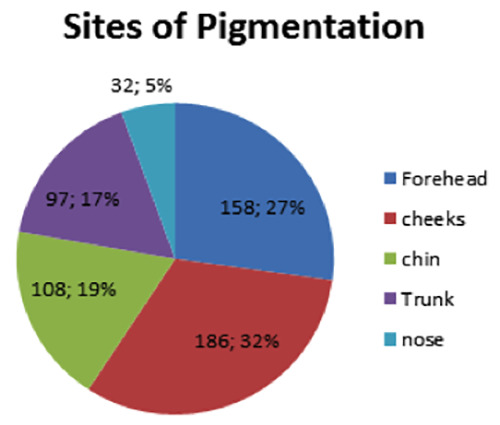
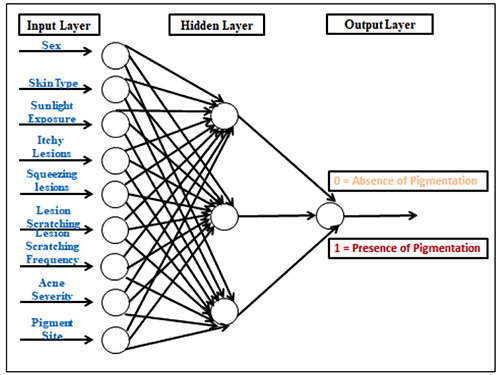
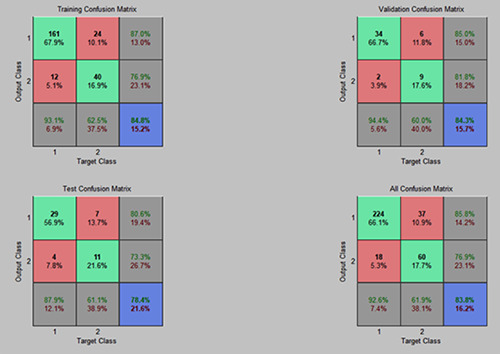
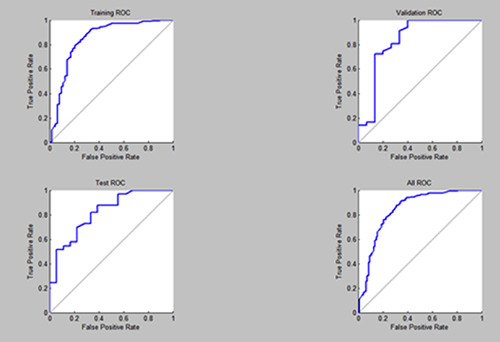
Acne is common among young individuals. People with dark skin have a higher risk for developing pigmentary complications. Inflammation is an important factor in post-acne hyperpigmentation however other factors are also involved in developing this complication however these factors are not well studied. The aim of this study is to identify risk factors involved in post-acne hyperpigmentation. Clinical data related to acne, acne- related hyperpigmentation were collected. Data was analyzed for risk factors associated with acne pigmentation. Artificial neural network was used as predictive disease classifier for the outcome of pigmentation. Majority of patients in this study (339 patients) had dark skin phototypes (3 and 4). Post- acne hyperpigmentation was seen in more than 80% of patients. Females, darker skin color, severe acne, facial sites, and excessive sunlight exposure, squeezing or scratching lesions are important risk factors for post-acne hyperpigmentation. Post-acne hyperpigmentation is multifactorial. Several factors implicated in PAH are modifiable by adequate patient education (lesion trauma, excessive sunlight exposure). The use of ANN was helpful in predicting appearance of post-acne hyperpigmentation based on identified risk factors.
Keywords: Acne; Artificial neural network; Classification; Post-acne hyperpigmentation.
©Copyright: the Author(s).
Conflict of interest statement
Conflict of interest: The authors declare no potential conflict of interest.
Figures
References
-
- Wolkenstein P, Machovcová A, Szepietowski JC, et al. Acne prevalence and associations with lifestyle: a crosssectional online survey of adolescents/young adults in 7 european countries. J Eur Acad Dermatol Venereol. 2018;32:298-306. - PubMed
-
- Perkins AC, Maglione J, Hillebrand GG, et al. Acne vulgaris in women: prevalence across the life span. J Womens Health (Larchmt). 2012;21:223-30. - PubMed
-
- Chua-Ty G, Goh CL, Koh SL. Pattern of skin diseases at the national skin centre (Singapore) from 1989-1990. Int J Dermatol 1992;31:555-9. - PubMed
-
- Abanmi A, Al-Enezi M, Al Hammadi A, et al. Survey of acne-related postinflammatory hyperpigmentation in the middle east. J Dermatolog Treat 2018;14:1-4. - PubMed
-
- Tomita Y, Maeda K, Tagami H. Leukotrienes and thromboxane B2 stimulate normal human melanocytes in vitro: possible inducers of postinflammatory pigmentation. Tohoku J Exp Med 1988;156:303-4. - PubMed
LinkOut - more resources
Full Text Sources
