


Use of halo fixation therapy for traumatic cranio-cervical instability in children: a systematic review
- PMID: 34881392
- PMCID: PMC9532283
- DOI: 10.1007/s00068-021-01849-z
Use of halo fixation therapy for traumatic cranio-cervical instability in children: a systematic review
Abstract
Purpose: Traumatic cranio-cervical instability in childhood is rare and constitutes a challenge for the treating surgeon. The aim of therapy is to restore cervical stability without limiting the range of motion. The goal of this systematic review was to find out whether, over the last 10 years, halo fixation (HF) could still be considered a successful treatment option without major risks or complications.
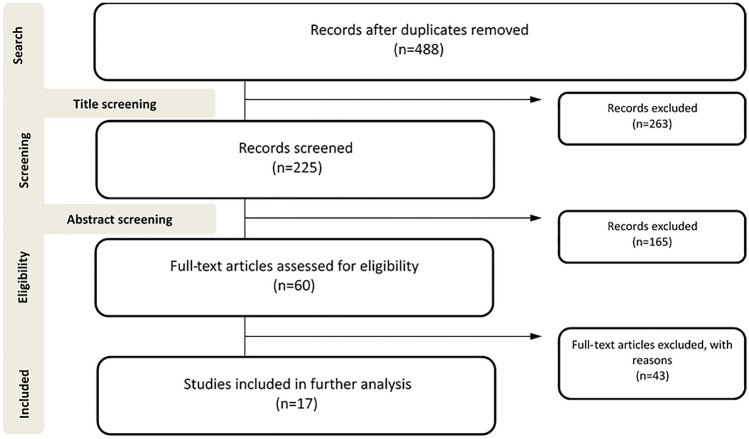
Methods: We analyzed studies describing the use of HF in traumatic injuries of the cranio-cervical junction in children under the age of 17. Searches were performed in PubMed, MEDLINE and Embase databases for the years from 2010 to 2020. The general success rate, the success rate related to underlying pathologies, and complication rates were evaluated.
Results: The main indications for HF range from pre-surgical correction to postoperative fusion support. C2 is the most frequently injured vertebra in children. The overall success rate of HF was very high. Evaluation according to the underlying pathology showed that, except for atlanto-occipital dislocation, HF generates high fusion rates among different patient cohorts, mainly in C2 vertebra injuries and atlantoaxial rotatory subluxation. Only minor complications were reported, such as pin infections.
Conclusion: The current data show that, when used according to the appropriate indication, HF is an effective conservative treatment option for cranio-cervical instability, associated with only minor complications.
Keywords: Halo fixation; Pediatric; Spine surgery; Traumatic cranio-cervical instability.
© 2021. The Author(s).
Conflict of interest statement
The authors report no conflicts of interest. The authors alone are responsible for the content and writing of this work.
References
-
- Anderson RC, Ragel BT, Mocco J, Bohman LE, Brockmeyer DL. Selection of a rigid internal fixation construct for stabilization at the craniovertebral junction in pediatric patients. J Neurosurg. 2007;107:36–42. - PubMed
Publication types
MeSH terms
LinkOut - more resources
Full Text Sources
Medical
Research Materials
Miscellaneous
