


Clinical Spectrum of Schistosomiasis: An Update
- PMID: 34884223
- PMCID: PMC8672275
- DOI: 10.3390/jcm10235521
Clinical Spectrum of Schistosomiasis: An Update
Abstract
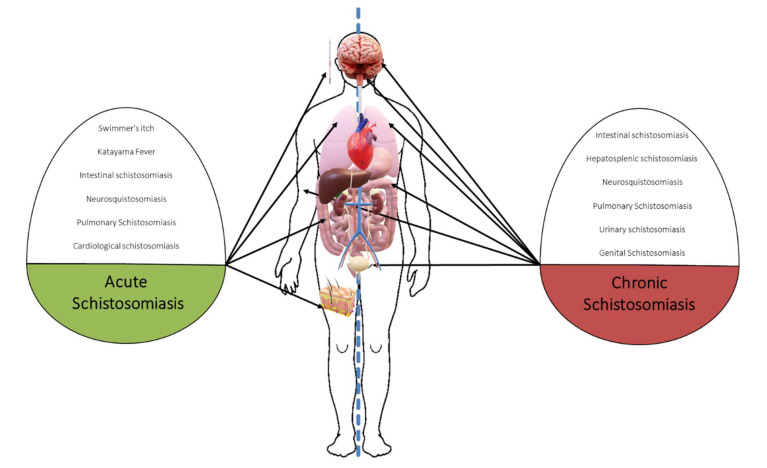
Schistosomiasis is a helminthic infection and one of the neglected tropical diseases (NTDs). It is caused by blood flukes of the genus Schistosoma. It is an important public health problem, particularly in poverty-stricken areas, especially those within the tropics and subtropics. It is estimated that at least 236 million people worldwide are infected, 90% of them in sub-Saharan Africa, and that this disease causes approximately 300,000 deaths annually. The clinical manifestations are varied and affect practically all organs. There are substantial differences in the clinical presentation, depending on the phase and clinical form of schistosomiasis in which it occurs. Schistosomiasis can remain undiagnosed for a long period of time, with secondary clinical lesion. Here, we review the clinical profile of schistosomiasis. This information may aid in the development of more efficacious treatments and improved disease prognosis.
Keywords: Katayama syndrome; acute schistosomiasis; cercarial dermatitis; chronic schistosomiasis; clinical manifestations; imported diseases; schistosomiasis.
Conflict of interest statement
The authors declare no conflict of interest.
Figures

References
-
- Gautret P., Cramer J.P., Field V., Caumes E., Jensenius M., Gkrania-Klotsas E., de Vries P.J., Grobusch M.P., Lopez-Velez R., Castelli F., et al. Infectious diseases among travellers and migrants in Europe, EuroTravNet 2010. Eurosurveillance. 2012;17:20205. doi: 10.2807/ese.17.26.20205-en. - DOI - PubMed
Publication types
LinkOut - more resources
Full Text Sources
