Review
. 2021 Nov 23;22(23):12641.
doi: 10.3390/ijms222312641.

Skin Aging, Cellular Senescence and Natural Polyphenols

Affiliations
Review

Skin Aging, Cellular Senescence and Natural Polyphenols

Erika Csekes et al. Int J Mol Sci. .

Abstract

The skin, being the barrier organ of the body, is constitutively exposed to various stimuli impacting its morphology and function. Senescent cells have been found to accumulate with age and may contribute to age-related skin changes and pathologies. Natural polyphenols exert many health benefits, including ameliorative effects on skin aging. By affecting molecular pathways of senescence, polyphenols are able to prevent or delay the senescence formation and, consequently, avoid or ameliorate aging and age-associated pathologies of the skin. This review aims to provide an overview of the current state of knowledge in skin aging and cellular senescence, and to summarize the recent in vitro studies related to the anti-senescent mechanisms of natural polyphenols carried out on keratinocytes, melanocytes and fibroblasts. Aged skin in the context of the COVID-19 pandemic will be also discussed.

Keywords: anti-senescence; natural polyphenols; senescence; skin aging.


Conflict of interest statement

The authors declare no conflict of interest.

Figures
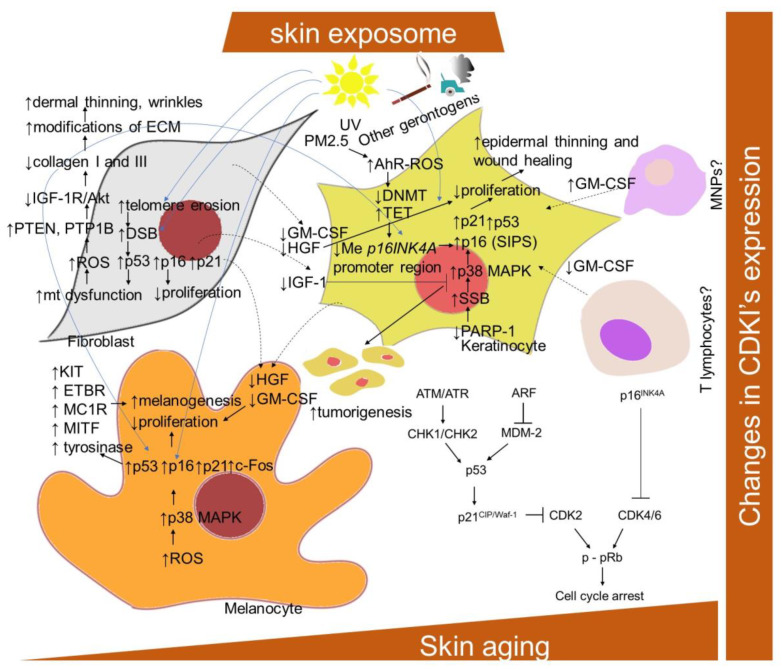
Figure 1
Figure 1
Schematic representation of aging- and senescence-related changes associated with CDKIs expression. AhR-ROS, aryl hydrocarbon receptor and ROS-mediated pathway; Akt, protein kinase B; ATM, protein kinase ataxia-telangiectasia mutated; ATR, ATM and Rad3-related protein kinase; ARF, alternative reading frame protein; CDK, cyclin-dependent kinase; c-Fos, proto-oncogene; CDKI, cyclin-dependent kinase inhibitor; DSB, DNA double-strand break; DNMT, DNA methyltransferase; ECM, extracellular matrix; ETBR, endothelin–endothelin receptor B; GM-CSF, granulocyte–macrophage colony-stimulating factor; HGF, hepatocyte growth factor; IGF-1R, insulin-like growth factor-1 receptor; mt, mitochondria; KIT, transmembrane protein with tyrosine kinase activity; MAPK, mitogen-activated protein kinase; MDM-2; mouse double minute 2 homolog; MITF, microphthalmia-associated transcription factor; MNPs, mononuclear phagocytes; NRAS and BRAF, proto-oncogenes; PARP-1, poly-(ADP-ribose) polymerase 1; PTEN, phosphatase and tensin homolog; p-pRb, phosphorylated retinoblastoma protein; PTP1B, protein tyrosine phosphatase 1B; ROS, reactive oxygen species; PM2.5, particular matter 2.5; SSB, DNA single-strand break; TET, ten–eleven translocation enzyme.
Figure 2
Figure 2
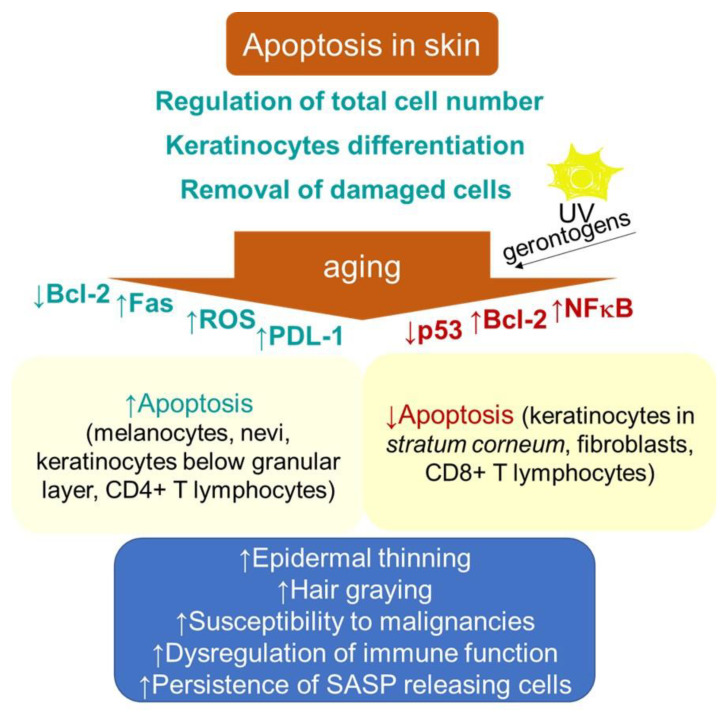
Schematic representation of aging- and senescence-related changes in skin associated with apoptosis. Bcl-2, B cell lymphoma 2; Fas, cell surface death receptor; NF-κB, nuclear factor kappa-light-chain-enhancer of activated B cells; PDL-1, programmed death-ligand 1; ROS, reactive oxygen species; SASP, senescence-associated secretory phenotype.
Figure 3
Figure 3
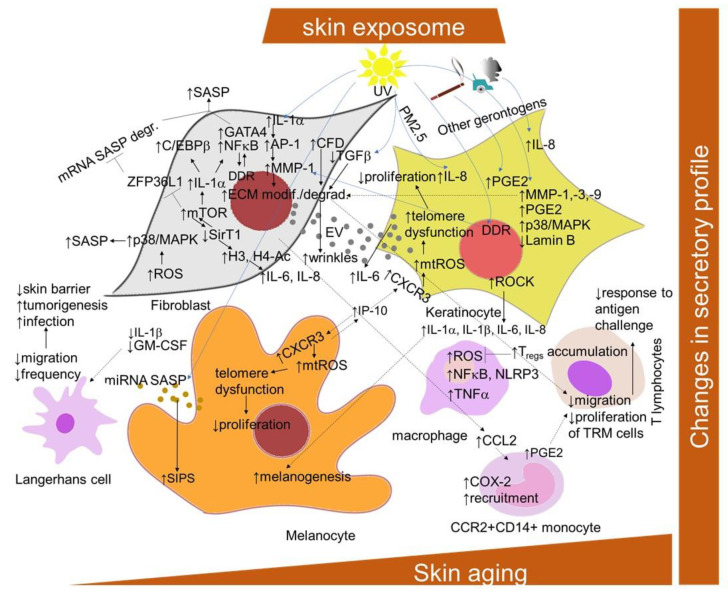
Scheme of the cellular and signaling crosstalk related to age- and senescence-related changes in SASP promotion in the skin. AP-1, activator protein-1; CXCR2 and 3, C-X-C motif chemokine receptor 2 and 3; CCL2, C-C motif chemokine ligand 2; C/EBPb, CCAAT/enhancer-binding protein beta; COX-2, cyclooxygenase 2; DDR, DNA damage response; ECM, extracellular matrix; GATA4, transcription factors GATA binding protein 4; GM-CSF, granulocyte–macrophage colony-stimulating factor; H3, histone 3; H4-Ac, acetylated histone 4; HDAC2 and 7, histone deacetylase 2 and 7; mTOR, mammalian target of rapamycin NF-κB, nuclear factor kappa-light-chain-enhancer of activated B cells; IL-6 and -8, interleukin 6 and 8; IP-10, interferon-gamma-induced protein 10; ZFP36L1, ZFP36 ring finger protein like 1; MAPK, mitogen-activated protein kinase; MMPs, matrix metalloproteinases; mtROS, mitochondrial ROS; ROCK, Rho-associated protein kinase; IGFBP7, insulin-like growth factor binding protein 7; MMPs, matrix metalloproteinases; NLRP3, NLR family pyrin domain containing 3 PGE2, prostaglandin E; PMs, particular matters; SASP, senescence-associated secretory phenotype; SirT1, silent mating type information regulation 2 homolog; SIPS, stress-induced premature senescence; TNF-α, tumor-necrosis factor alpha; TRM, tissue-resident memory T cells.
Figure 4
Figure 4
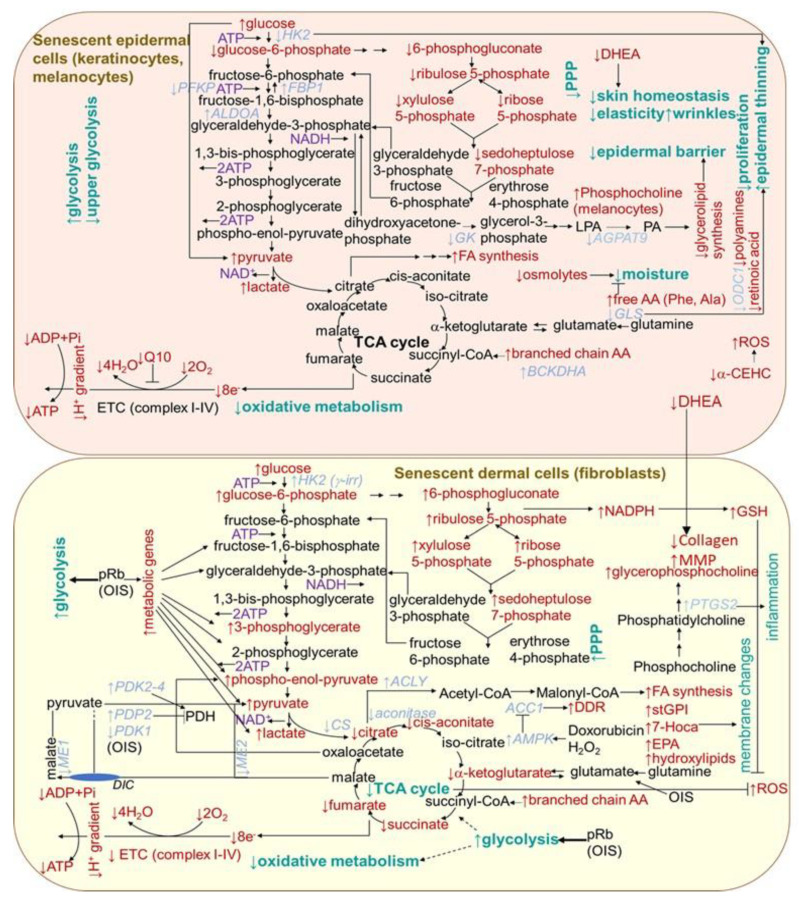
Scheme of aging- and senescence-related changes in metabolic pathways in epidermal and dermal cells. AA, amino acid; ACC1, acetyl-CoA carboxylase; ACLY, ATP citrate lyase; AGPAT9, glycerol-3-phosphate acyltransferase 3; ALDOA, aldolase A; AMPK, 5′ AMP-activated protein kinase; BCKDHA, branched chain keto acid dehydrogenase; α-CEHC, α-carboxyethyl hydroxychroman; CS, citrate synthase; DDR, DNA damage response; DHE, dehydroepiandrosterone; DIC, dicarboxylate carrier; EPA, eicosapentaenoate; ETC, electron transport chain; FA, fatty acid; FBP1, fructose bisphosphatase 1; GLS, glutaminase; GK, glucokinase; HK2, hexokinase 2; 7-Hoca, 7-alpha-hydroxy-3-oxo-4-cholestenoate; LPA, lysophosphatidic acid; ME, malic enzyme; MMP, matrix metalloproteinases; ODC, ornithine decarboxylase 1; OIS, oncogene-induced senescence; PA, phosphatidic acid; PDH, pyruvate dehydrogenase; PDK, pyruvate dehydrogenase kinase; PDP2, pyruvate dehyrogenase phosphatase 2; PFK, phosphofructokinase; PPP, pentose phosphate pathway; pRb, retinoblastoma protein; PTGS2, prostaglandin-endoperoxide synthase 2; stGPI, 1-stearoylglycerophosphoinositol; TCA, tricarboxylic acid cycle.
Figure 5
Figure 5
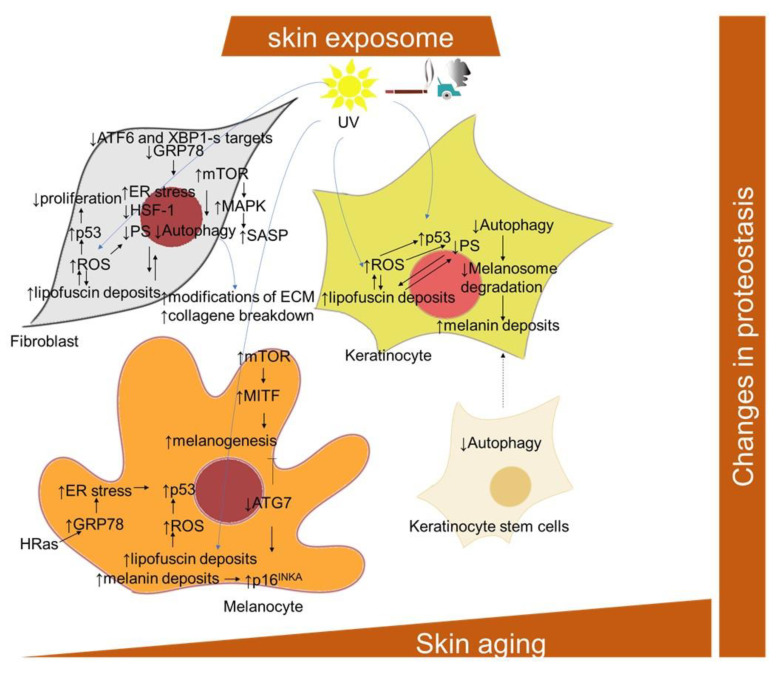
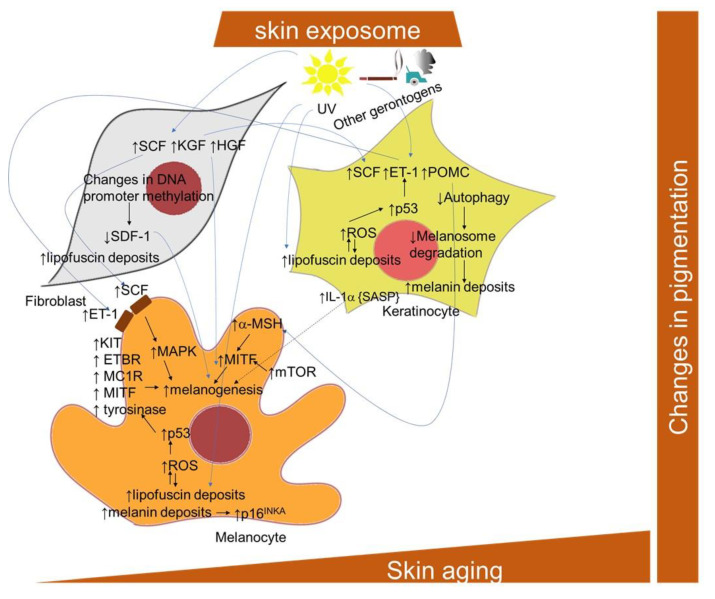
Scheme of the cellular and signaling crosstalk related to age- and senescence-related changes in protein homeostasis in the skin. ATF6, activating transcription factor 6; ATG7, autophagy related 7; GRP78, the 78-kDa glucose-regulated protein; MITF, microphthalmia-associated transcription factor; MAPK, mitogen-activated protein kinase; mTOR, mammalian target of rapamycin; α-MSH, alpha melanocyte stimulating factor; POMC, pro-opiomelanocortin; SDF-1, stromal cell-derived factor-1; XBP1, X-box binding protein 1.
Figure 6
Figure 6
Scheme of the cellular and signaling crosstalk related to age- and senescence-related pigmentation changes in the skin. ET-1, endothelin; ETBR, endothelin–endothelin receptor B; HGF, hepatocyte growth factor; KGF, keratinocyte growth factor; KIT, transmembrane protein with tyrosine kinase activity; MC1R, melanocortin 1 receptor; MITF, microphthalmia-associated transcription factor; a-MSH, alpha melanocyte stimulating factor; POMC, pro-opiomelanocortin; SCF, stem cell factor; SDF-1, stromal cell-derived factor-1.
Figure 7
Figure 7
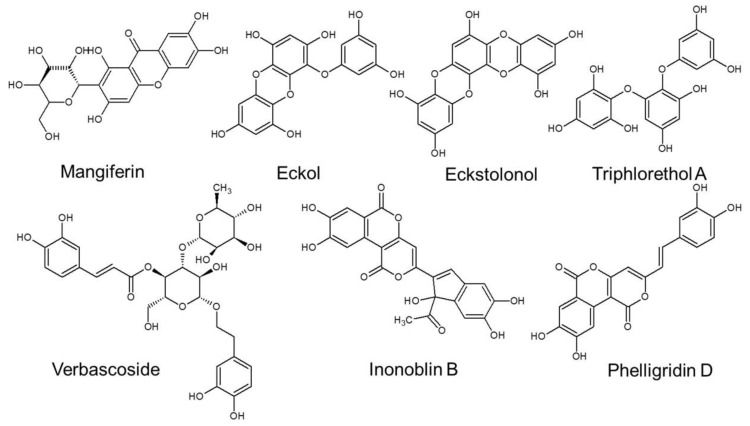
The structures of the selected unique polyphenols exerting protective potential against skin senescence and aging.
Figure 8
Figure 8
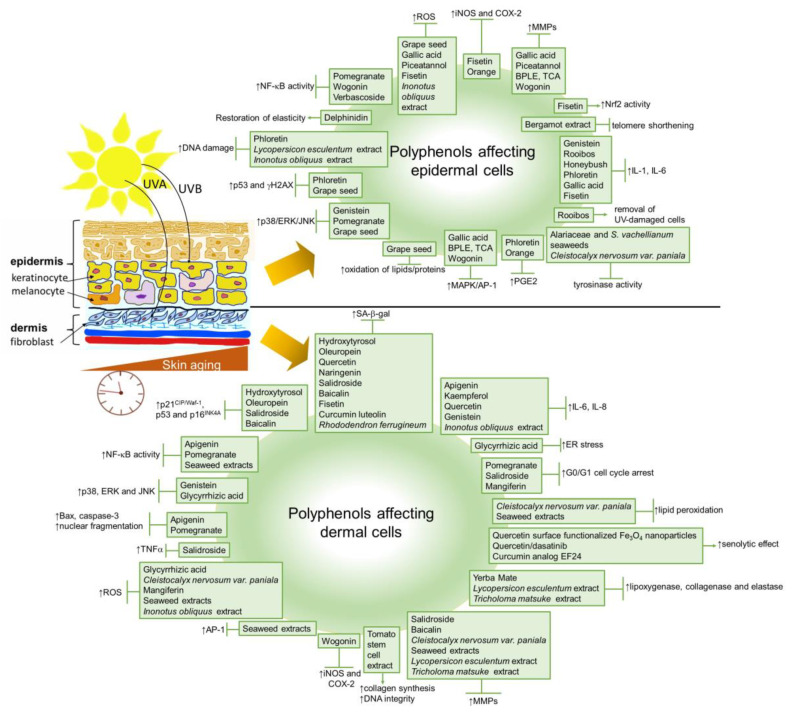
Schematic representation of polyphenols targeting different components/processes of cellular senescence in the skin. AP-1, activator protein 1; BPLE, brown pine leaf extract; COX-2, cyclooxygenase 2; ERK, extracellular-signal-regulated kinase; γ-H2AX, H2AX variant histone; IL-6 and 8, interleukin 6 and 8; JNK, c-Jun N-terminal kinase; MAPK, mitogen-activated protein kinase; MMPs, matrix metalloproteases; NF-κB, nuclear factor kappa B; iNOS, inducible nitric oxide synthase; Nrf2, nuclear factor erythroid 2-related factor 2; SA-β-Gal, senescence associated-beta-galactosidase; PGE2, prostaglandin 2; TNF-α, tumor necrosis factor alpha; TCA, trans-communic acid.

References

    1. Höhn A., Weber D., Jung T., Ott C., Hugo M., Kochlik B., Kehm R., König J., Grune T., Castro J.P. Happily (n)ever after: Aging in the context of oxidative stress, proteostasis loss and cellular senescence. Redox Biol. 2017;11:482–501. doi: 10.1016/j.redox.2016.12.001. - DOI - PMC - PubMed
    1. Hayflick L., Moorhead P.S. The serial cultivation of human diploid cell strains. Exp. Cell Res. 1961;25:585–621. doi: 10.1016/0014-4827(61)90192-6. - DOI - PubMed
    1. Campisi J. Aging, Cellular Senescence, and Cancer. Annu. Rev. Physiol. 2013;75:685–705. doi: 10.1146/annurev-physiol-030212-183653. - DOI - PMC - PubMed
    1. Childs B.G., Baker D.J., Kirkland J.L., Campisi J., Deursen J.M. Senescence and apoptosis: Dueling or complementary cell fates? EMBO Rep. 2014;15:1139–1153. doi: 10.15252/embr.201439245. - DOI - PMC - PubMed
    1. Campisi J., d’Adda di Fagagna F. Cellular senescence: When bad things happen to good cells. Nat. Rev. Mol. Cell Biol. 2007;8:729–740. doi: 10.1038/nrm2233. - DOI - PubMed