


Measures of anxiety, depression and stress in the antenatal and perinatal period following a stillbirth or neonatal death: a multicentre cohort study
- PMID: 34886815
- PMCID: PMC8662876
- DOI: 10.1186/s12884-021-04289-0
Measures of anxiety, depression and stress in the antenatal and perinatal period following a stillbirth or neonatal death: a multicentre cohort study
Abstract
Background: The grief associated with the death of a baby is enduring, however most women embark on another pregnancy, many in less than a year following their loss. Symptoms of anxiety and depression are reported to be increased in pregnancies after perinatal death, although effect on maternal stress is less clear. Variation between individual studies may result from differences in gestation at sampling, the questionnaire used and the type of antecedent perinatal death. We aimed to describe quantitative measures of anxiety, depression, stress and quality of life at different timepoints in pregnancies after perinatal death and in the early postnatal period.
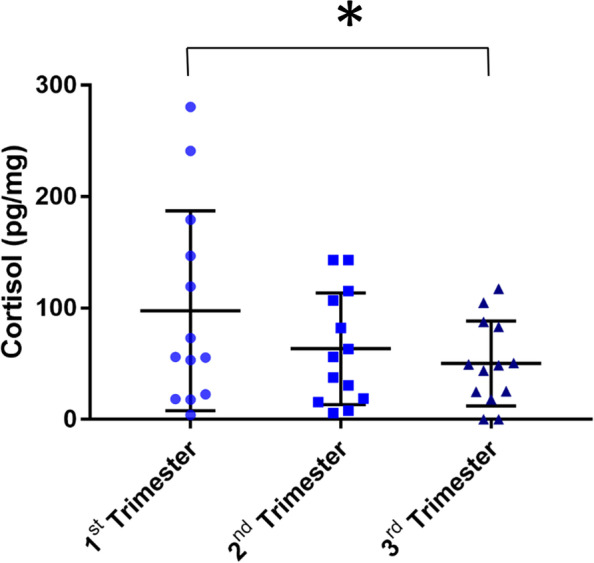
Methods: Women recruited from three sites in the North-West of England. Women were asked to participate if a previous pregnancy had ended in a perinatal death. Participants completed validated measures of psychological state (Cambridge Worry Score, Edinburgh Postnatal Depression Score (EPDS), Generalized Anxiety Disorder 7-item score) and health status (EQ-5D-5L™ and EQ5D-Visual Analogue Scale) at three time points, approximately 15 weeks' and 32 weeks' gestation and 6 weeks postnatally. A sample of hair was taken at approximately 36 weeks' gestation for measurement of hair cortisol in a subgroup of women. The hair sample was divided into samples from each trimester and cortisol measured by ELISA.
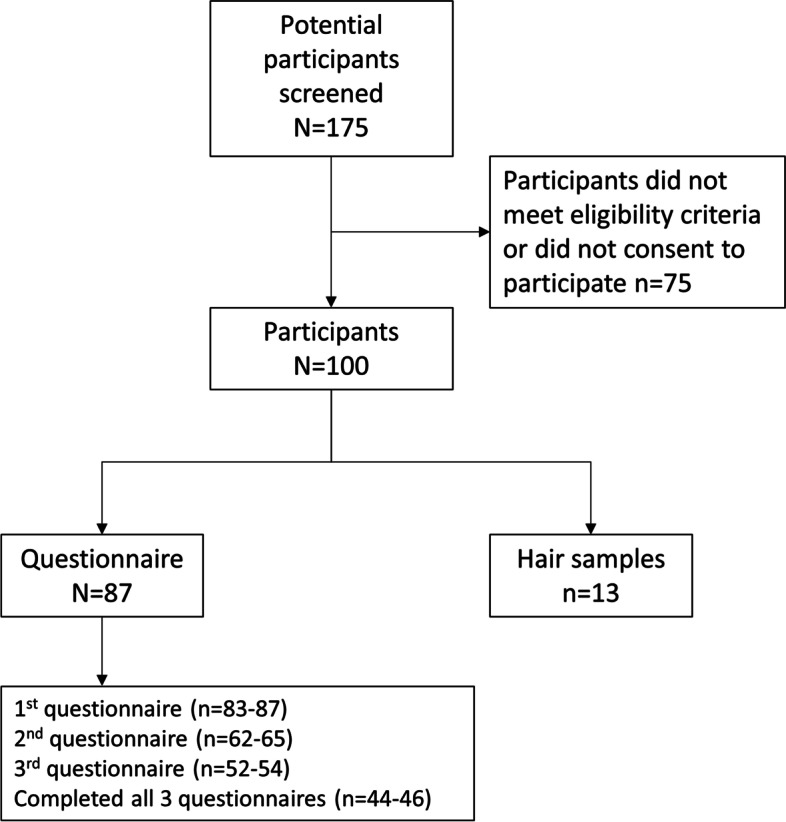
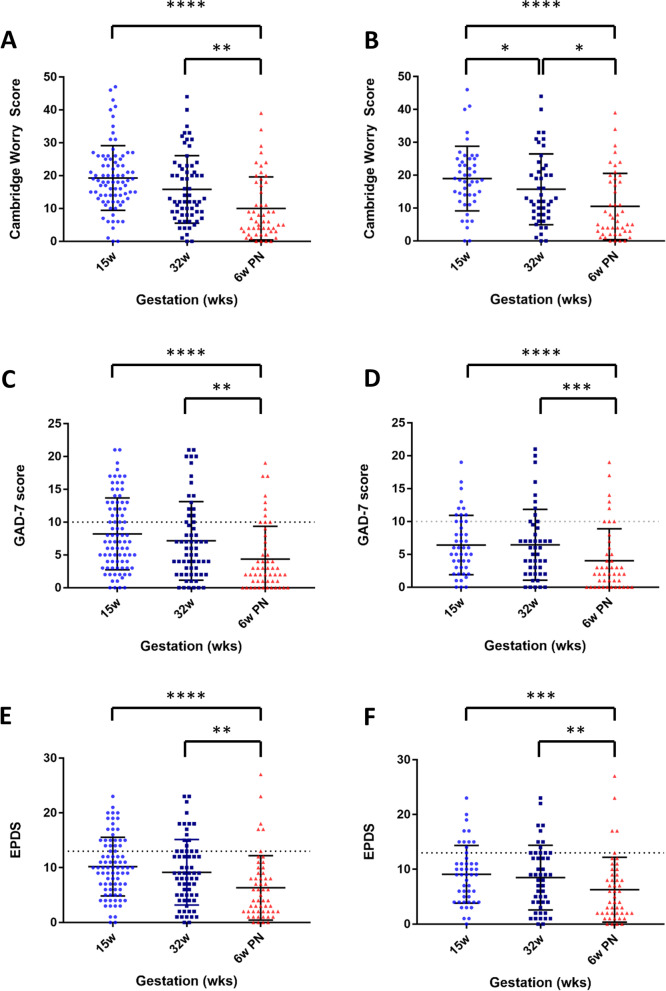
Results: In total 112 women participated in the study. Measures of anxiety and depressive symptoms decreased from the highest levels at 15 weeks' gestation to 6-weeks postnatal (for example mean GAD-7: 15 weeks 8.2 ± 5.5, 6 weeks postnatal 4.4 ± 5.0, p<0.001). Hair cortisol levels fell in a similar profile to anxiety and depression symptoms (p<0.05). In contrast, the median EQ-5D index, measuring health status was 0.768 at 15 weeks' gestation (Interquartile range (IQR) 0.684-0.879), 0.696 at 32 weeks' (IQR 0.637-0.768) and 0.89 (0.760-1.00) at 6 weeks postnatal. There was a negative relationship between EPDS and perceived health status.
Conclusions: This study demonstrated heightened anxiety and depressive symptoms and elevated cortisol levels in women in pregnancies after a stillbirth or neonatal death which decrease as pregnancy progresses. Further studies are needed to determine optimal care for women to address these negative psychological consequences.
Keywords: Anxiety; Depression; Neonatal Death; Perceived Stress; Perinatal Death; Pregnancy after loss; Stillbirth; Subsequent Pregnancy.
© 2021. The Author(s).
Conflict of interest statement
The authors declare that they have no competing interests
Figures

References
-
- Draper ES, Gallimore ID, Kurinczuk JJ, Smith PW, Boby T, Smith LK, Manktelow BN, on behalf of the MBRRACE-UK collaboration: MBRRACE-UK Perinatal Mortality Surveillance Report, UK Perinatal Deaths for Births from January to December 2016 In. Leicester:: The Infant Mortality and Morbidity Studies, Department of Health Sciences, University of Leicester.; 2018.
Publication types
MeSH terms
Substances
LinkOut - more resources
Full Text Sources
Medical
