


Plant lectins as prospective antiviral biomolecules in the search for COVID-19 eradication strategies
- PMID: 34891122
- PMCID: PMC8648558
- DOI: 10.1016/j.biopha.2021.112507
Plant lectins as prospective antiviral biomolecules in the search for COVID-19 eradication strategies
Abstract
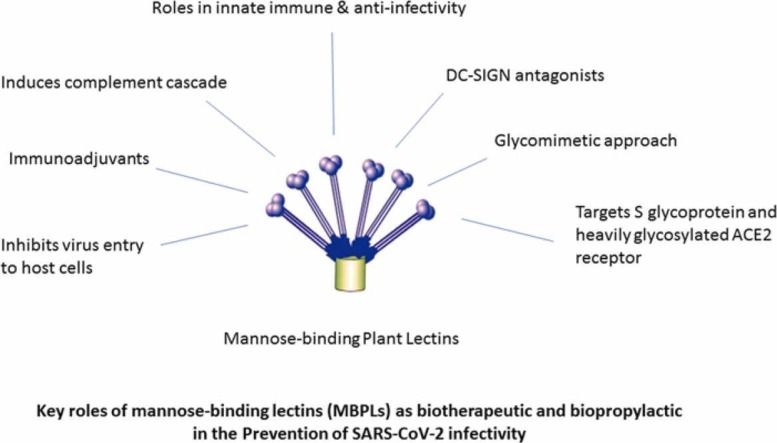
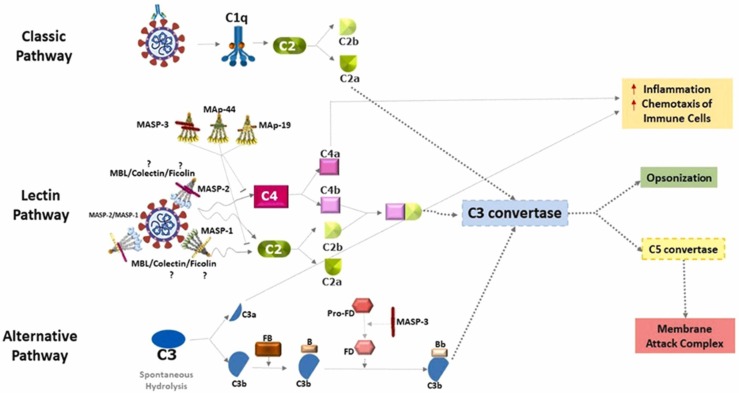
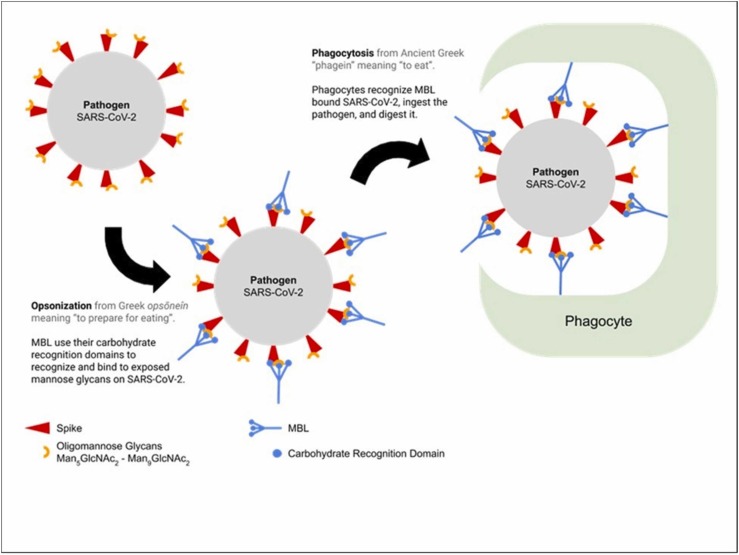
Lectins or clusters of carbohydrate-binding proteins of non-immune origin are distributed chiefly in the Plantae. Lectins have potent anti-infectivity properties for several RNA viruses including SARS-CoV-2. The primary purpose of this review is to review the ability of lectins mediated potential biotherapeutic and bioprophylactic strategy against coronavirus causing COVID-19. Lectins have binding affinity to the glycans of SARS-COV-2 Spike glycoprotein that has N-glycosylation sites. Apart from this, the complement lectin pathway is a "first line host defense" against the viral infection that is activated by mannose-binding lectins. Mannose-binding lectins deficiency in serum influences innate immunity of the host and facilitates infectious diseases including COVID-19. Our accumulated evidence obtained from scientific databases particularly PubMed and Google Scholar databases indicate that mannose-specific/mannose-binding lectins (MBL) have potent efficacies like anti-infectivity, complement cascade induction, immunoadjuvants, DC-SIGN antagonists, or glycomimetic approach, which can prove useful in the strategy of COVID-19 combat along with the glycobiological aspects of SARS-CoV-2 infections and antiviral immunity. For example, plant-derived mannose-specific lectins BanLac, FRIL, Lentil, and GRFT from red algae can inhibit and neutralize SARS-CoV-2 infectivity, as confirmed with in-vitro, in-vivo, and in-silico assessments. Furthermore, Bangladesh has a noteworthy resource of antiviral medicinal plants as well as plant lectins. Intensifying research on the antiviral plant lectins, adopting a glyco-biotechnological approach, and with deeper insights into the "glycovirological" aspects may result in the designing of alternative and potent blueprints against the 21st century's biological pandemic of SARS-CoV-2 causing COVID-19.
Keywords: Antiviral plant lectins; Glycobiotechnology; Glycoprotein; Glycosylation; Mannose-specific/mannose-binding lectins; SARS-CoV-2 glycobiology.
Copyright © 2021 The Authors. Published by Elsevier Masson SAS.. All rights reserved.
Conflict of interest statement
The authors declare have no conflict of interest.
Figures
References
-
- Van Damme E.J.M. In: Lectins: Methods and Protocols. Hirabayashi J., editor. Vol. 1200. Humana Press; New York, NY: 2014. History of plant lectin research; pp. 3–13. (Methods in Molecular Biology). - DOI
-
- Kabir S.R., Hasan I., Zubair A. In: Recent Progress in Medicinal Plants-Nutraceuticals and Functional Foods. Govil J.N., editor. Vol. 42. Studium Press LLC; Houston, Texas, USA: 2014. Lectins from medicinal plants: characterizations and biological properties; pp. 339–356.
Publication types
MeSH terms
Substances
LinkOut - more resources
Full Text Sources
Medical
Miscellaneous
