


Diabetes-Specific Dementia: A Structured Literature Review of Cognitive Assessment Methods
- PMID: 34893425
- PMCID: PMC8936078
- DOI: 10.1053/j.jfas.2021.11.003
Diabetes-Specific Dementia: A Structured Literature Review of Cognitive Assessment Methods
Abstract
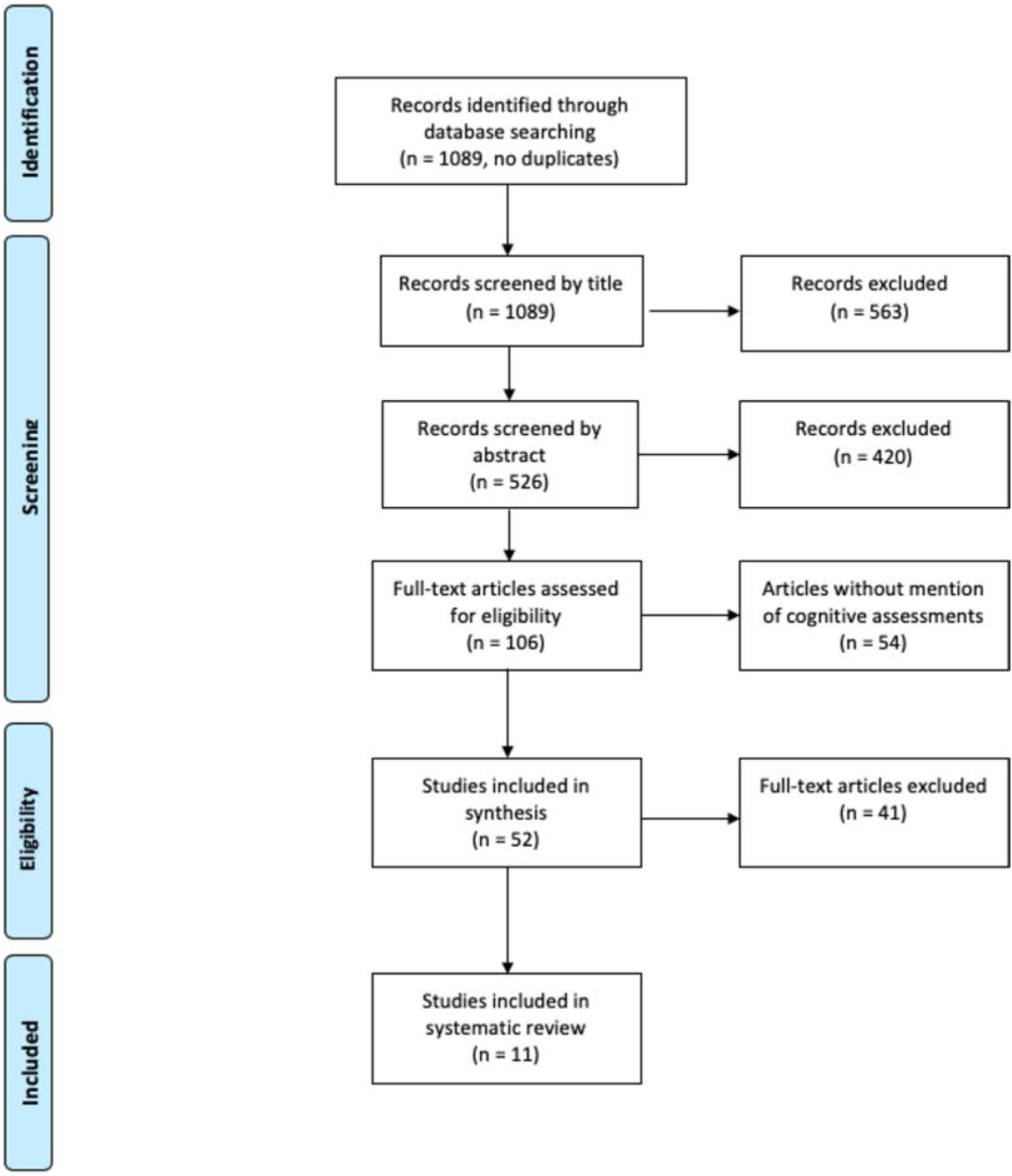
Diabetes mellitus is a known risk factor for the development of multiple subtypes of dementia and mild cognitive impairment. Recent research identifies a cause-specific diabetes-related dementia with a unique set of characteristics. Currently, there is no standard cognitive assessment battery recommended to specifically assess dementia that is a direct consequence of chronic diabetes, and some evaluations have been used for decades with minimal revisions, regardless of appropriateness. We performed a systematic review of the dementia/cognition evaluation methods most commonly used in the literature for assessing diabetic patients and identified which cognitive domains are typically assessed in this setting, and whether cognitive changes were more reflective of a vascular pathology, Alzheimer's pathology, or something else entirely. Search results yielded 1089 articles. After screening for appropriateness, a total of 11 full-text articles were assessed. In general, subjects in the reviewed studies were assessed using a variety of testing methods, examining different combinations of cognitive domains. A standard, clear definition of which cognitive domains are the most important to assess in diabetic patients is needed in order to determine what combination of assessment tools are most pertinent. Given the growing subset of the US population, careful reconsideration of cognitive assessment methods is needed to create self-care plans that take into account a specific collection of cognitive challenges for those with diabetes.
Keywords: cognitive assessment screening instrument; cognitive decline; cognitive impairments; diabetes mellitus; diabetes-related complications.
Copyright © 2021 the American College of Foot and Ankle Surgeons. Published by Elsevier Inc. All rights reserved.
Conflict of interest statement
Figures
References
-
- Cheng G, Huang C, Deng H, Wang H. Diabetes as a risk factor for dementia and mild cognitive impairment: a meta-analysis of longitudinal studies. Intern Med J 2012;42:484–491. - PubMed
-
- Ganmore I, Beeri MS. The chicken or the egg? Does glycaemic control predict cognitive function or the other way around? Diabetologia 2018;61:1913–1917. - PubMed
-
- Natovich R, Kushnir T, Harman-Boehm I, Margalit D, Siev-Ner I, Tsalichin D, Volkov I, Giveon S, Rubin-Asher D, Cukierman-Yaffe T. Cognitive dysfunction: part and parcel of the diabetic foot. Diabetes Care 2016;39:1202–1207. - PubMed
Publication types
MeSH terms
Grants and funding
LinkOut - more resources
Full Text Sources
Medical
