


Spatial Neglect Subtypes, Definitions and Assessment Tools: A Scoping Review
- PMID: 34899565
- PMCID: PMC8653914
- DOI: 10.3389/fneur.2021.742365
Spatial Neglect Subtypes, Definitions and Assessment Tools: A Scoping Review
Abstract
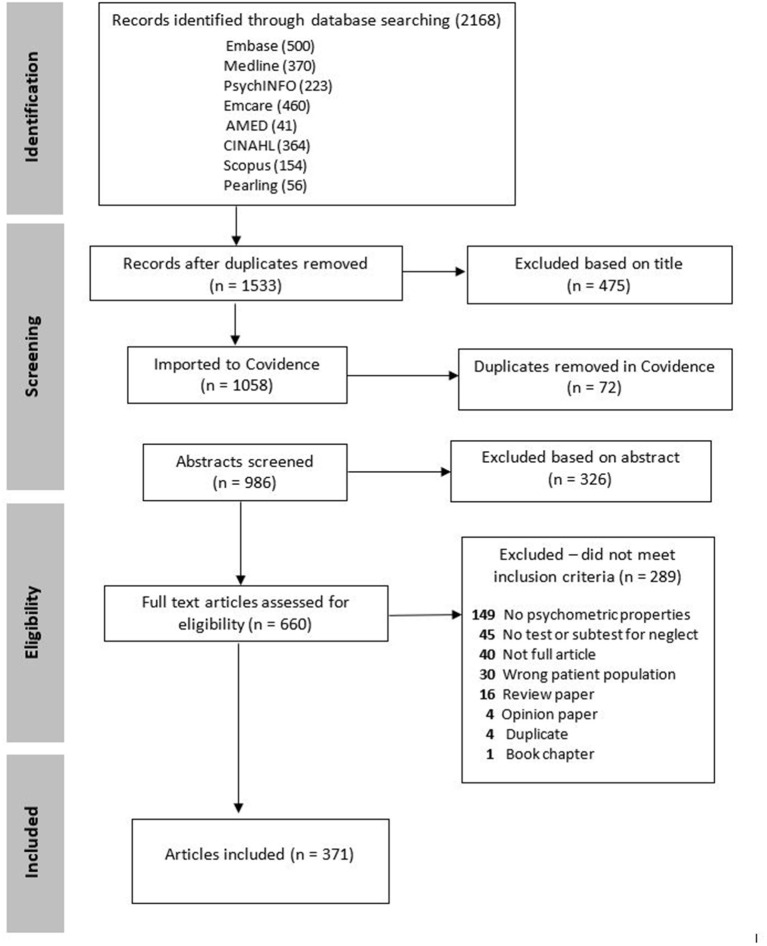
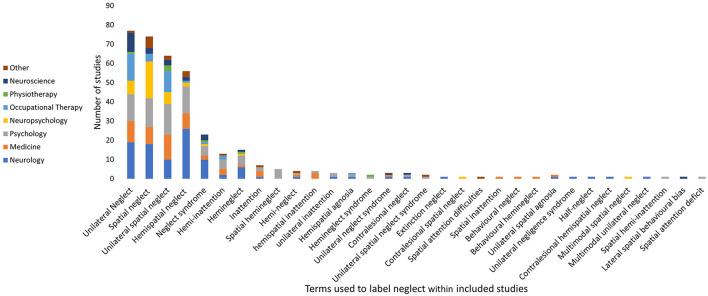
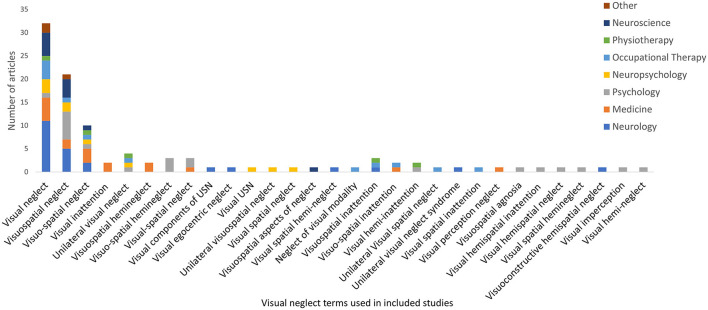
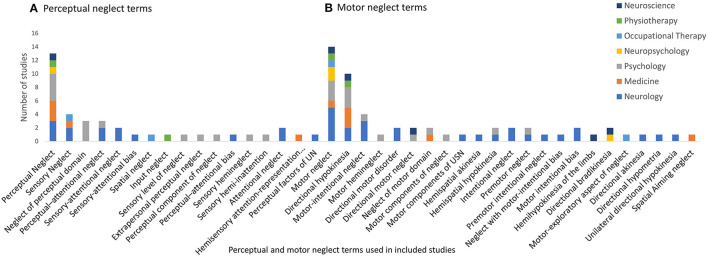
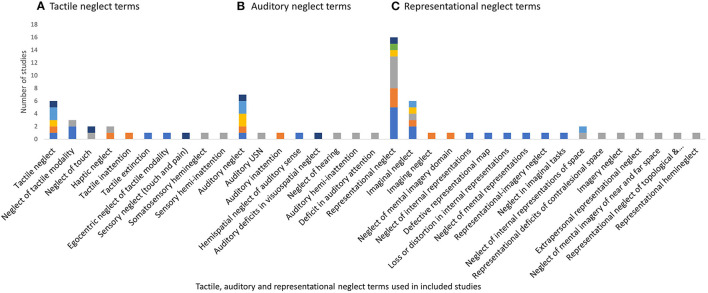
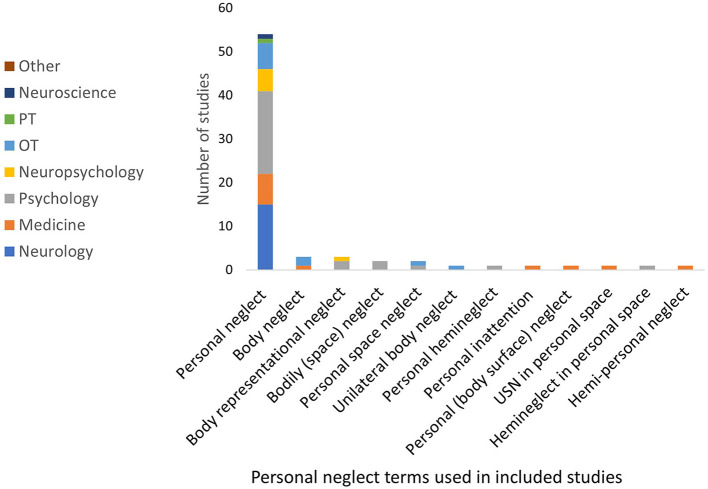
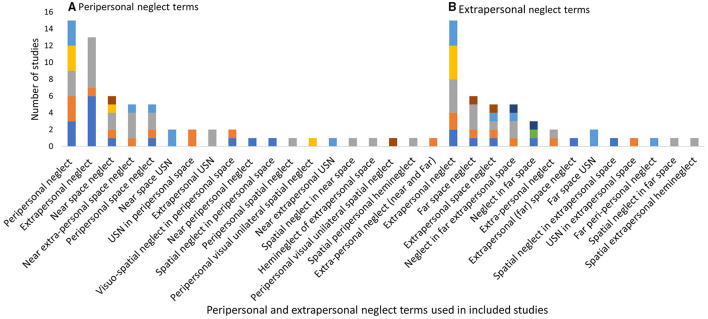
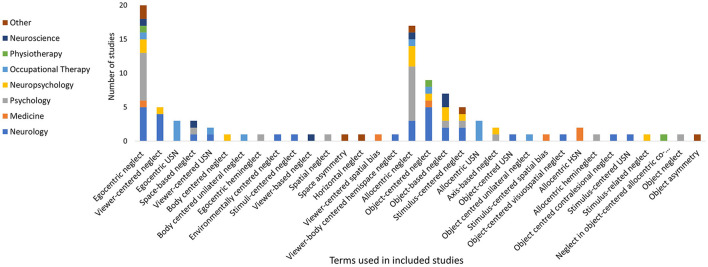
Objective: The objective of this scoping review was to capture the reported definitions for the subtypes of neglect post stroke and map the range of assessment tools employed for each neglect subtype. Methods: EMBASE, Emcare, Medline, and psychINFO were searched from database inception. Searching included all allied terms and mesh headings for stroke, spatial neglect, measurement, screening tools, psychometric properties. Two reviewers independently screened studies for inclusion. Primary studies with documented protocols of a spatial neglect tool for adults post stroke, with some aspect of validity or reliability were included. Two reviewers independently reviewed the documented protocols of each tool to determine the underlying subtypes and disagreements were resolved through discussion. Results: There were 371 articles included with 292 tools used for the screening or diagnosis of neglect. The majority of studies (67%) included a tool that did not specify the neglect subtype being assessed, therefore an analysis of the underlying subtypes for each tool is presented. Conclusions: There is no consistency with the terms used to refer to the syndrome of spatial neglect with over 200 different terms used within the included studies to refer to the syndrome as a whole or one of its subtypes. It is essential to unify the terminology and definition for each neglect subtype. There are hundreds of neglect tools available, however many are not able to differentiate presenting subtypes. It is important for clinicians and researchers to critically evaluate the neglect tools being used for the screening and diagnosis of neglect.
Keywords: neglect; neuropsychological test; patient outcome assessment; perceptual disorders; spatial neglect; stroke.
Copyright © 2021 Williams, Kernot, Hillier and Loetscher.
Conflict of interest statement
The authors declare that the research was conducted in the absence of any commercial or financial relationships that could be construed as a potential conflict of interest.
Figures
References
-
- World Stroke Organization . Learn about stroke. World Stroke Organization 2021. Available online at: https://www.world-stroke.org/world-stroke-day-campaign/why-stroke-matter... (accessed June 2, 2021).
-
- Heilman KM, Watson RT, Valenstein E. Neglect and related disorders. In: Heilman KM, Valenstein E, editors. Clinical neuropsychology. 4th ed. US: Oxford University Press. (2003) p. 296–346. 10.1016/B0-12-226870-9/00804-2 - DOI
Publication types
LinkOut - more resources
Full Text Sources
