Testing Denmark: a Danish Nationwide Surveillance Study of COVID-19
- PMID: 34908473
- PMCID: PMC8672904
- DOI: 10.1128/Spectrum.01330-21
Testing Denmark: a Danish Nationwide Surveillance Study of COVID-19
Abstract
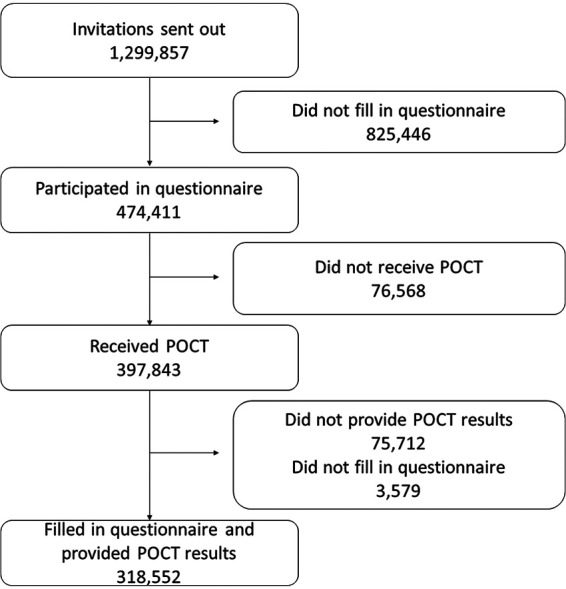
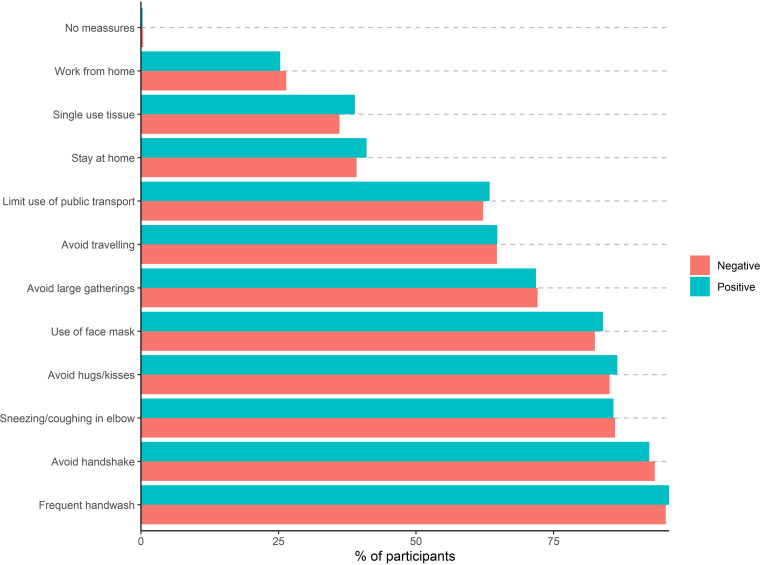
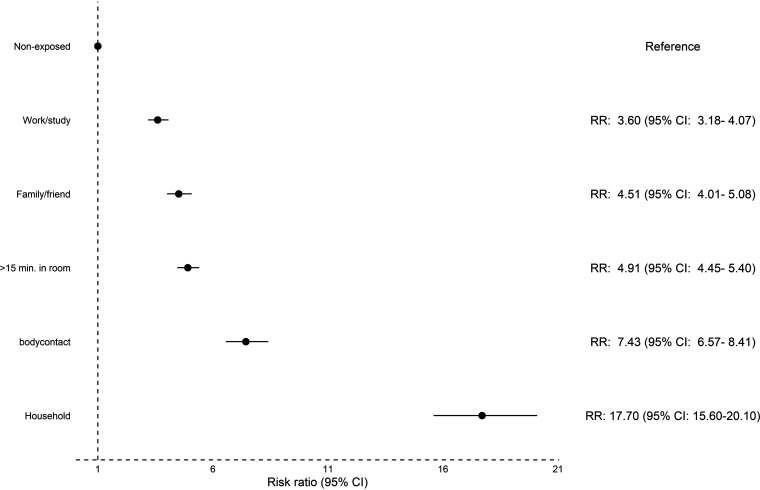
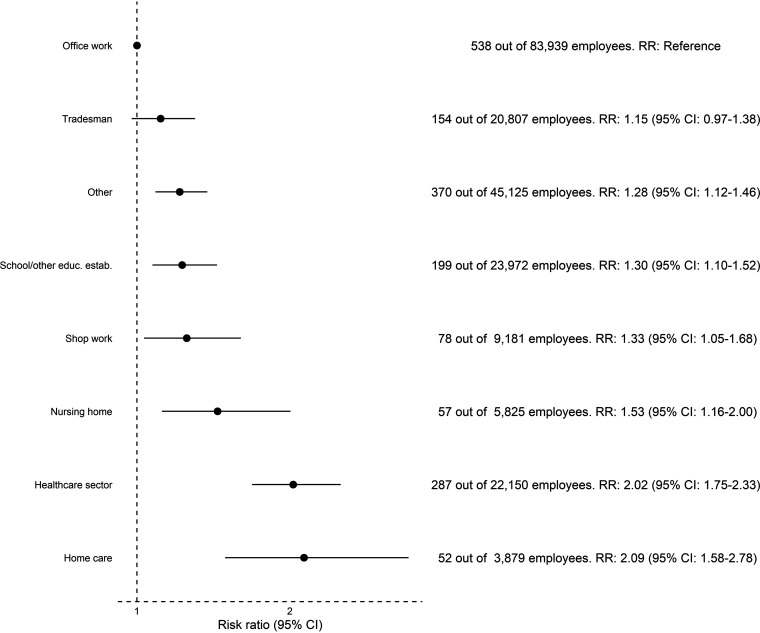
"Testing Denmark" is a national, large-scale, epidemiological surveillance study of SARS-CoV-2 in the Danish population. Between September and October 2020, approximately 1.3 million people (age >15 years) were randomly invited to fill in an electronic questionnaire covering COVID-19 exposures and symptoms. The prevalence of SARS-CoV-2 antibodies was determined by point-of care rapid test (POCT) distributed to participants' home addresses. In total, 318,552 participants (24.5% invitees) completed the study and 2,519 (0.79%) were seropositive. Of the participants with a prior positive PCR test (n = 1,828), 29.1% were seropositive in the POCT. Although seropositivity increased with age, participants 61 years and over reported fewer symptoms and were tested less frequently. Seropositivity was associated with physical contact with SARS-CoV-2 infected individuals (risk ratio [RR] 7.43, 95% CI: 6.57-8.41), particular in household members (RR 17.70, 95% CI: 15.60-20.10). A greater risk of seropositivity was seen in home care workers (RR 2.09, 95% CI: 1.58-2.78) compared to office workers. A high degree of adherence with national preventive recommendations was reported (e.g., >80% use of face masks), but no difference were found between seropositive and seronegative participants. The seroprevalence result was somewhat hampered by a lower-than-expected performance of the POCT. This is likely due to a low sensitivity of the POCT or problems reading the test results, and the main findings therefore relate to risk associations. More emphasis should be placed on age, occupation, and exposure in local communities. IMPORTANCE To date, including 318,522 participants, this is the largest population-based study with broad national participation where tests and questionnaires have been sent to participants' homes. We found that more emphasis from national and local authorities toward the risk of infection should be placed on age of tested individuals, type of occupation, as well as exposure in local communities and households. To meet the challenge that broad nationwide information can be difficult to gather. This study design sets the stage for a novel way of conducting studies. Additionally, this study design can be used as a supplementary model in future general test strategy for ongoing monitoring of COVID-19 immunity in the population, both from past infection and from vaccination against SARS-CoV-2, however, with attention to the complexity of performing and reading the POCT at home.
Keywords: COVID-19; SARS-CoV-2; population study.
Conflict of interest statement
The authors declare no conflict of interest.
Figures
References
-
- Aziz NA, Corman VM, Echterhoff AKC, Müller MA, Richter A, Schmandke A, Schmidt ML, Schmidt TH, de Vries FM, Drosten C, Breteler MMB. 2021. Seroprevalence and correlates of SARS-CoV-2 neutralizing antibodies from a population-based study in Bonn, Germany. Nat Commun 12:2117. doi: 10.1038/s41467-021-22351-5. - DOI - PMC - PubMed
-
- Danmarks Statistik. COVID-19—hurtige indikatorer 2021. [Available from: https://www.dst.dk/da/Statistik/covid-19-hurtige-indikatorer.
Publication types
MeSH terms
Substances
Grants and funding
LinkOut - more resources
Full Text Sources
Medical
Miscellaneous