


WNT11/ROR2 signaling is associated with tumor invasion and poor survival in breast cancer
- PMID: 34911552
- PMCID: PMC8672621
- DOI: 10.1186/s13046-021-02187-z
WNT11/ROR2 signaling is associated with tumor invasion and poor survival in breast cancer
Abstract
Background: Breast cancer has been associated with activation of the WNT signaling pathway, although no driver mutations in WNT genes have been found yet. Instead, a high expression of the alternative WNT receptor ROR2 was observed, in particular in breast cancer brain metastases. However, its respective ligand and downstream signaling in this context remained unknown.
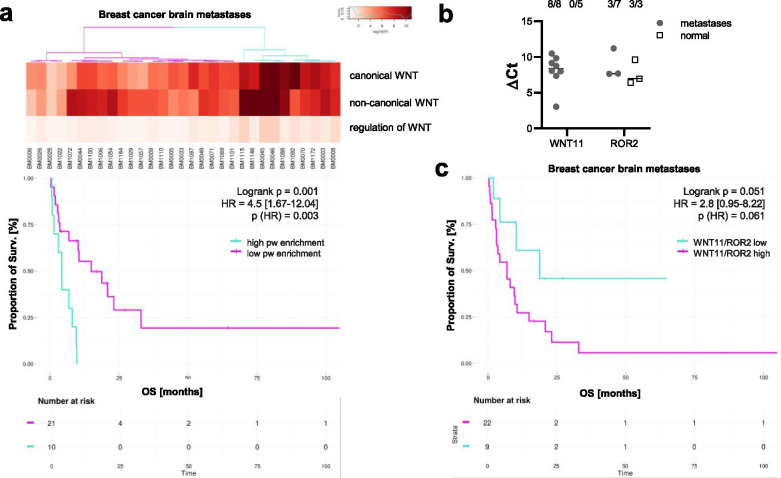
Methods: We modulated the expression of ROR2 in human breast cancer cells and characterized their gene and protein expression by RNA-Seq, qRT-PCR, immunoblots and reverse phase protein array (RPPA) combined with network analyses to understand the molecular basis of ROR2 signaling in breast cancer. Using co-immunoprecipitations, we verified the interaction of ROR2 with the identified ligand, WNT11. The functional consequences of WNT11/ROR2 signaling for tumor cell aggressiveness were assessed by microscopy, impedance sensing as well as viability and invasion assays. To evaluate the translational significance of our findings, we performed gene set enrichment, expression and survival analyses on human breast cancer brain metastases.
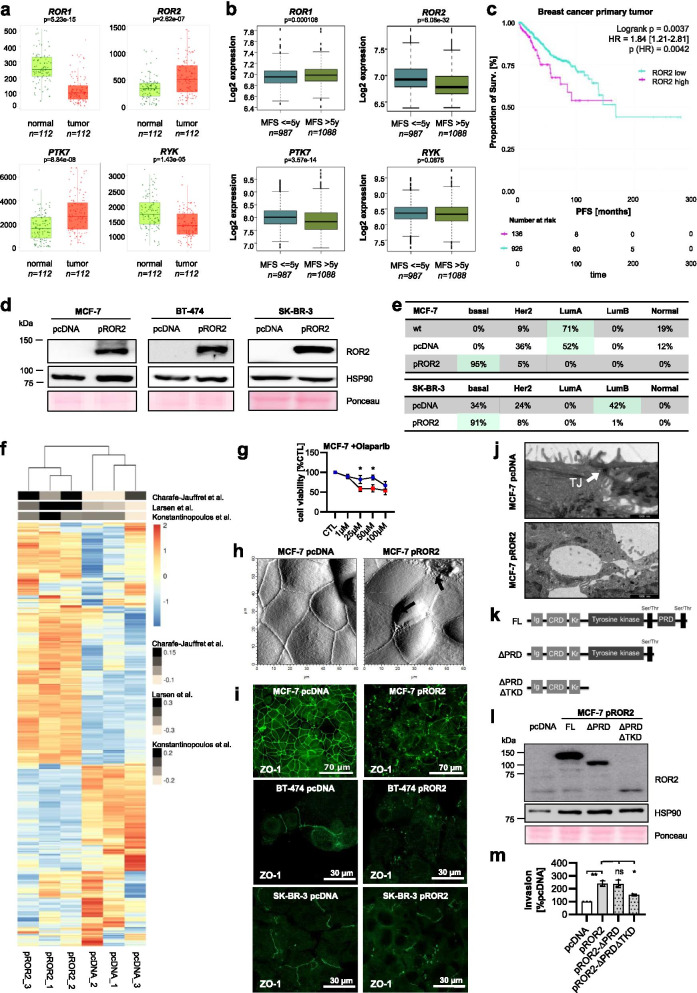
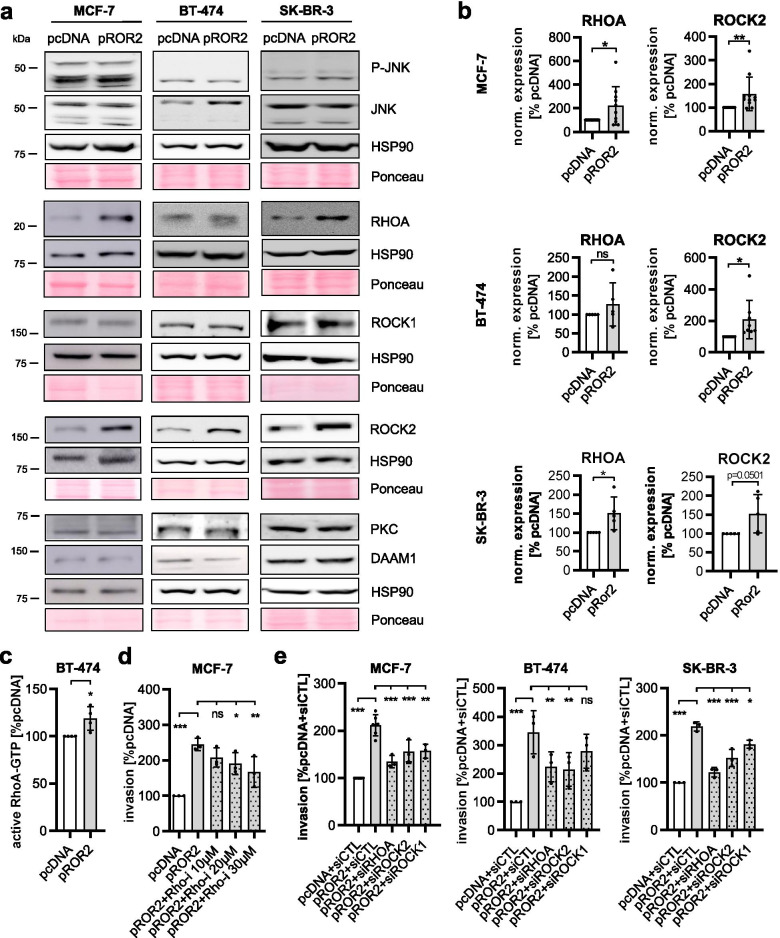
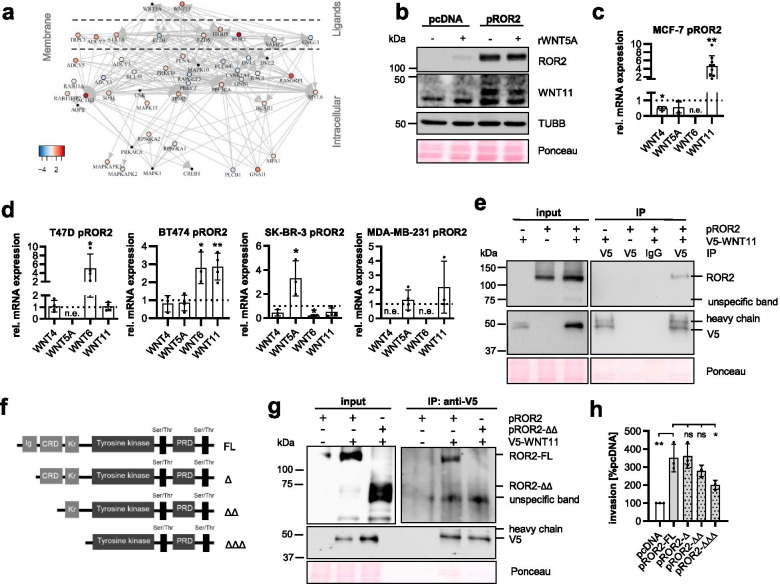
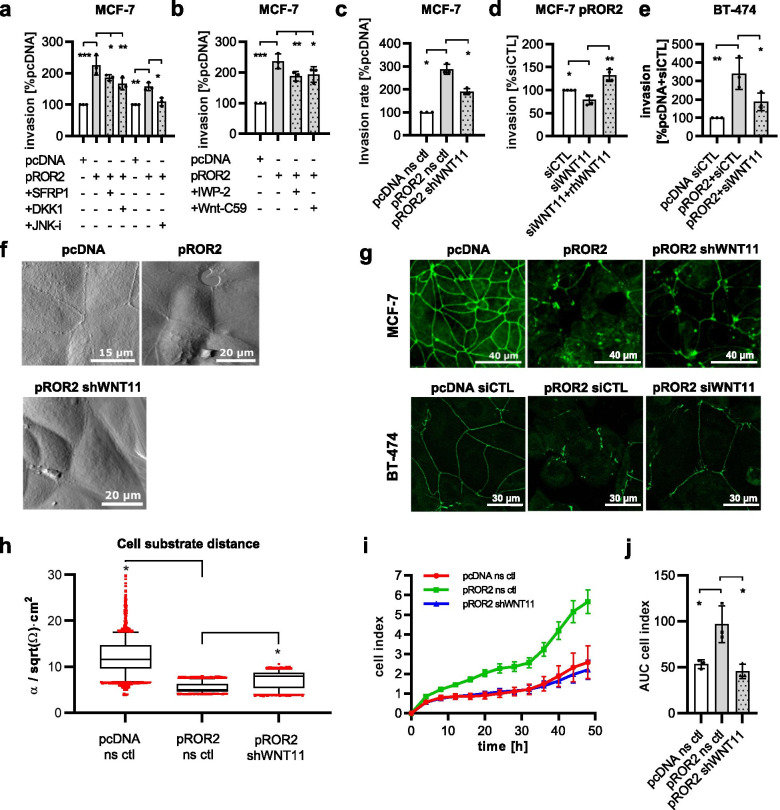
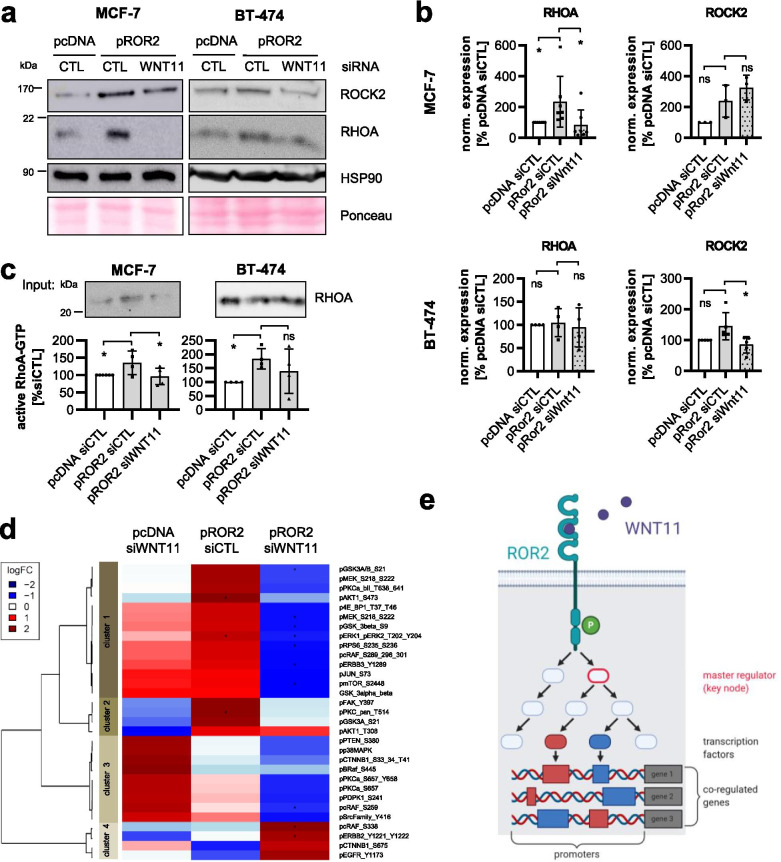
Results: We found ROR2 to be highly expressed in aggressive breast tumors and associated with worse metastasis-free survival. ROR2 overexpression induced a BRCAness-like phenotype in a cell-context specific manner and rendered cells resistant to PARP inhibition. High levels of ROR2 were furthermore associated with defects in cell morphology and cell-cell-contacts leading to increased tumor invasiveness. On a molecular level, ROR2 overexpression upregulated several non-canonical WNT ligands, in particular WNT11. Co-immunoprecipitation confirmed that WNT11 indeed interacts with the cysteine-rich domain of ROR2 and triggers its invasion-promoting signaling via RHO/ROCK. Knockdown of WNT11 reversed the pro-invasive phenotype and the cellular changes in ROR2-overexpressing cells.
Conclusions: Taken together, our study revealed a novel auto-stimulatory loop in which ROR2 triggers the expression of its own ligand, WNT11, resulting in enhanced tumor invasion associated with breast cancer metastasis.
Keywords: BRCAness; Breast cancer; Metastasis; Network analysis; ROR2; WNT11.
© 2021. The Author(s).
Conflict of interest statement
The authors declare that they have no competing interests.
Figures
References
-
- Bray F, Ferlay J, Soerjomataram I, Siegel RL, Torre LA, Jemal A. Global cancer statistics 2018: GLOBOCAN estimates of incidence and mortality worldwide for 36 cancers in 185 countries. CA Cancer J Clin. 2018;68:394–424. - PubMed
-
- Niehrs C. The complex world of WNT receptor signalling. Nat Rev Mol Cell Biol. 2012;13:767–779. - PubMed
-
- De A. Wnt/Ca2+ signaling pathway: a brief overview. Acta Biochim Biophys Sin. 2011;43:745–756. - PubMed
-
- Habas R, Kato Y, He X. Wnt/Frizzled activation of Rho regulates vertebrate gastrulation and requires a novel Formin homology protein Daam1. Cell. 2001;107:843–854. - PubMed
MeSH terms
Grants and funding
LinkOut - more resources
Full Text Sources
Medical
Research Materials
Miscellaneous
