


Critical review of nucleic acid nanotechnology to identify gaps and inform a strategy for accelerated clinical translation
- PMID: 34915069
- PMCID: PMC8886801
- DOI: 10.1016/j.addr.2021.114081
Critical review of nucleic acid nanotechnology to identify gaps and inform a strategy for accelerated clinical translation
Abstract
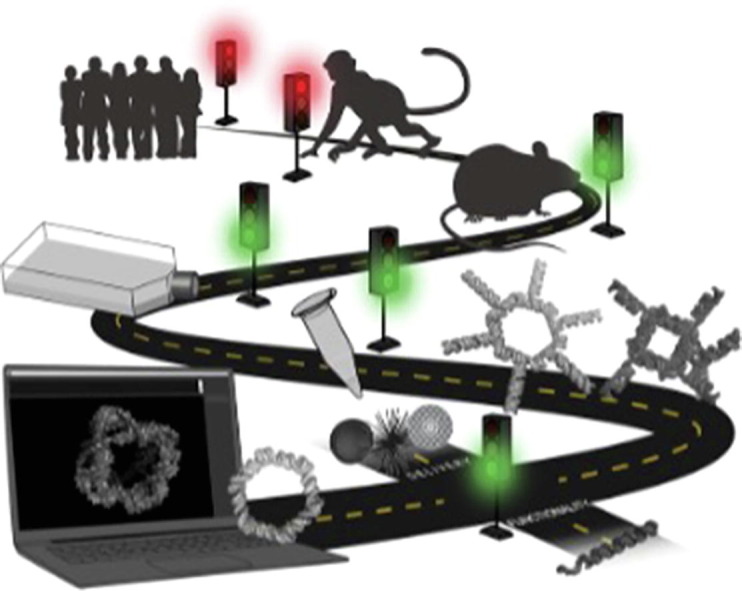
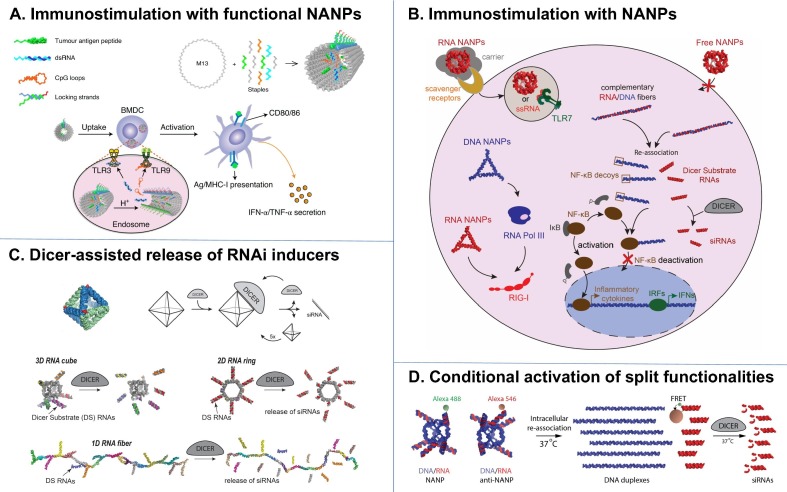
With numerous recent advances, the field of therapeutic nucleic acid nanotechnology is now poised for clinical translation supported by several examples of FDA-approved nucleic acid nanoformulations including two recent mRNA-based COVID-19 vaccines. Within this rapidly growing field, a new subclass of nucleic acid therapeutics called nucleic acid nanoparticles (NANPs) has emerged in recent years, which offers several unique properties distinguishing it from traditional therapeutic nucleic acids. Key unique aspects of NANPs include their well-defined 3D structure, their tunable multivalent architectures, and their ability to incorporate conditional activations of therapeutic targeting and release functions that enable diagnosis and therapy of cancer, regulation of blood coagulation disorders, as well as the development of novel vaccines, immunotherapies, and gene therapies. However, non-consolidated research developments of this highly interdisciplinary field create crucial barriers that must be overcome in order to impact a broader range of clinical indications. Forming a consortium framework for nucleic acid nanotechnology would prioritize and consolidate translational efforts, offer several unifying solutions to expedite their transition from bench-to-bedside, and potentially decrease the socio-economic burden on patients for a range of conditions. Herein, we review the unique properties of NANPs in the context of therapeutic applications and discuss their associated translational challenges.
Keywords: Dna origami; Non-viral vector; Nucleic acid nanotechnology; Therapeutic nucleic acids; Vaccine.
Copyright © 2021. Published by Elsevier B.V.
Conflict of interest statement
Declaration of Competing Interest The authors declare that they have no known competing financial interests or personal relationships that could have appeared to influence the work reported in this paper.
Figures
References
-
- Mukherjee K. Care for Rare: Spotlight on Rare Diseases. Trends Pharmacol. Sci. 2019;40:227–228. - PubMed
-
- Dieguez G., Ferro C., Pyenson B.S. A multi-year look at the cost burden of cancer care. Milliman Res. Rep. 2017;4:1–19.
Publication types
MeSH terms
Substances
Grants and funding
LinkOut - more resources
Full Text Sources
