


Use of Sanger protocols to identify variants of concern, key mutations and track evolution of SARS-CoV-2
- PMID: 34915086
- PMCID: PMC8667421
- DOI: 10.1016/j.jviromet.2021.114422
Use of Sanger protocols to identify variants of concern, key mutations and track evolution of SARS-CoV-2
Abstract
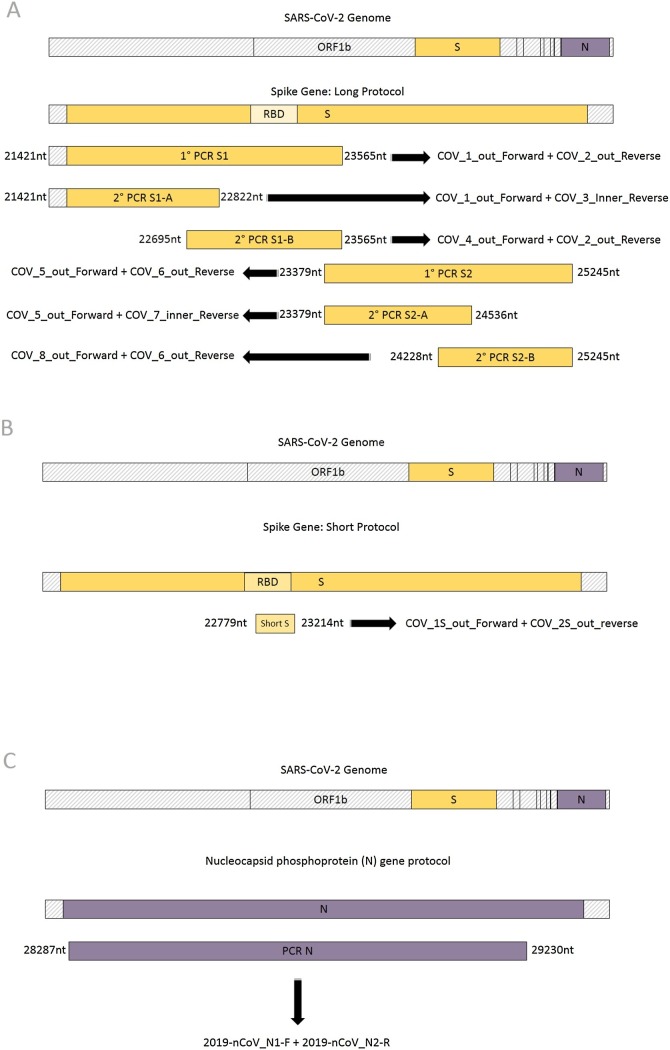
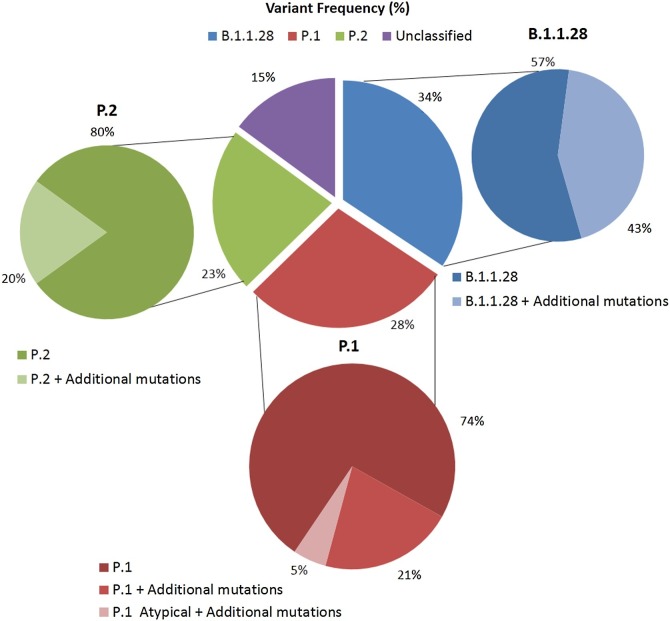
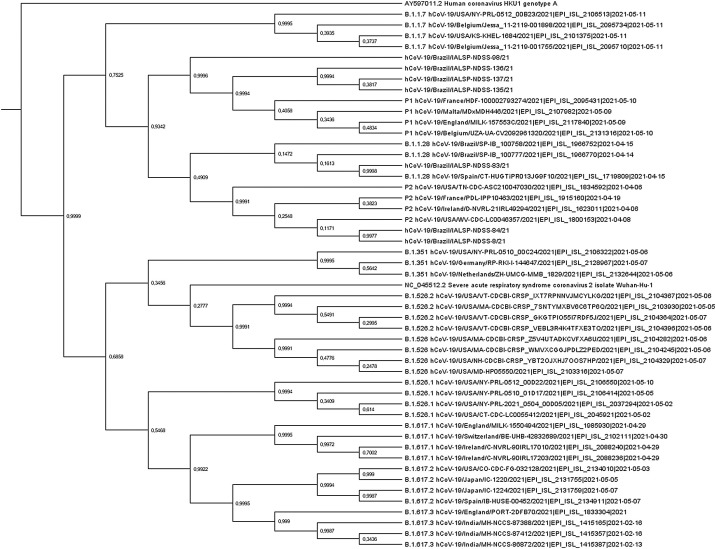
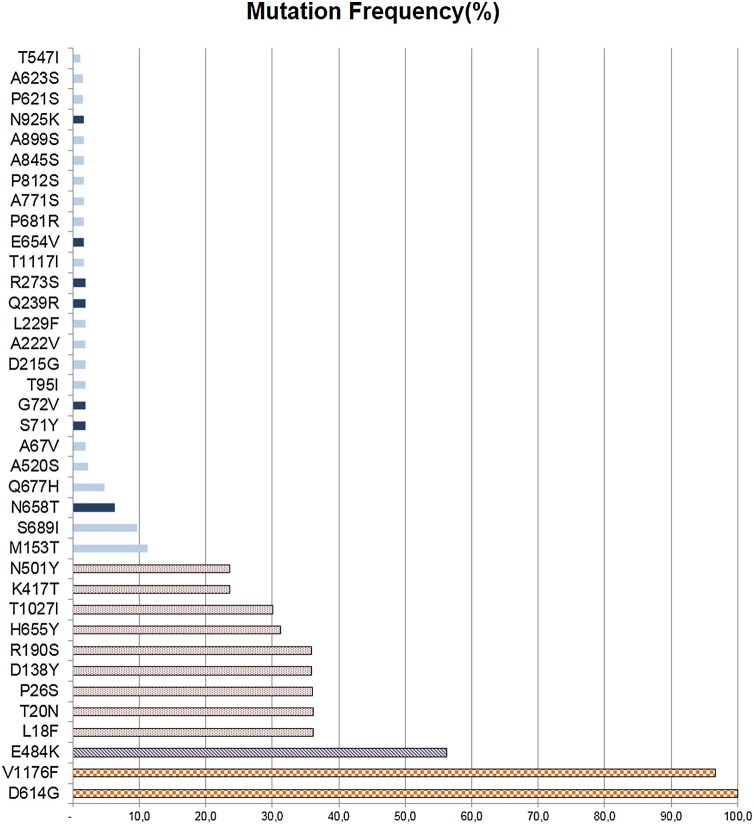
Vaccination and the emergence of SARS-CoV-2 variants mark the second year of the pandemic. Variants have amino acid mutations at the spike region, a viral protein central in the understanding of COVID-19 pathogenesis and vaccine response. Variants may dominate local epidemics, as Gamma (P.1) in Brazil, emerging in 2020 and prevailing until mid-2021. Different obstacles hinder a wider use of Next-Generation Sequencing for genomic surveillance. We describe Sanger based sequencing protocols: i) Semi-nested RT-PCR covering up to 3.684 kb (>96 %) spike gene; ii) One-Step RT-PCR for key Receptor Binding Domain (RBD) mutations (codons 417-501); iii) One-Step RT-PCR of partial N region to improve genomic capability. Protocols use leftovers of RNA extracted from nasopharyngeal swabs for quantitative RT-PCR diagnosis; with retro-transcribed DNA sequenced at ABI 3500 using dye termination chemistry. Analyses of sequences from 95 individuals (late 2020/early 2021) identified extensive amino acid variation, 57 % with at least one key mutation at the Receptor Binding Domain, with B.1.1.28 lineage most prevalent, followed by Gamma and Zeta variants, with no Delta variant observed. The relatively low cost and simplicity may provide an accessible tool to improve surveillance of SARS-CoV-2 evolution, monitor new variants and vaccinated breakthroughs.
Keywords: Brazil; COVID-19; Gamma; Genomic surveillance; SARS-CoV-2; Variants.
Copyright © 2021 Elsevier B.V. All rights reserved.
Conflict of interest statement
The authors have not identified potential conflicts of interest.
Figures
References
-
- Cabral G.B., Ahagon C.M., Lopez-Lopes G.I.S., et al. P1 variants and key amino acid mutations at the Spike gene identified using Sanger protocols. medRxiv. 2021 03.21.21253158; Published: 2021 March 24.
-
- Center for Disease Control and Prevention . 2021. Information for Laboratories About Coronavirus (COVID-19) Available at: < https://www.cdc.gov/coronavirus/2019-ncov/lab/virus-requests.html> (Accessed oct 09, )
-
- Center for Disease Control and Prevention . 2021. Variants and Genomic Surveillance for SARS-CoV-2. Available on: < https://www.cdc.gov/coronavirus/2019-ncov/variants/index.html> (Accessed June 6, )
Publication types
MeSH terms
Substances
Supplementary concepts
LinkOut - more resources
Full Text Sources
Medical
Miscellaneous
