Review
. 2022 Jun;27(6):536-548.
doi: 10.1016/j.tplants.2021.11.003. Epub 2021 Dec 16.

TALE-induced cell death executors: an origin outside immunity?

Affiliations
Review

TALE-induced cell death executors: an origin outside immunity?

Moritz K Nowack et al. Trends Plant Sci. 2022 Jun.

Abstract

Phytopathogenic bacteria inject effector proteins into plant host cells to promote disease. Plant resistance (R) genes encoding nucleotide-binding leucine-rich repeat (NLR) proteins mediate the recognition of functionally and structurally diverse microbial effectors, including transcription-activator like effectors (TALEs) from the bacterial genus Xanthomonas. TALEs bind to plant promoters and transcriptionally activate either disease-promoting host susceptibility (S) genes or cell death-inducing executor-type R genes. It is perplexing that plants contain TALE-perceiving executor-type R genes in addition to NLRs that also mediate the recognition of TALE-containing xanthomonads. We present recent findings on the evolvability of TALEs, which suggest that the native function of executors is not in plant immunity, but possibly in the regulation of developmentally controlled programmed cell death (PCD) processes.

Keywords: Xanthomonas; evolution; executor; nucleotide-binding leucine-rich repeat (NLR) protein; programmed cell death (PCD); transcription activator-like effector (TALE).


Figures

Figure 1
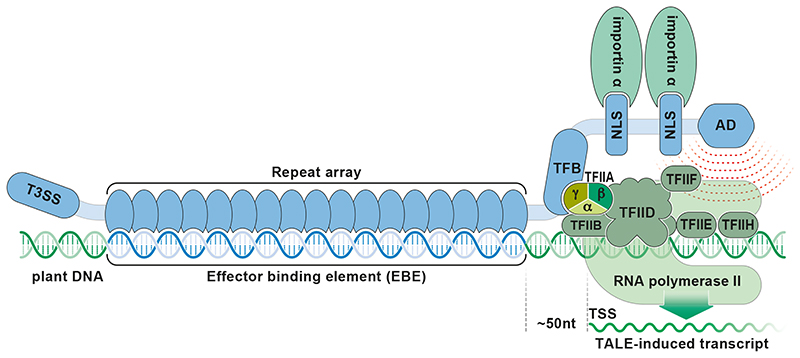
Figure 1. Transcriptional activation of plant gene by a TALE protein.
An N-terminal type III secretion signal (T3SS) marks effector proteins for translocation from the bacterial pathogen into the plant cytoplasm. Tandem-arranged repeat modules form a repeat array that binds in a sequence-specific fashion to a DNA target sequence (effector binding element; EBE). The transcription factor binding (TFB) domain mediates interaction with the gamma (γ) subunit of the general transcription factor TFIIA that is part of the host’s RNA polymerase II preinitiation complex. The C-terminal activation domain (AD) stimulates transcriptional activation. The transcriptional start site (TSS) of the TALE-induced transcript (green waved line) starts about 50-100 nucleotides downstream of the EBE. Notably, the TALE-induced TSS is typically distinct from the TSS of the corresponding native transcript.
Figure 2
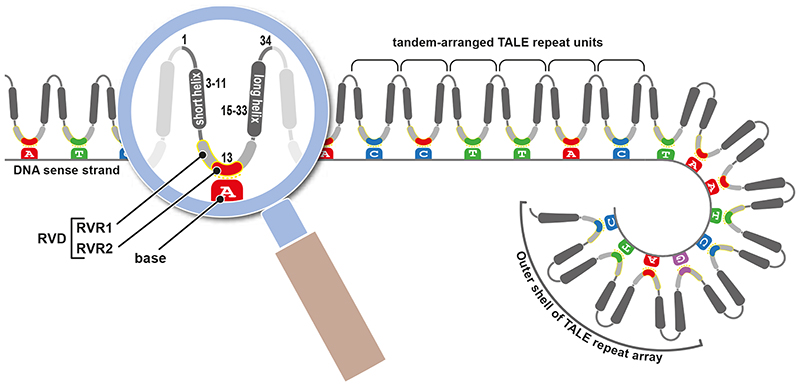
Figure 2. Structural basis of TALE-DNA interaction.
TALE proteins bind to DNA by a variable number of tandem-arranged repeats, with each repeat pairing with one DNA base in the sense strand of matching EBEs. The TALE-DNA interaction is depicted in a simplified linear display (left) and the helical arrangement (right) where the TALE repeat array wraps around the helical structure of the DNA. Repeats are generally highly sequence related to each other with residues 12 and 13 being most variable and accordingly designated as repeat variable diresidue (RVD; highlighted by yellow frame). The repeat variable residue 1 (RVR1; residue 12) and RVR2 (residue 13) define DNA base preference of a given repeat. RVR2, also known as the base-specifying residue (BSR), makes the major contribution to the base preference of a given repeat. Residues 12-14 collectively form the DNA binding loop that is flanked by short and long helical regions. Tandem-arranged repeats wind around the DNA and form a superhelical structure. Given that the outer shell of the repeat array is formed by conserved repeat residues, its shape is likely not affected by variation in the RVD composition and thus will be mostly highly similar for each TALE protein. Please note the simplified display of the TALE protein where only the TALE-repeat array is depicted and not the N- and C-terminal parts of the TALE protein, which are displayed in Figure 1. Note that TALEs bind to double stranded DNA but that in this simplified depiction only the DNA sense strand is shown.
Figure 3
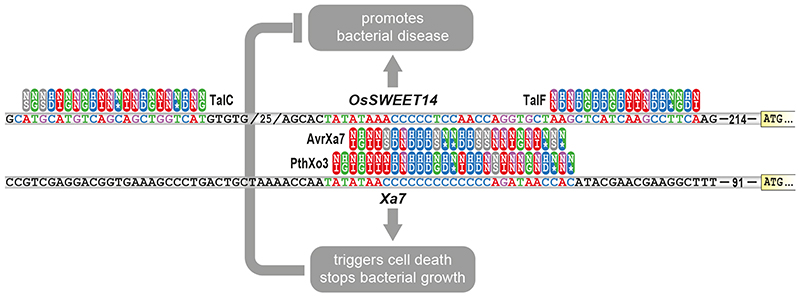
Figure 3. TALEs with a dual function that either promote disease or trigger plant resistance.
Strains of the rice pathogen Xanthomonas oryzae evolved distinct TALEs to transcriptionally activate the rice OsSWEET14 gene as depicted above. This includes the TALE proteins TalC, TalF, AvrXa7, and PthXo3. The rice executor R gene Xa7 contains in its 5’ upstream sequence an AvrXa7- and PthXo3-compatible EBE but not TalC- and TalF-compatible EBEs. TALEs are represented by repeats (ovals) with their RVDs (one-letter amino acid code). Colour coding indicates base preference of a given RVD. 5’ upstream nucleotide sequences of the rice S gene OsSWEET14 and the executor R gene Xa7 are shown in the upper and lower line, respectively.
Figure 4
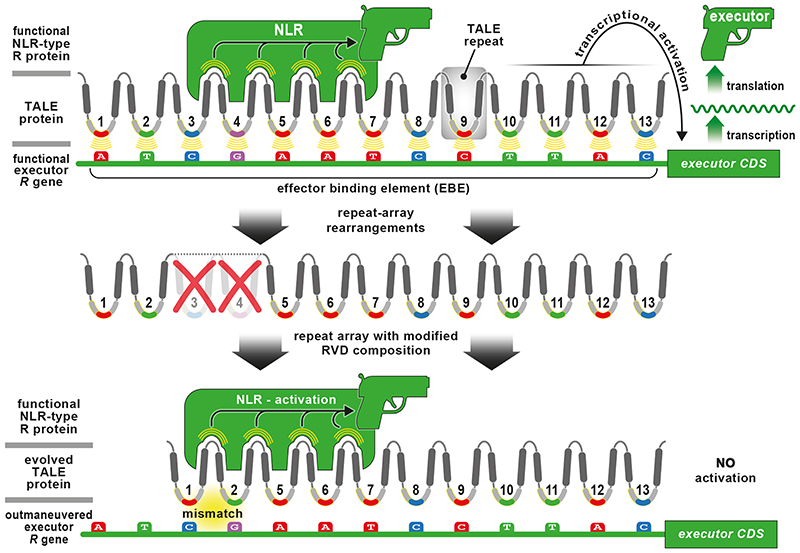
Figure 4. The impact of TALE repeat rearrangements on NLR- and executor-mediated recognition.
The displayed TALE protein is recognized either by a matching NLR protein or an executor R gene. The NLR perceives non-RVD residues of the repeat array and in turn executes an immune reaction (depicted by a pistol) that typically culminates in cell death. The TALE can also be perceived by a DNA-based receptor (EBE) of an executor R gene. Interaction of tandem-arranged RVDs with the EBE results in transcription of the downstream executor R gene that upon translation triggers cell death. TALEs can rapidly change the composition of their repeat array by inserting or deleting repeats (e.g.: deletion of repeats 3 and 4). The evolved TALE is still recognized by the NLR but no longer by the executor R gene. Note the simplified depiction of the TALE protein where only the TALE repeat array is shown. Note, that suppression of NLR-mediated recognition of TALEs by iTALEs/truncTALEs is not shown here since these atypical TALEs have been observed only in Asian rice-infecting xanthomonads.
Figure 5
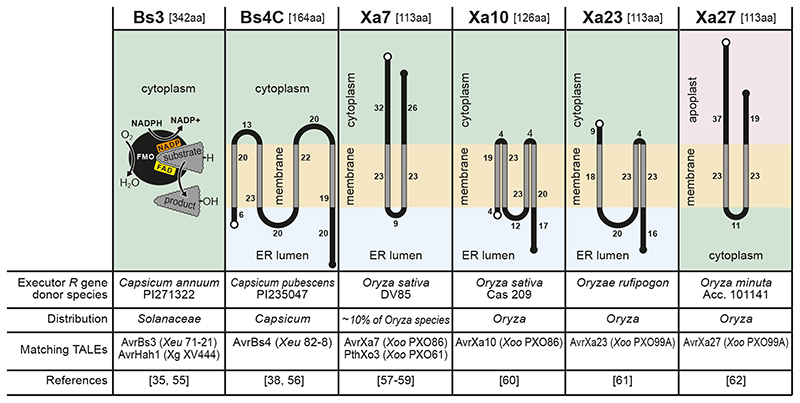
Figure 5. Structural and functional of executor R genes and encoded executor proteins.
Designation of executors is given on top with the size of the executor protein in square brackets. Depictions display the predicted topology and subcellular localization of executor proteins with terminal white and black circles indicating N- and C-termini, respectively. Transmembrane stretches were predicted with TMHMM (http://www.cbs.dtu.dk/services/TMHMM-2.0/) and are indicated with grey-coloured lines. Digits indicate the number of amino acids domains that a given domain is composed of.
Figure 6
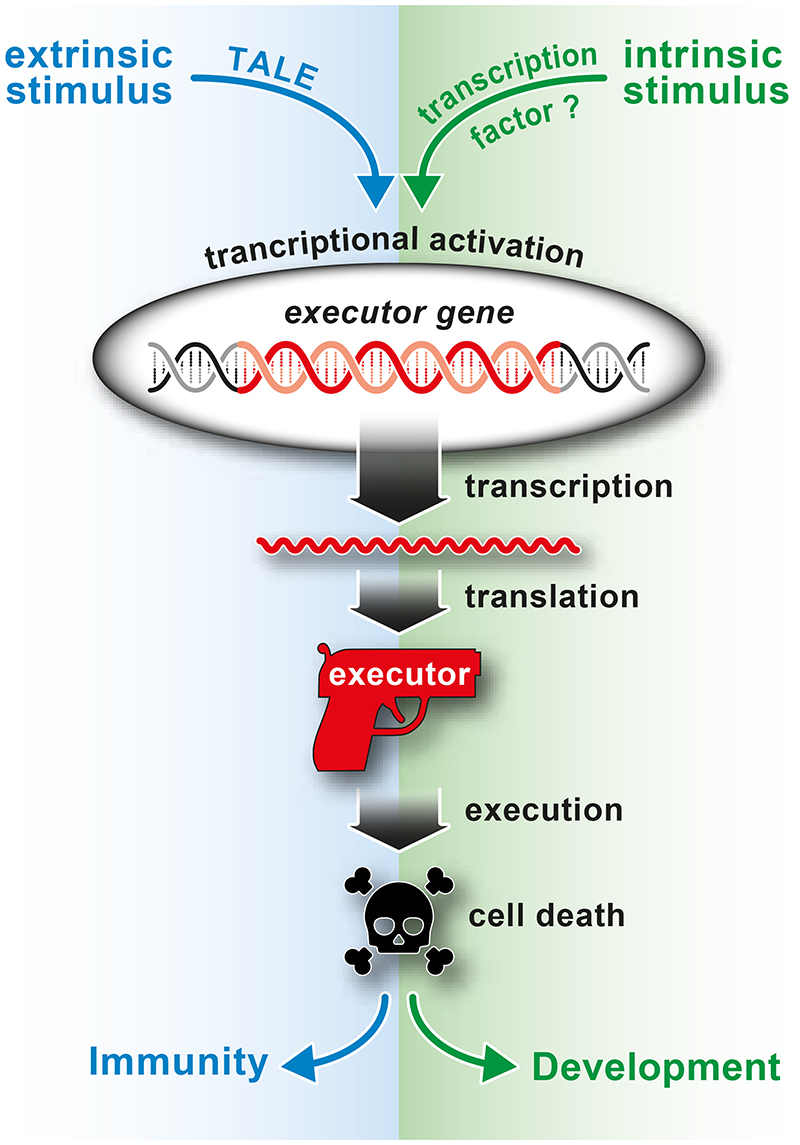
Figure 6. Transcriptional activation of executor genes.
Proposed working model where executor genes are transcriptionally activated either by TALEs, resulting in plant immunity, or by the to-be-identified plant transcription factors that transcriptionally activate executors upon intrinsic stimuli. Expression of executors triggered by an intrinsic stimulus is likely restricted to a specific tissue or developmental stage and is likely involved in formation of specific cells, tissues, or plant organs.

References

    1. de Lange O, et al. From dead leaf, to new life: TAL effectors as tools for synthetic biology. Plant J. 2014;78:753–771. - PubMed
    1. Pérez-Quintero AL, Szurek B. A decade decoded: spies and hackers in the history of TAL effectors research. Annu Rev Phytopathol. 2019;57:459–481. - PubMed
    1. Becker S, Boch J. TALE and TALEN genome editing technologies. Gene and Genome Editing. 2021;2:100007
    1. Teper D, Wang N. Consequences of adaptation of TAL effectors on host susceptibility to Xanthomonas. PLoS Genet. 2021;17:e1009310. - PMC - PubMed
    1. Teper D, et al. PthAW1, a transcription activator-like effector of Xanthomonas citri subsp. citri promotes host specific immune responses. Mol Plant-Microbe Interact. 2021 doi: 10.1094/MPMI-01-21-0026-R. - DOI - PubMed

Publication types

MeSH terms

Substances

LinkOut - more resources