


Extreme Hypoxia Causing Brady-Arrythmias During Apnea in Elite Breath-Hold Divers
- PMID: 34925050
- PMCID: PMC8678416
- DOI: 10.3389/fphys.2021.712573
Extreme Hypoxia Causing Brady-Arrythmias During Apnea in Elite Breath-Hold Divers
Abstract
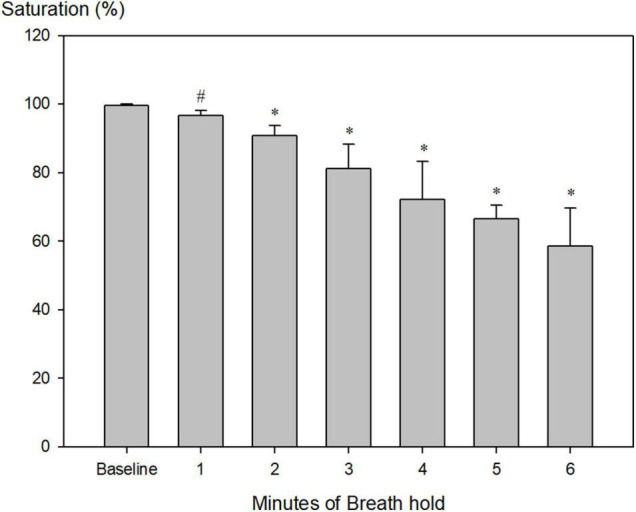
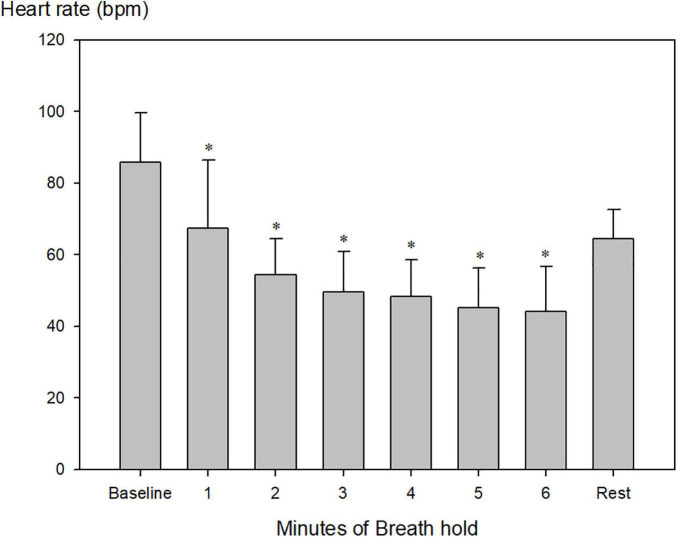
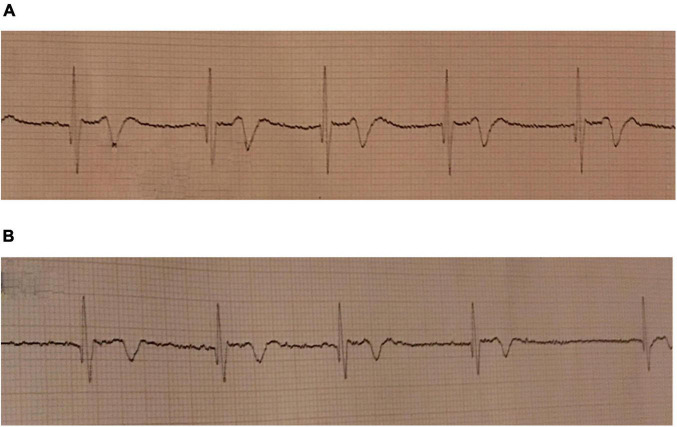
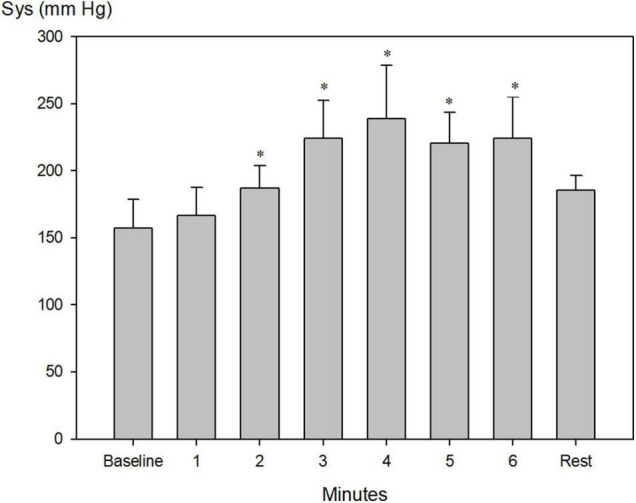
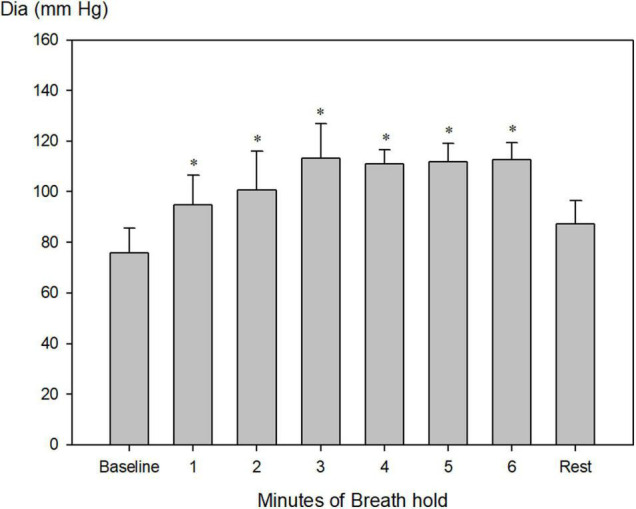
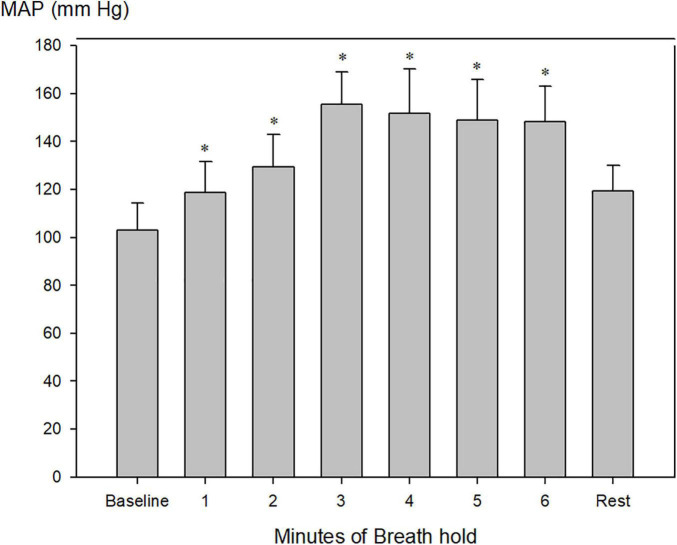
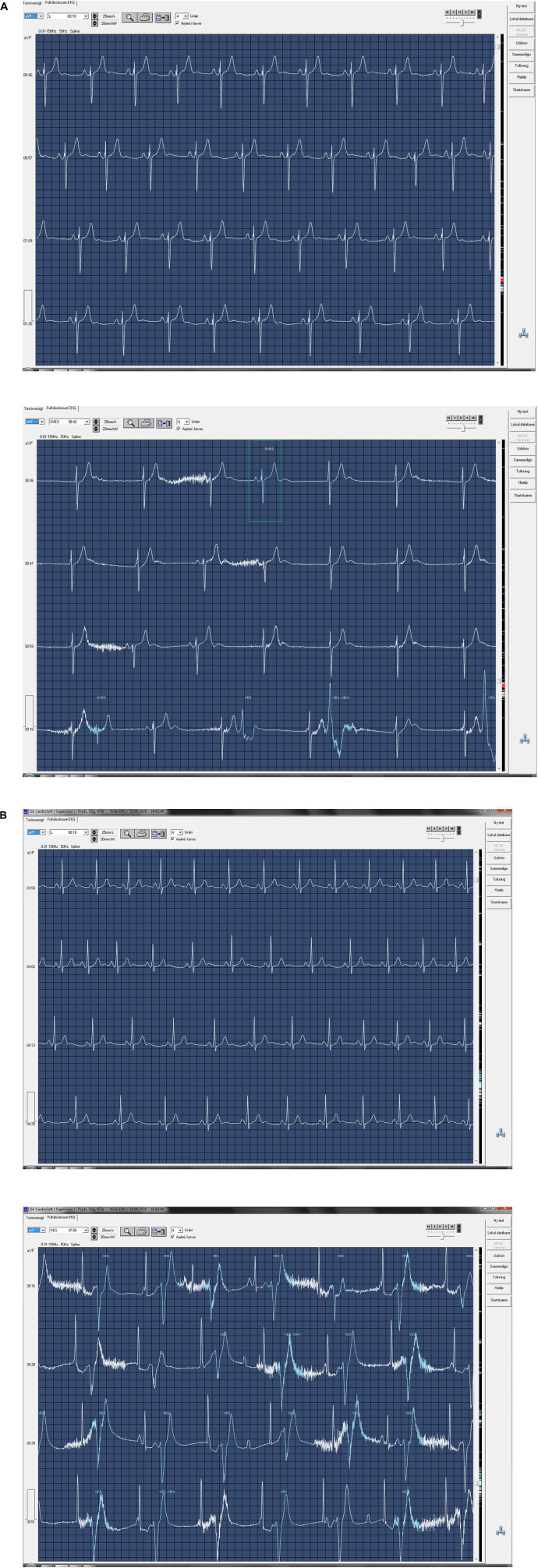
Introduction: The cardiac electrical conduction system is very sensitive to hypoglycemia and hypoxia, and the consequence may be brady-arrythmias. Weddell seals endure brady-arrythmias during their dives when desaturating to 3.2 kPa and elite breath-hold-divers (BHD), who share metabolic and cardiovascular adaptions including bradycardia with diving mammals, endure similar desaturation during maximum apnea. We hypothesized that hypoxia causes brady-arrythmias during maximum apnea in elite BHD. Hence, this study aimed to define the arterial blood glucose (Glu), peripheral saturation (SAT), heart rhythm (HR), and mean arterial blood pressure (MAP) of elite BHD during maximum apneas. Methods: HR was monitored with Direct-Current-Pads/ECG-lead-II and MAP and Glu from a radial arterial-catheter in nine BHD performing an immersed and head-down maximal static pool apnea after three warm-up apneas. SAT was monitored with a sensor on the neck of the subjects. On a separate day, a 12-lead-ECG-monitored maximum static apnea was repeated dry (n = 6). Results: During pool apnea of maximum duration (385 ± 70 s), SAT decreased from 99.6 ± 0.5 to 58.5 ± 5.5% (∼PaO2 4.8 ± 1.5 kPa, P < 0.001), while Glu increased from 5.8 ± 0.2 to 6.2 ± 0.2 mmol/l (P = 0.009). MAP increased from 103 ± 4 to 155 ± 6 mm Hg (P < 0.005). HR decreased to 46 ± 10 from 86 ± 14 beats/minute (P < 0.001). HR and MAP were unchanged after 3-4 min of apnea. During dry apnea (378 ± 31 s), HR decreased from 55 ± 4 to 40 ± 3 beats/minute (P = 0.031). Atrioventricular dissociation and junctional rhythm were observed both during pool and dry apneas. Conclusion: Our findings contrast with previous studies concluding that Glu decreases during apnea diving. We conclude during maximum apnea in elite BHD that (1) the diving reflex is maximized after 3-4 min, (2) increasing Glu may indicate lactate metabolism in accordance with our previous results, and (3) extreme hypoxia rather than hypoglycemia causes brady-arrythmias in elite BHD similar to diving mammals.
Keywords: apnea and face immersion; atrioventricular block; brady-arrythmia; bradycardia; free-diving; hypoxia induced factor-1 (HIF-1); invasive blood pressure; junctional rhythm.
Copyright © 2021 Kjeld, Isbrand, Linnet, Zerahn, Højberg, Hansen, Gormsen, Bejder, Krag, Vissing, Bøtker and Arendrup.
Conflict of interest statement
TKj was voluntary (unpaid) board member of the Danish National Diving Federation. The remaining authors declare that the research was conducted in the absence of any commercial or financial relationships that could be construed as a potential conflict of interest.
Figures
References
-
- Bakovíc D., Valic Z., Eterovíc D., Vukovic I., Obad A., Marinovíc-Terzíc I., et al. (2003). Spleen volume and blood flow response to repeated breath-hold apneas. J. Appl. Physiol. 95, 1460–1466. - PubMed
-
- Brignole M., Auricchio A., Baron-Esquivias G., Bordachar P., Boriani G., Breithardt O. A., et al. (2013). 2013 ESC Guidelines on cardiac pacing and cardiac resynchronization therapy: the Task Force on cardiac pacing and resynchronization therapy of the European Society of Cardiology (ESC). Developed in collaboration with the European Heart Rhythm Association (EHRA). Eur. Heart J. 34 2281–2329. 10.1093/eurheartj/eht150 - DOI - PubMed
-
- Buzzacott P., Denoble P. J. (eds). (2018). DAN Annual Diving Report 2018 Edition: A Report on 2016 Diving Fatalities, Injuries, and Incidents. Durham: Divers Alert Network. - PubMed
LinkOut - more resources
Full Text Sources
Research Materials
