Meta-Analysis
. 2022 Jan 4;11(1):e023806.
doi: 10.1161/JAHA.121.023806. Epub 2021 Dec 20.

Impact of Cardiac Arrest Centers on the Survival of Patients With Nontraumatic Out-of-Hospital Cardiac Arrest: A Systematic Review and Meta-Analysis

Collaborators, Affiliations
Meta-Analysis

Impact of Cardiac Arrest Centers on the Survival of Patients With Nontraumatic Out-of-Hospital Cardiac Arrest: A Systematic Review and Meta-Analysis

Jun Wei Yeo et al. J Am Heart Assoc. .

Abstract

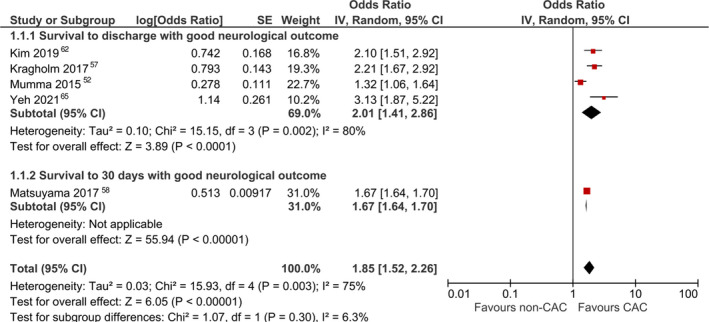
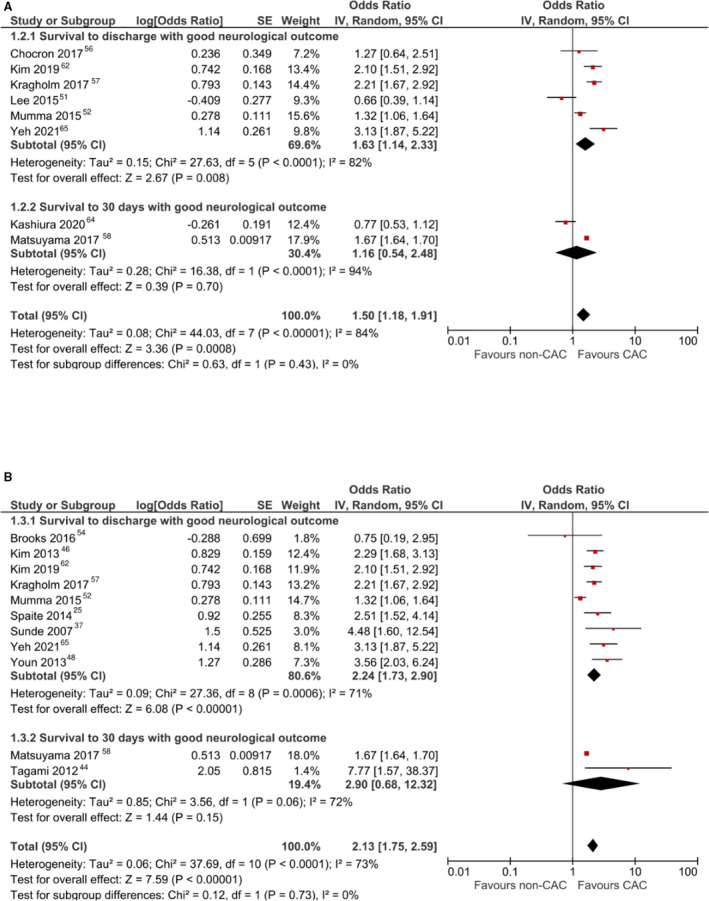
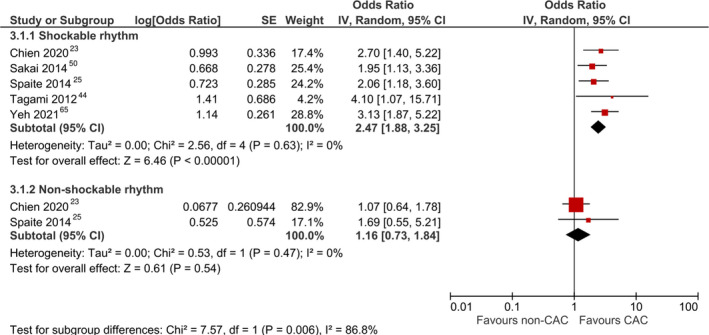
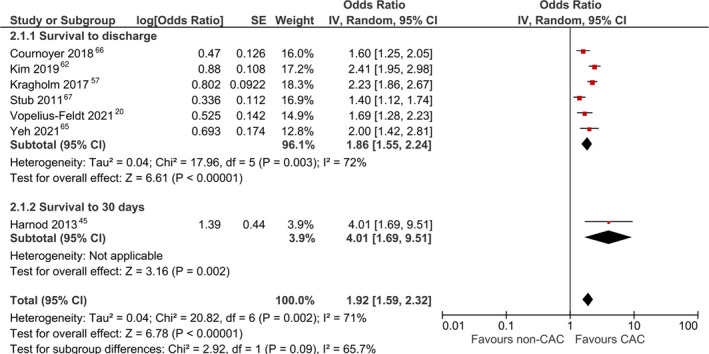
Background The role of cardiac arrest centers (CACs) in out-of-hospital cardiac arrest care systems is continuously evolving. Interpretation of existing literature is limited by heterogeneity in CAC characteristics and types of patients transported to CACs. This study assesses the impact of CACs on survival in out-of-hospital cardiac arrest according to varying definitions of CAC and prespecified subgroups. Methods and Results Electronic databases were searched from inception to March 9, 2021 for relevant studies. Centers were considered CACs if self-declared by study authors and capable of relevant interventions. Main outcomes were survival and neurologically favorable survival at hospital discharge or 30 days. Meta-analyses were performed for adjusted odds ratio (aOR) and crude odds ratios. Thirty-six studies were analyzed. Survival with favorable neurological outcome significantly improved with treatment at CACs (aOR, 1.85 [95% CI, 1.52-2.26]), even when including high-volume centers (aOR, 1.50 [95% CI, 1.18-1.91]) or including improved-care centers (aOR, 2.13 [95% CI, 1.75-2.59]) as CACs. Survival significantly increased with treatment at CACs (aOR, 1.92 [95% CI, 1.59-2.32]), even when including high-volume centers (aOR, 1.74 [95% CI, 1.38-2.18]) or when including improved-care centers (aOR, 1.97 [95% CI, 1.71-2.26]) as CACs. The treatment effect was more pronounced among patients with shockable rhythm (P=0.006) and without prehospital return of spontaneous circulation (P=0.005). Conclusions were robust to sensitivity analyses, with no publication bias detected. Conclusions Care at CACs was associated with improved survival and neurological outcomes for patients with nontraumatic out-of-hospital cardiac arrest regardless of varying CAC definitions. Patients with shockable rhythms and those without prehospital return of spontaneous circulation benefited more from CACs. Evidence for bypassing hospitals or interhospital transfer remains inconclusive.

Keywords: cardiac arrest; cardiac arrest center; heart arrest; resuscitation.


Figures
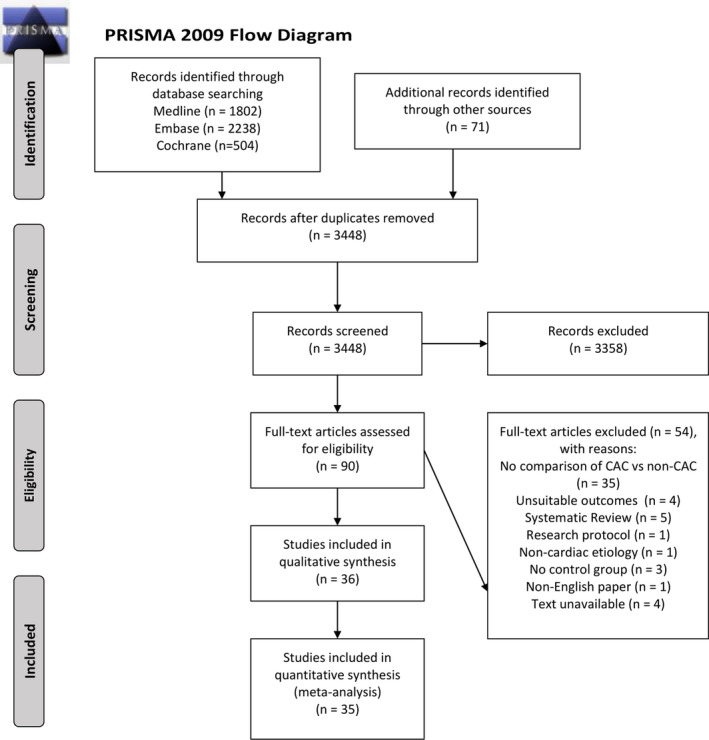
Figure 1
Figure 1. Preferred Reporting Items for Systematic Reviews and Meta‐Analyses (PRISMA) flowchart.
CAC indicates cardiac arrest center.
Figure 2
Figure 2. Forest plot for meta‐analysis of adjusted analyses comparing survival with good neurological outcome between cardiac arrest centers (CACs) and non‐CACs using a random‐effects model and the strict definition of CACs.
IV indicates inverse variance.
Figure 3
Figure 3. Sensitivity analyses for survival with good neurological outcome using less strict definitions of cardiac arrest centers (CACs).
A, Forest plot for meta‐analysis of adjusted analyses comparing survival with good neurological outcome between CACs and non‐CACs using a random‐effects model and including high‐volume centers. B, Forest plot for meta‐analysis of adjusted analyses comparing survival with good neurological outcome between CACs and non‐CACs using a random‐effects model and including improved‐care centers. IV indicates inverse variance.
Figure 4
Figure 4. Forest plot for subgroup analysis comparing survival with good neurological outcome between cardiac arrest centers (CACs) and non‐CACs within subgroups of patients with shockable and nonshockable rhythm.
IV indicates inverse variance.
Figure 5
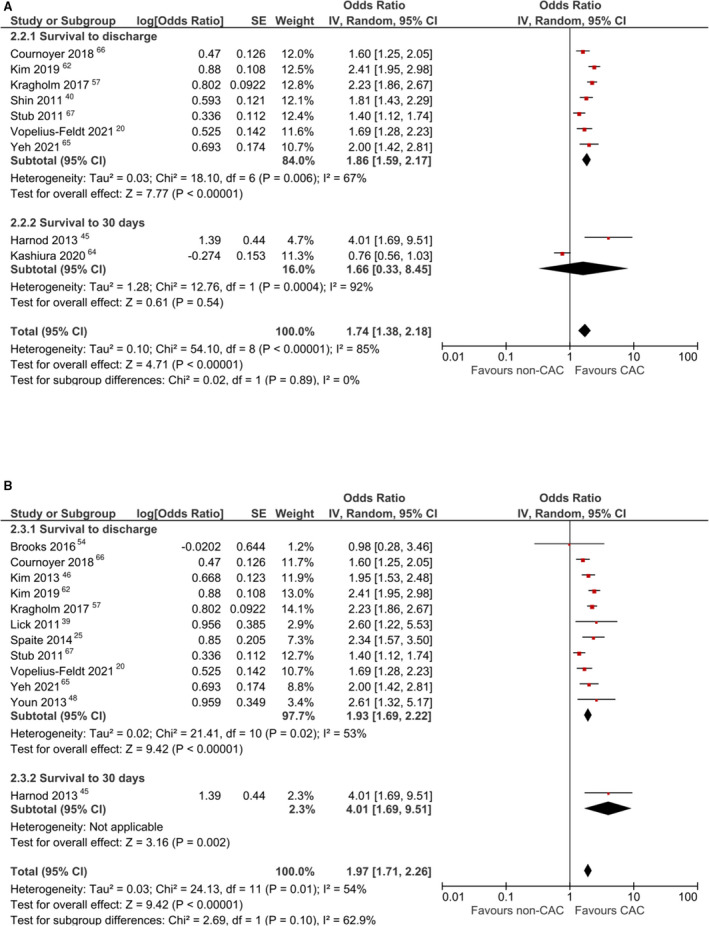
Figure 5. Forest plot for meta‐analysis of adjusted analyses comparing survival between cardiac arrest centers (CACs) and non‐CACs using a random‐effects model and the strict definition of CACs.
IV indicates inverse variance.
Figure 6
Figure 6. Sensitivity analyses for survival using less strict definitions of cardiac arrest centers (CACs).
A, Forest plot for meta‐analysis of adjusted analyses comparing survival between CACs and non‐CACs using a random‐effects model and including high‐volume centers. B, Forest plot for meta‐analysis of adjusted analyses comparing survival between CACs and non‐CACs using a random‐effects model and including improved‐care centers. IV indicates inverse variance.
Figure 7
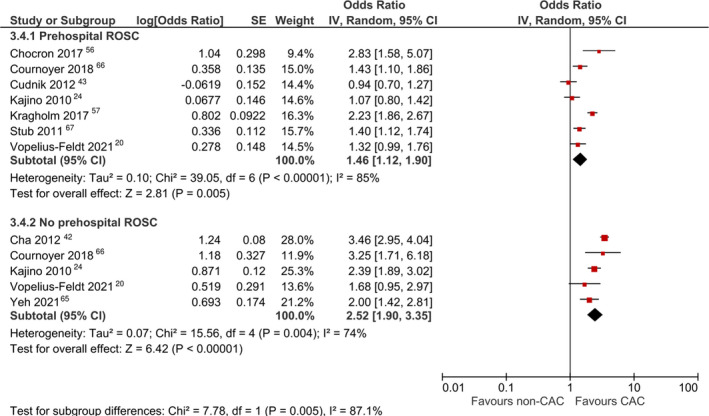
Figure 7. Forest plot for subgroup analysis comparing survival between cardiac arrest centers (CACs) and non‐CACs within subgroups of patients with and without prehospital return of spontaneous circulation (ROSC).
IV indicates inverse variance.

References

    1. Ong MEH, Perkins GD, Cariou A. Out‐of‐hospital cardiac arrest: prehospital management. Lancet. 2018;391:980–988. doi: 10.1016/S0140-6736(18)30316-7 - DOI - PubMed
    1. Lotfi A, Klein LW, Hira RS, Mallidi J, Mehran R, Messenger JC, Pinto DS, Mooney MR, Rab T, Yannopoulos D, et al. SCAI expert consensus statement on out of hospital cardiac arrest. Catheter Cardiovasc Interv. 2020;96:844–861. doi: 10.1002/ccd.28990 - DOI - PubMed
    1. Kiguchi T, Okubo M, Nishiyama C, Maconochie I, Ong MEH, Kern KB, Wyckoff MH, McNally B, Christensen EF, Tjelmeland I, et al. Out‐of‐hospital cardiac arrest across the world: first report from the International Liaison Committee on Resuscitation (ILCOR). Resuscitation. 2020;152:39–49. doi: 10.1016/j.resuscitation.2020.02.044 - DOI - PubMed
    1. Coute RA, Nathanson BH, Panchal AR, Kurz MC, Haas NL, McNally B, Neumar RW, Mader TJ. Disability‐adjusted life years following adult out‐of‐hospital cardiac arrest in the United States. Circ Cardiovasc Qual Outcomes. 2019;12:e004677. doi: 10.1161/CIRCOUTCOMES.118.004677 - DOI - PubMed
    1. Myat A, Song K‐J, Rea T. Out‐of‐hospital cardiac arrest: current concepts. Lancet. 2018;391:970–979. doi: 10.1016/S0140-6736(18)30472-0 - DOI - PubMed

Publication types

MeSH terms