


A high-protein total diet replacement alters the regulation of food intake and energy homeostasis in healthy, normal-weight adults
- PMID: 34928408
- PMCID: PMC9106637
- DOI: 10.1007/s00394-021-02747-1
A high-protein total diet replacement alters the regulation of food intake and energy homeostasis in healthy, normal-weight adults
Abstract
Purpose: Dietary intake can affect energy homeostasis and influence body weight control. The aim of this study was to compare the impact of high-protein total diet replacement (HP-TDR) versus a control (CON) diet in the regulation of food intake and energy homeostasis in healthy, normal-weight adults.
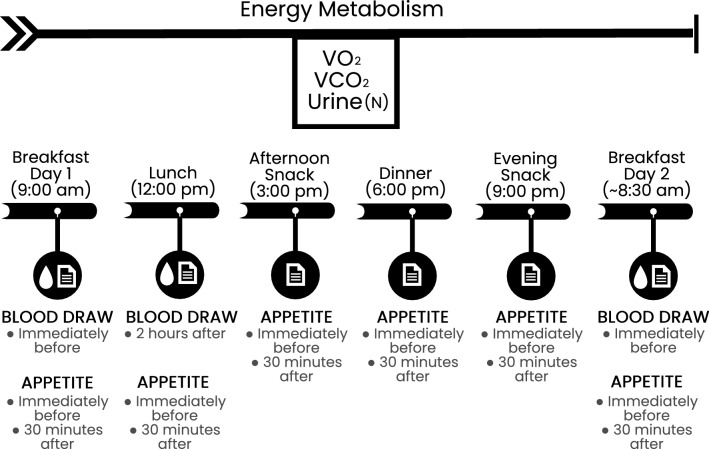
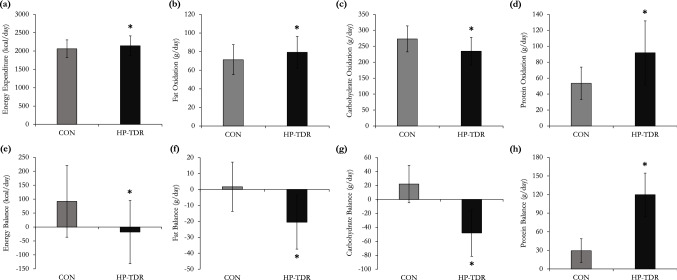
Methods: In this acute randomized controlled, cross-over study, participants completed two isocaloric arms: a) HP-TDR: 35% carbohydrate, 40% protein, and 25% fat; b) CON: 55% carbohydrate, 15% protein, and 30% fat. The diets were provided for 32 h while inside a whole-body calorimetry unit. Appetite sensations, appetite-related hormones, and energy metabolism were assessed.
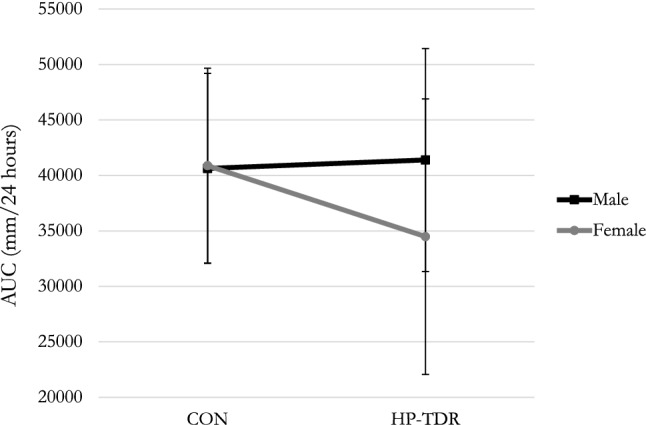
Results: Forty-three healthy, normal-weight adults (19 females) participated. Appetite sensations did not differ between diets (all p > 0.05). Compared to the CON diet, the change in fasting blood markers during the HP-TDR intervention was smaller for peptide tyrosine-tyrosine (PYY; - 18.9 ± 7.9 pg/mL, p = 0.02) and greater for leptin (1859 ± 652 pg/mL, p = 0.007). Moreover, postprandial levels of glucagon-like peptide 1 (1.62 ± 0.36 pM, p < 0.001) and PYY (31.37 ± 8.05 pg/mL, p < 0.001) were higher in the HP-TDR. Significant correlations were observed between energy balance and satiety (r = - 0.41, p = 0.007), and energy balance and PFC (r = 0.33, p = 0.033) in the HP-TDR.
Conclusion: Compared to the CON diet, the HP-TDR increased blood levels of anorexigenic hormones. Moreover, females and males responded differently to the intervention in terms of appetite sensations and appetite-related hormones.
Trial registration: NCT02811276 (retrospectively registered on 16 June 2016) and NCT03565510 (retrospectively registered on 11 June 2018).
Keywords: Appetite; Appetite-related hormones; Energy homeostasis; Protein; Total diet replacement.
© 2021. The Author(s).
Conflict of interest statement
In addition to what was mentioned above, Camila L. P. Oliveira received travel fees from Almased Wellness GmbH. Arya M. Sharma and Carla M. Prado have received travel and speaker fees unrelated to this study. Aloys Berg has received consulting fees.
Figures
References
Publication types
MeSH terms
Substances
Associated data
LinkOut - more resources
Full Text Sources
Medical
Research Materials
Miscellaneous
