


Putative pleiotropic effects of the knockdown resistance (L1014F) allele on the life-history traits of Anopheles gambiae
- PMID: 34930272
- PMCID: PMC8686585
- DOI: 10.1186/s12936-021-04005-5
Putative pleiotropic effects of the knockdown resistance (L1014F) allele on the life-history traits of Anopheles gambiae
Abstract
Background: Existing mechanisms of insecticide resistance are known to help the survival of mosquitoes following contact with chemical compounds, even though they could negatively affect the life-history traits of resistant malaria vectors. In West Africa, the knockdown resistance mechanism kdrR (L1014F) is the most common. However, little knowledge is available on its effects on mosquito life-history traits. The fitness effects associated with this knockdown resistance allele in Anopheles gambiae sensu stricto (s.s.) were investigated in an insecticide-free laboratory environment.
Methods: The life-history traits of Kisumu (susceptible) and KisKdr (kdr resistant) strains of An. gambiae s.s. were compared. Larval survivorship and pupation rate were assessed as well as fecundity and fertility of adult females. Female mosquitoes of both strains were directly blood fed through artificial membrane assays and then the blood-feeding success, blood volume and adult survivorship post-blood meal were assessed.
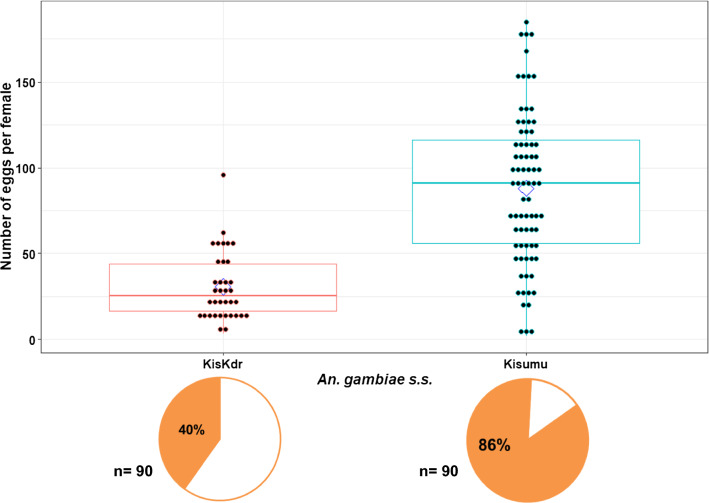
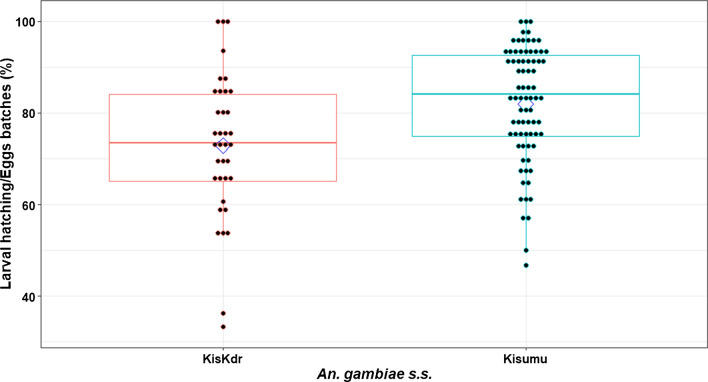
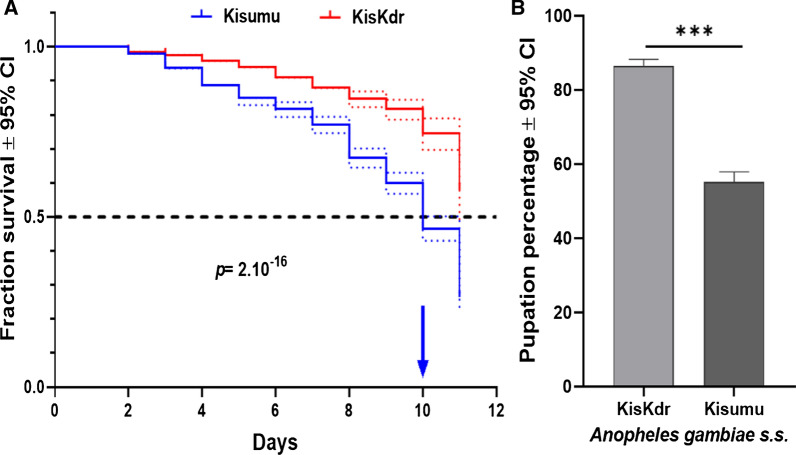
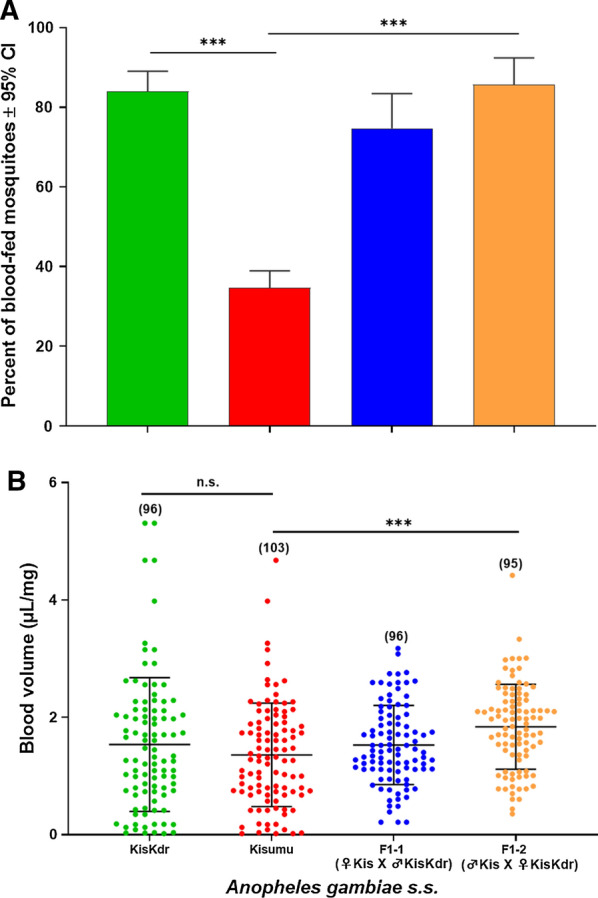
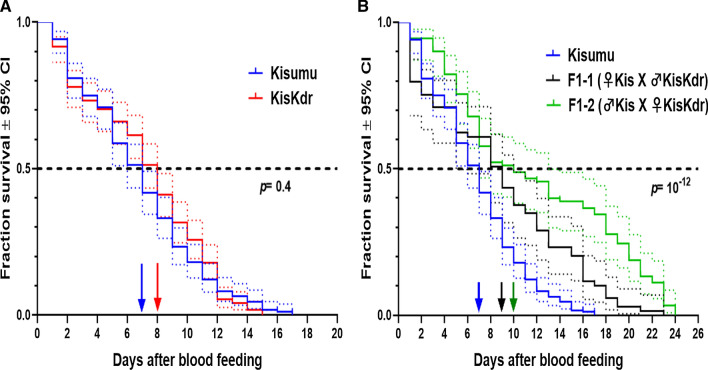
Results: The An. gambiae mosquitoes carrying the kdrR allele (KisKdr) laid a reduced number of eggs. The mean number of larvae in the susceptible strain Kisumu was three-fold overall higher than that seen in the KisKdr strain with a significant difference in hatching rates (81.89% in Kisumu vs 72.89% in KisKdr). The KisKdr larvae had a significant higher survivorship than that of Kisumu. The blood-feeding success was significantly higher in the resistant mosquitoes (84%) compared to the susceptible ones (34.75%). However, the mean blood volume was 1.36 µL/mg, 1.45 µL/mg and 1.68 µL/mg in Kisumu, homozygote and heterozygote KisKdr mosquitoes, respectively. After blood-feeding, the heterozygote KisKdr mosquitoes displayed highest survivorship when compared to that of Kisumu.
Conclusions: The presence of the knockdown resistance allele appears to impact the life-history traits, such as fecundity, fertility, larval survivorship, and blood-feeding behaviour in An. gambiae. These data could help to guide the implementation of more reliable strategies for the control of malaria vectors.
Keywords: Anopheles gambiae; Fitness effects; Kdr R allele; Life-history traits; Malaria.
© 2021. The Author(s).
Conflict of interest statement
The authors declare that they have no competing interests for this study.
Figures
References
-
- WHO . Global Malaria Programme. World Malaria Report. . Geneva: World Health Organization; 2017.
-
- Gillies MT, De Meillon B. The Anophelinae of Africa south of the Sahara. Publ South African Inst Med Res. 1968;54:1–343.
-
- Gillies MT, Coetzee M. A supplement to the Anophelinae of Africa south of the Sahara (Afrotropical Region) Publ South African Inst Med Res. 1987;55:1–143.
MeSH terms
LinkOut - more resources
Full Text Sources
