Meta-Analysis
. 2021 Dec 20;11(1):24287.
doi: 10.1038/s41598-021-03778-8.

Long-term macrolide treatment for non-cystic fibrosis bronchiectasis in children: a meta-analysis

Affiliations
Meta-Analysis

Long-term macrolide treatment for non-cystic fibrosis bronchiectasis in children: a meta-analysis

Eun Lee et al. Sci Rep. .

Abstract

Recurrent bacterial infection causes frequent bronchiectasis (BE) exacerbations. The effectiveness and safety of long-term administration of macrolides in BE remain controversial, especially in children who require minimal treatment to prevent exacerbation. We conducted this meta-analysis to determine the usefulness of long-term macrolide use in pediatric BE. We searched PubMed, Cochrane Library databases, Embase, KoreaMed, Igaku Chuo Zasshi, and Chinese National Knowledge Infrastructure databases. We identified randomized controlled trials (RCTs) which elucidated long-term macrolide treatment (≥ 4 weeks) in non-cystic fibrosis BE in children aged < 18 years. The primary outcome was frequency of acute exacerbation; secondary outcomes included changes in pulmonary function, sputum scores, and adverse events including bacterial resistance. We included four RCTs. Long-term macrolide treatment showed a significant decrease in the frequency of exacerbation (odds ratio [OR], 0.30; 95% confidence interval [CI], 0.10-0.87), mean number of exacerbations per patient (mean difference, - 1.40; 95% CI, - 2.26 to - 0.54), and sputum purulence score (mean difference, - 0.78; 95% CI, - 1.32 to - 0.24). However, long-term macrolide treatment was accompanied by an increased carriage of azithromycin-resistant bacteria (OR, 7.13). Long-term macrolide administration prevents exacerbation of BE in children; however, there are risks of increasing antibiotic resistance. Benefits and risks should be weighed and determined on a patient-by-patient basis.


Conflict of interest statement

The authors declare no competing interests.

Figures
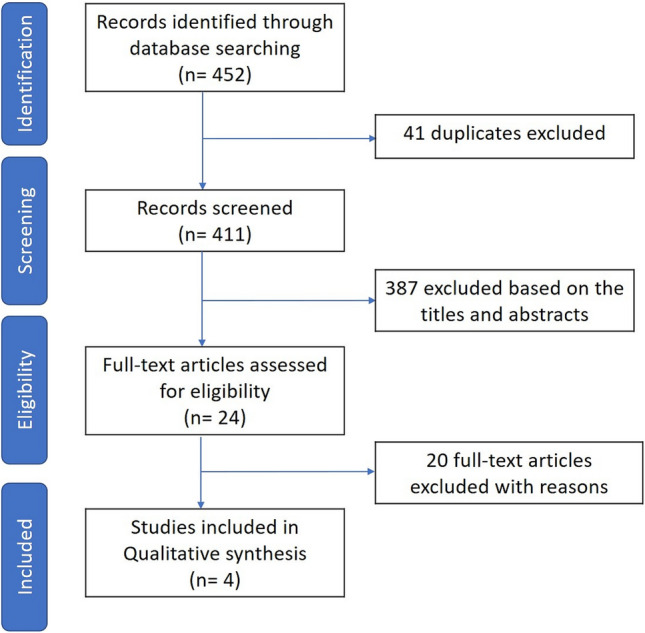
Figure 1
Figure 1
PRISMA flow diagram.
Figure 2
Figure 2
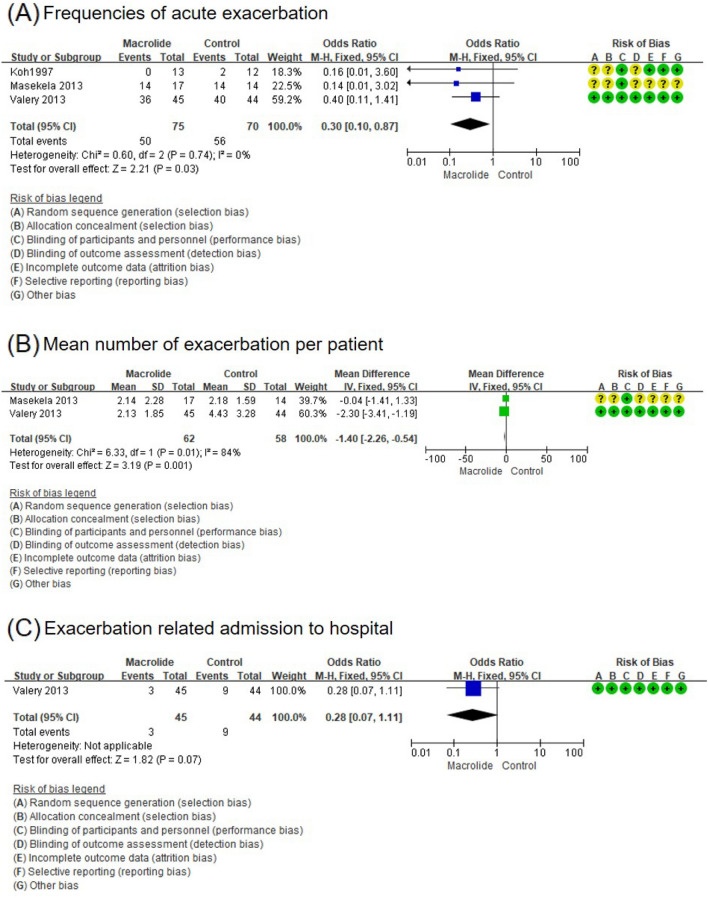
Forest plot of the effects of long-term macrolide treatment on acute exacerbation of bronchiectasis (BE) in children with non-cystic fibrosis BE. (A) Frequencies of acute exacerbation, (B) mean number of exacerbations of BE per patient, and (C) exacerbation-related admission to the hospital.
Figure 3
Figure 3
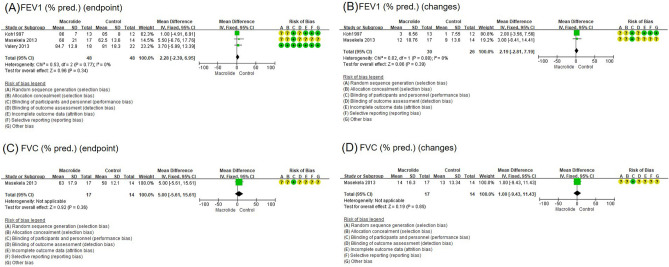
Forest plot of the effects of long-term macrolide treatment on the pulmonary function in children with non-cystic fibrosis BE. (A) FEV1% predicted at endpoint, (B) FEV1% predicted changes, (C) FVC % predicted at the endpoint, and (D) FVC % predicted changes. FEV1, forced expiratory volume in 1 s; FVC, forced vital capacity.
Figure 4
Figure 4
Forest plot of the sputum scores of long-term macrolide treatment on children with non-cystic fibrosis BE. (A) Sputum purulent score, and (B) sputum leukocyte score in children with BE.
Figure 5
Figure 5
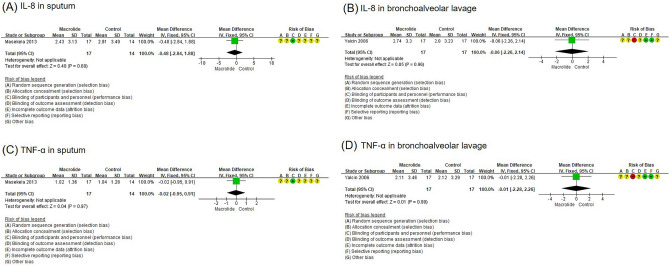
Forest plot of the effects of long-term macrolide treatment on cytokine levels from the sputum in children with BE. (A) Log-transformed IL-8 levels in the sputum, (B) log-transformed IL-8 levels in the bronchoalveolar lavage fluid, (C) log-transformed TNF-α level in the sputum, and (D) log-transformed TNF-α level in the bronchoalveolar lavage fluid.
Figure 6
Figure 6
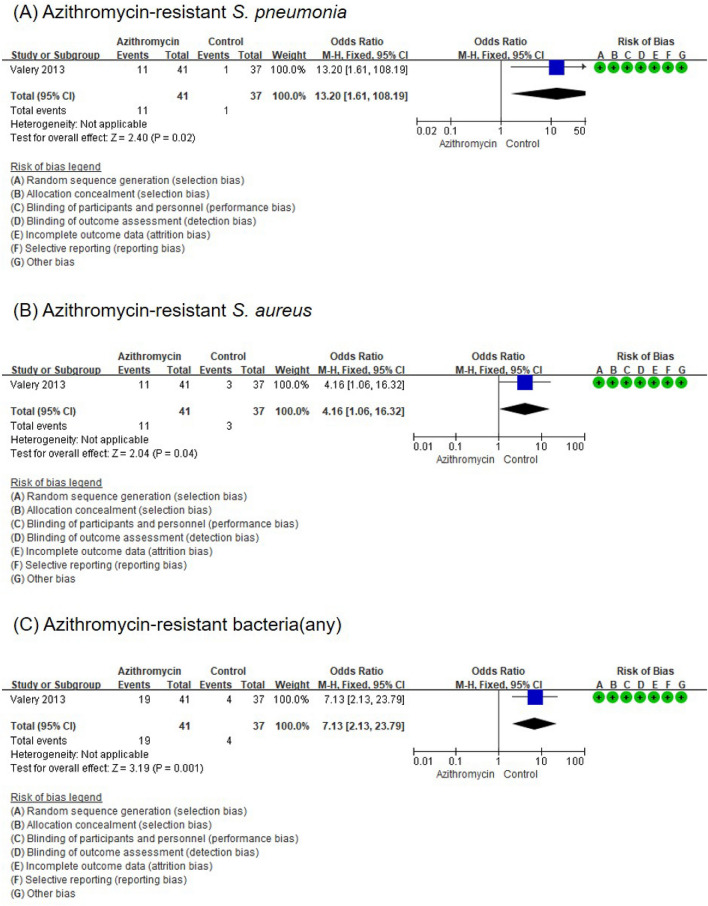
Forest plot of the effects of long-term macrolide treatment on the development of resistance to antibiotics in children with BE. (A) Azithromycin-resistant Streptococcus pneumoniae, (B) azithromycin-resistant Staphylococcus aureus, and (C) any azithromycin-resistant bacteria.
Figure 7
Figure 7
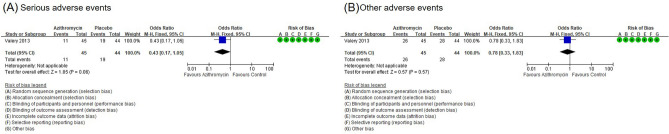
Forest plot for adverse events with long-term macrolide treatment in children with BE. (A) Serious adverse events and (B) other adverse events.

References

    1. Lee E, Hong SJ. Pharmacotherapeutic strategies for treating bronchiectasis in pediatric patients. Expert Opin. Pharmacother. 2019;20:1025–1036. doi: 10.1080/14656566.2019.1589453. - DOI - PubMed
    1. Ramsey KA, Chen ACH, Radicioni G, Lourie R, Martin M, Broomfield A, et al. Airway mucus hyperconcentration in non-cystic fibrosis bronchiectasis. Am. J. Respir. Crit. Care Med. 2020;201:661–670. doi: 10.1164/rccm.201906-1219OC. - DOI - PMC - PubMed
    1. Lee E, Shim JY, Kim HY, Suh DI, Choi YJ, Han MY, et al. Clinical characteristics and etiologies of bronchiectasis in Korean children: A multicenter retrospective study. Respir. Med. 2019;150:8–14. doi: 10.1016/j.rmed.2019.01.018. - DOI - PubMed
    1. Imam JS, Duarte AG. Non-CF bronchiectasis: Orphan disease no longer. Respir. Med. 2020;166:105940. doi: 10.1016/j.rmed.2020.105940. - DOI - PubMed
    1. Lovie-Toon YG, Grimwood K, Byrnes CA, Goyal V, Busch G, Masters IB, et al. Health-resource use and quality of life in children with bronchiectasis: a multi-center pilot cohort study. BMC Health Serv. Res. 2019;19:561. doi: 10.1186/s12913-019-4414-5. - DOI - PMC - PubMed

Publication types