Review
. 2022 May 26;39(5):946-968.
doi: 10.1039/d1np00062d.

Synthesis of rearranged indole diterpenes of the paxilline type

Affiliations
Review

Synthesis of rearranged indole diterpenes of the paxilline type

Devon J Schatz et al. Nat Prod Rep. .

Abstract

Covering: up to 2021Rearranged indole diterpenes of the paxilline type comprise a large group of fungal metabolites that possess diverse structural features and potentially useful biological effects. The unique indoloterpenoid motif, which is common to all congeners, was first confirmed by crystallographic studies of paxilline. This family of natural products has fascinated organic chemists for the past four decades and has inspired numerous syntheses and synthetic approaches. The present review highlights efforts that have laid the foundation and introduced new directions to this field of natural product synthesis. The introduction includes a summary of biosynthetic considerations and biological activities, the main body of the manuscript provides a detailed discussion of selected syntheses, and the review concludes with a brief outlook on the future of the field.


Conflict of interest statement

Conflicts of interest

There are no conflicts to declare.

Figures
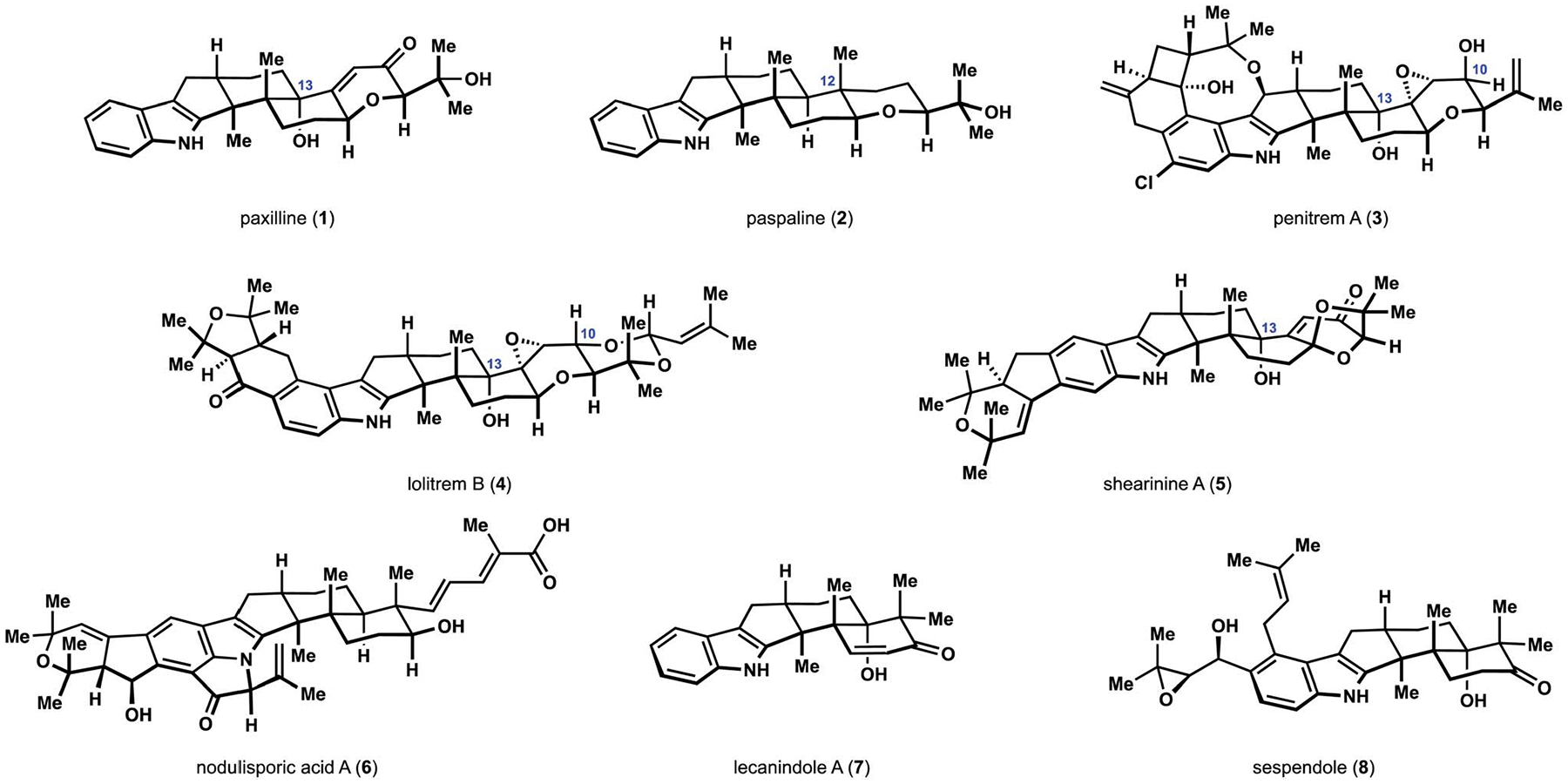
Fig. 1
Fig. 1
Representative natural products containing rearranged indoloterpenoid core.
Fig. 2
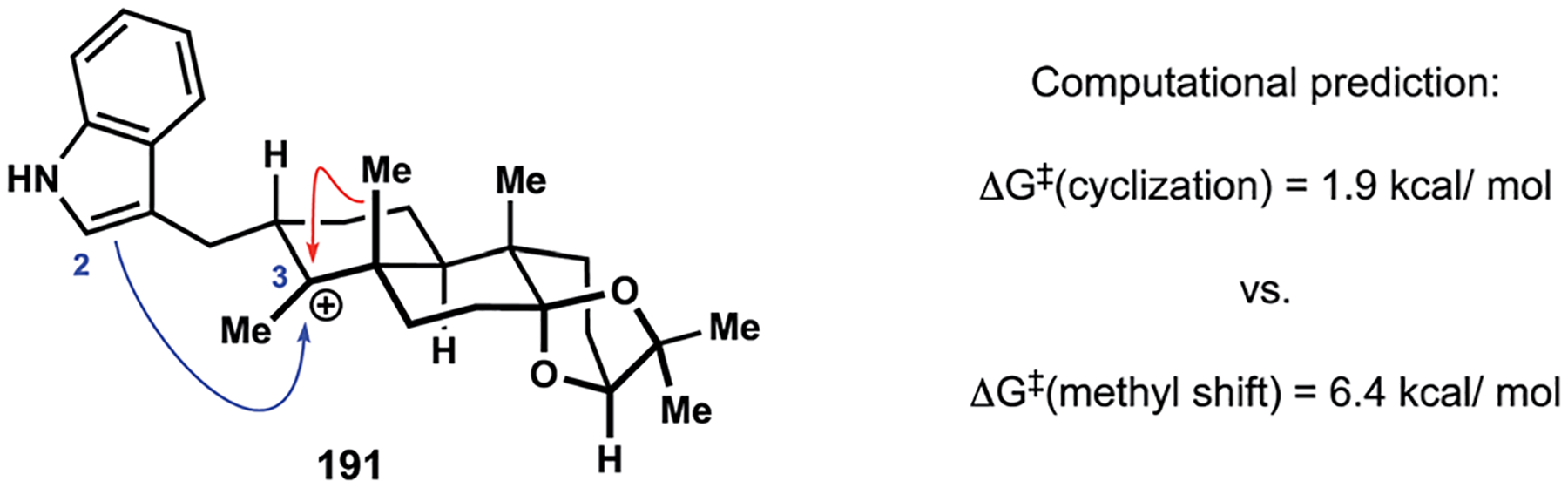
Fig. 2
Computational evaluation of a biomimetic Friedel–Crafts cyclization by the Newhouse group.
Scheme 1
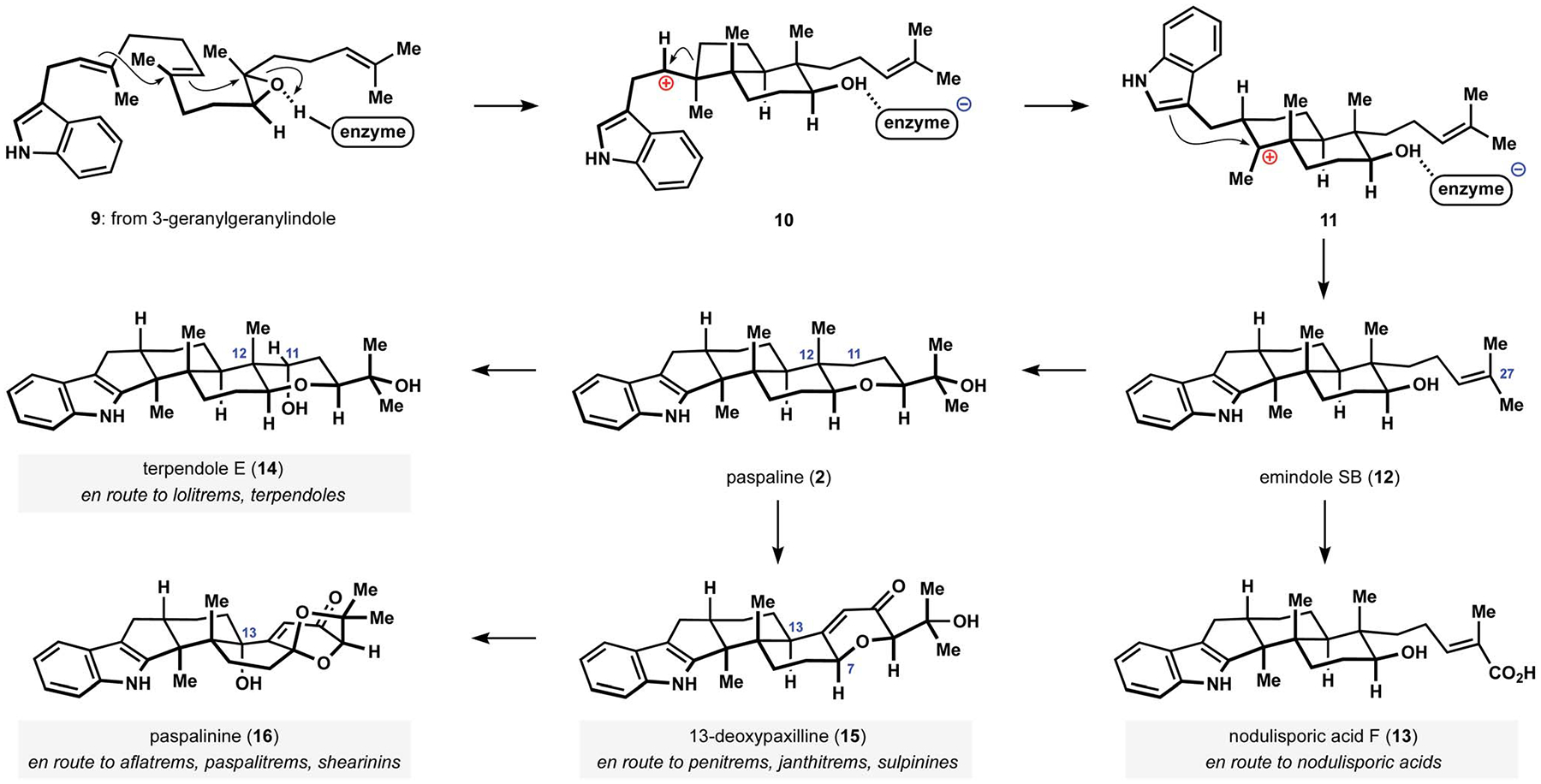
Scheme 1
Biosynthetic construction and modification of the shared indoloterpenoid core.
Scheme 2
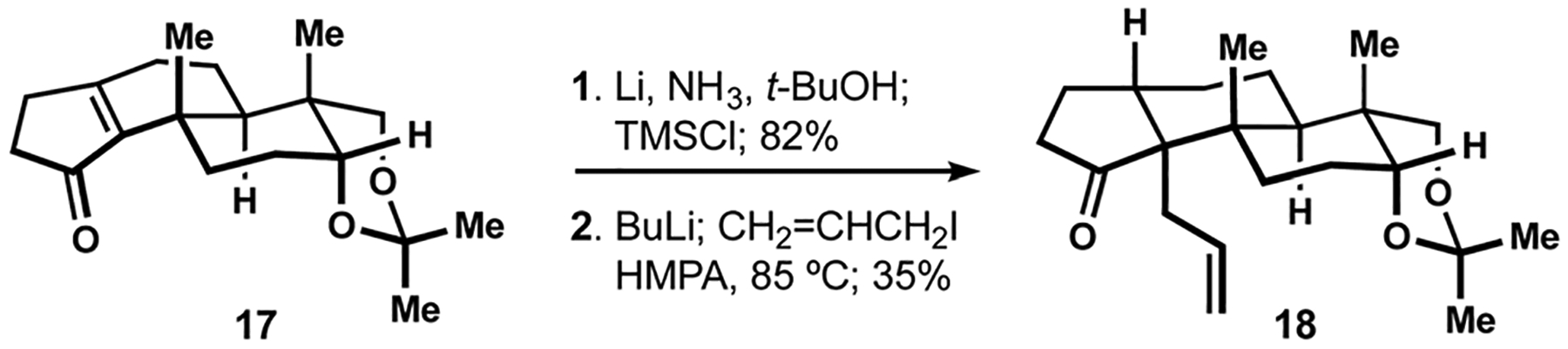
Scheme 2
Reductive allylation en route to aphidicolin.
Scheme 3
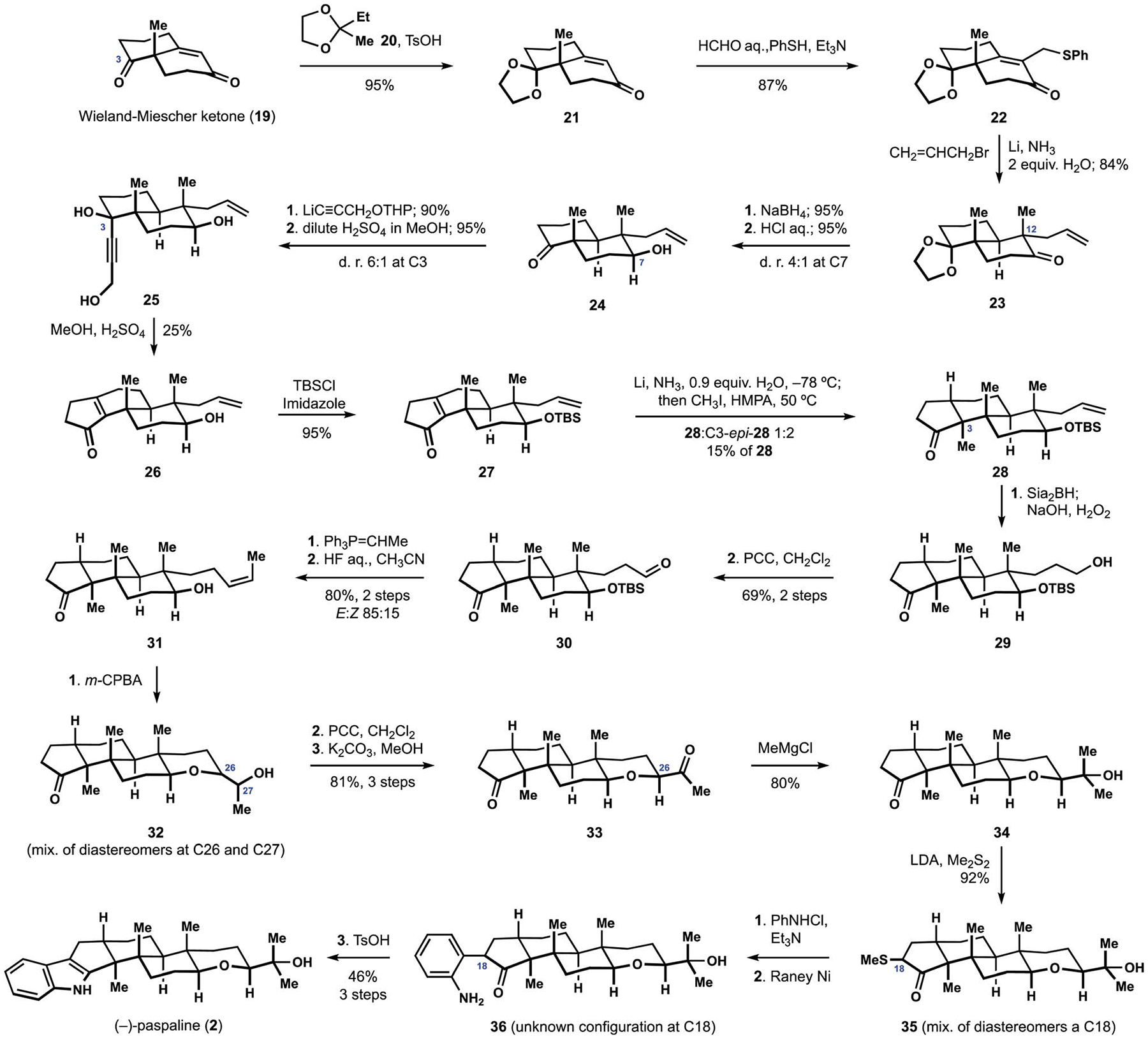
Scheme 3
The Smith synthesis of (−)-paspaline (2).
Scheme 4
Scheme 4
Revised synthesis of the tricyclic terpenoid motif by the Smith group.
Scheme 5
Scheme 5
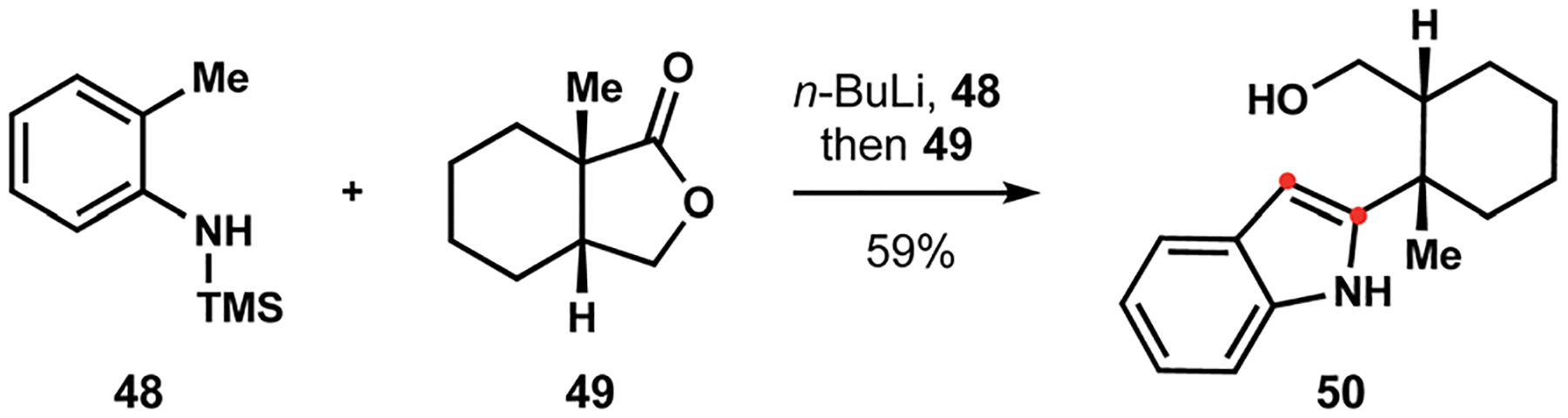
New indole synthesis developed by the Smith group.
Scheme 6
Scheme 6
Synthesis of the polycyclic terpenoid motif of penitrems by the Smith group.
Scheme 7
Scheme 7
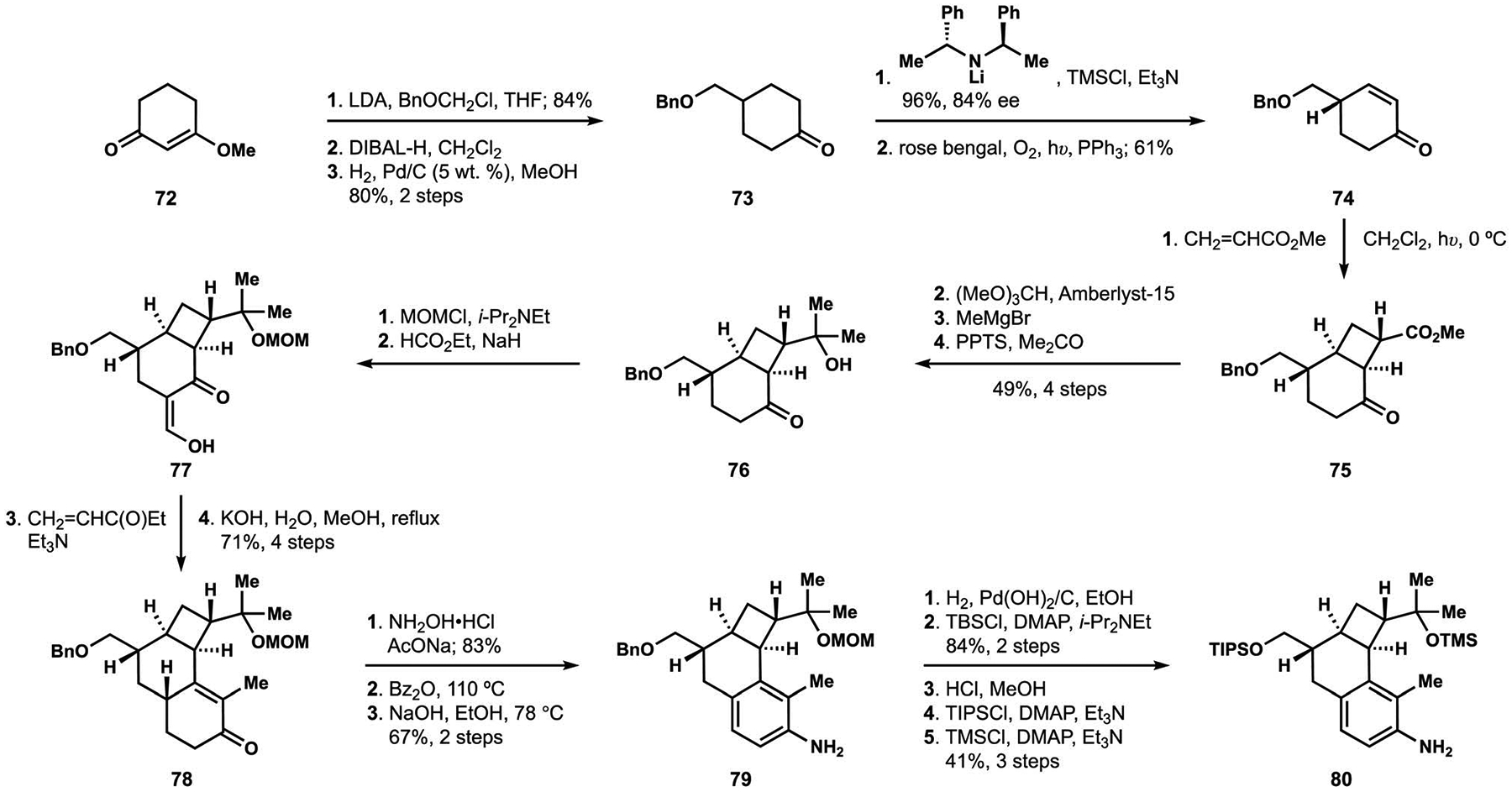
Construction of the toluidine fragment by the Smith group.
Scheme 8
Scheme 8
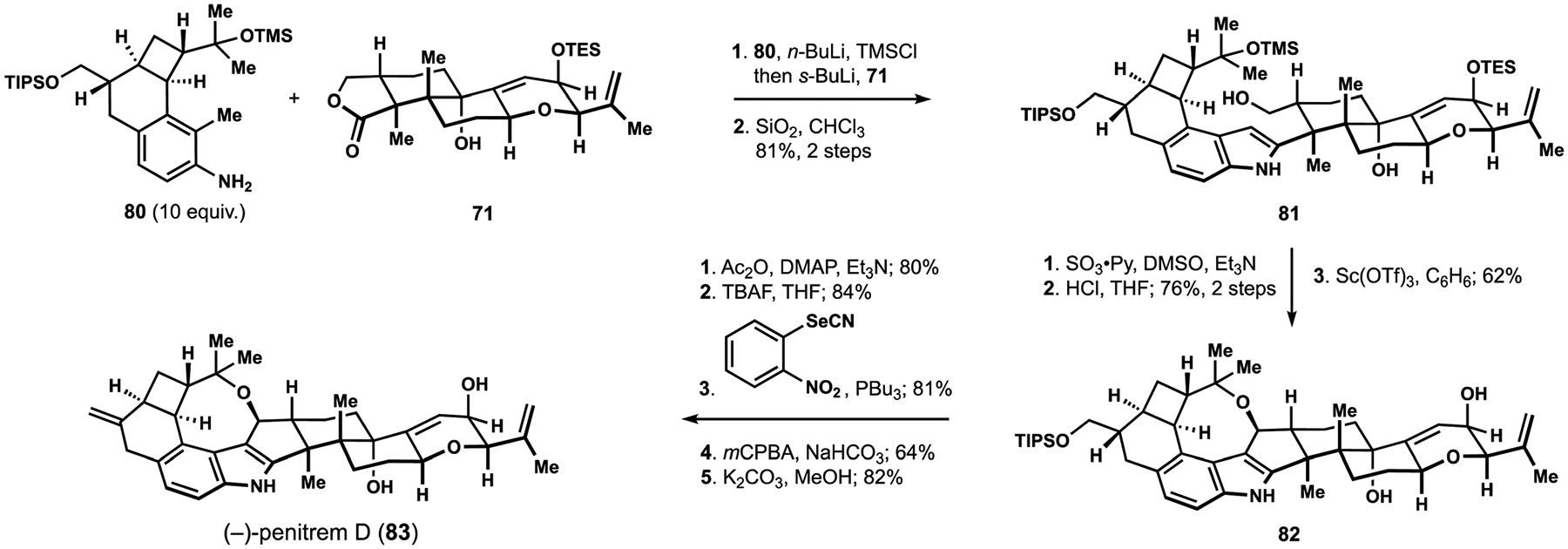
The Smith synthesis of (−)-penitrem D (83).
Scheme 9
Scheme 9
The Saxton approach to the terpenoid core.
Scheme 10
Scheme 10
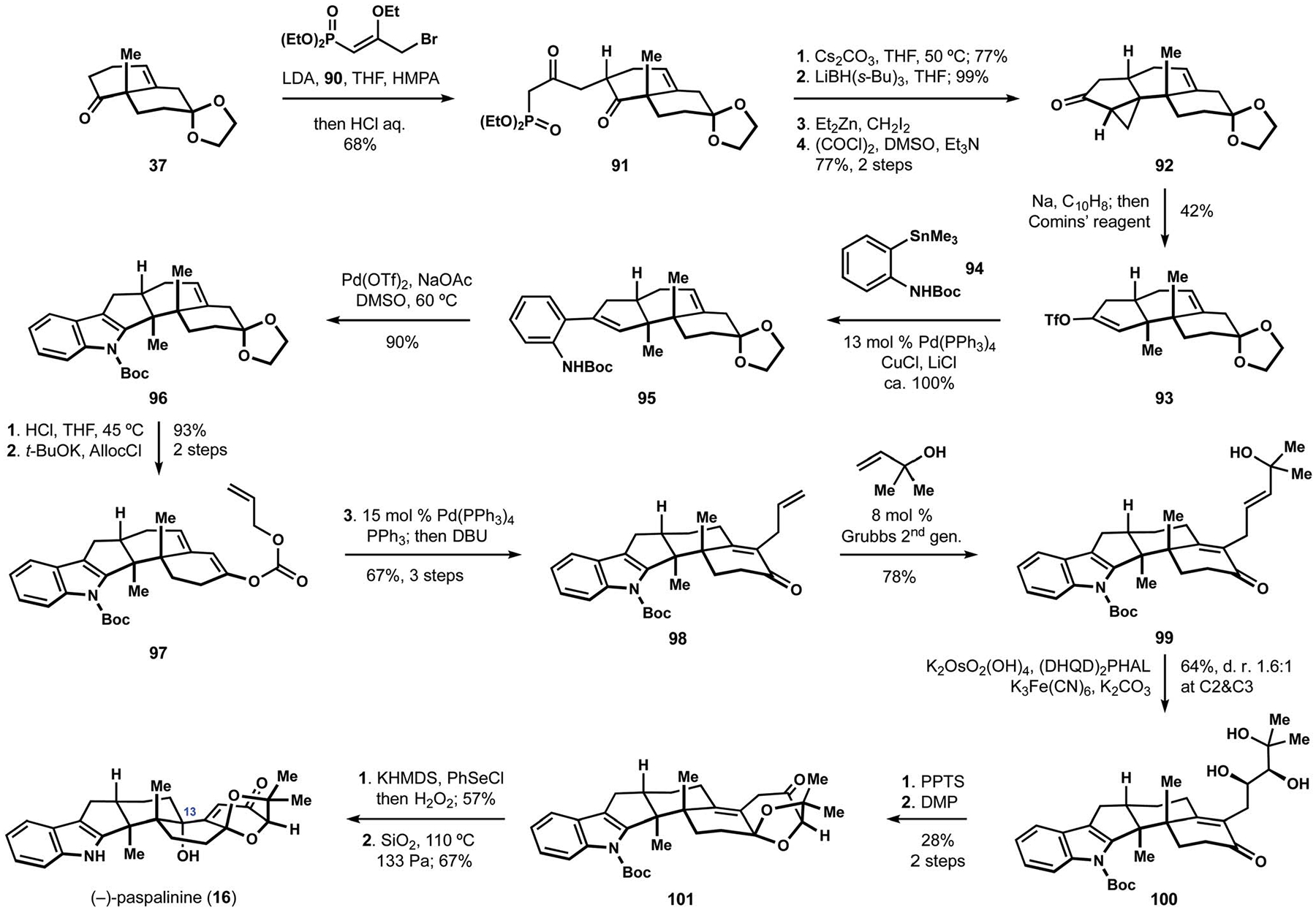
The Kuwahara synthesis of (−)-paspalinine (16).
Scheme 11
Scheme 11
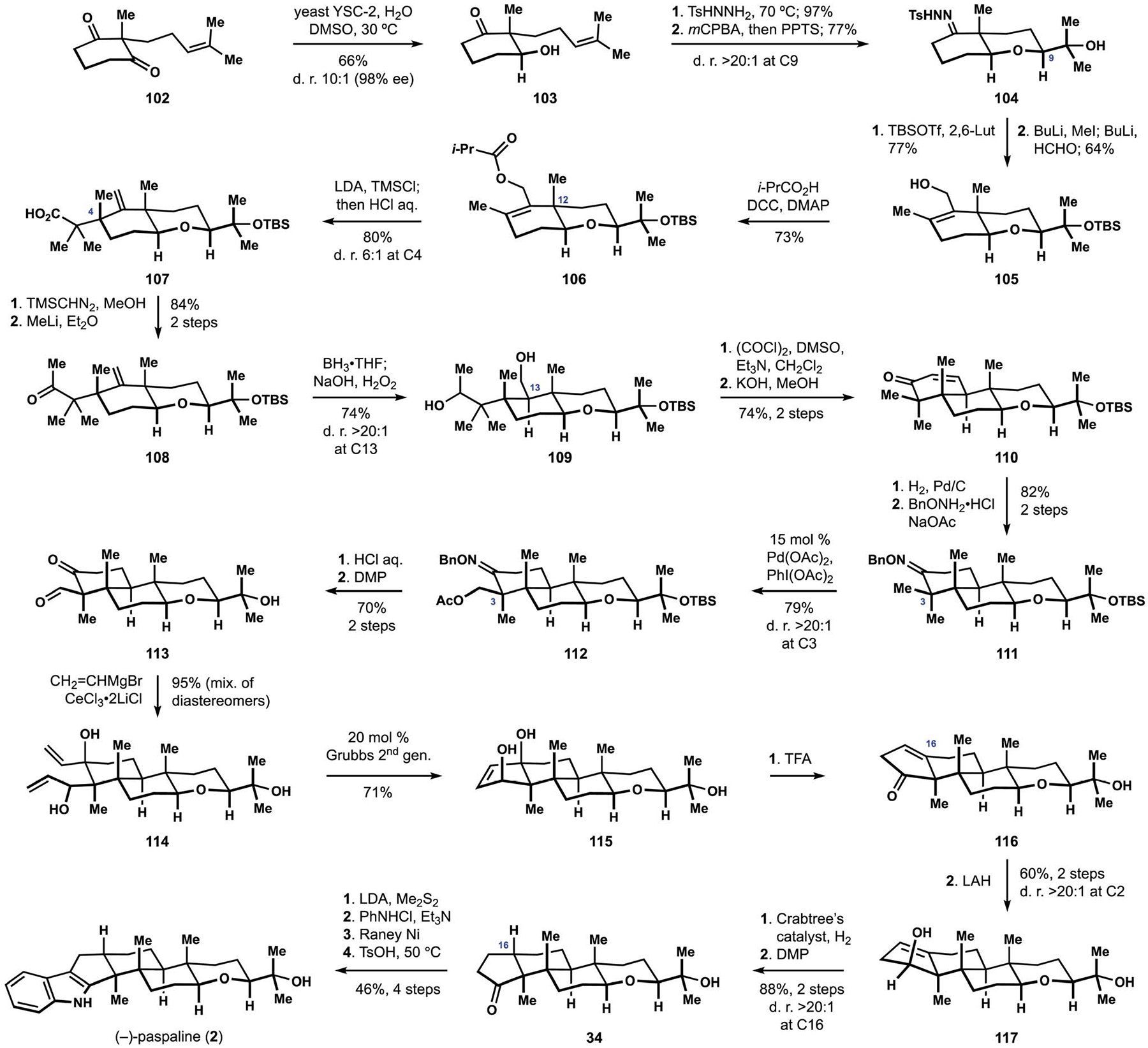
The Johnson synthesis of (−)-paspaline (2).
Scheme 12
Scheme 12
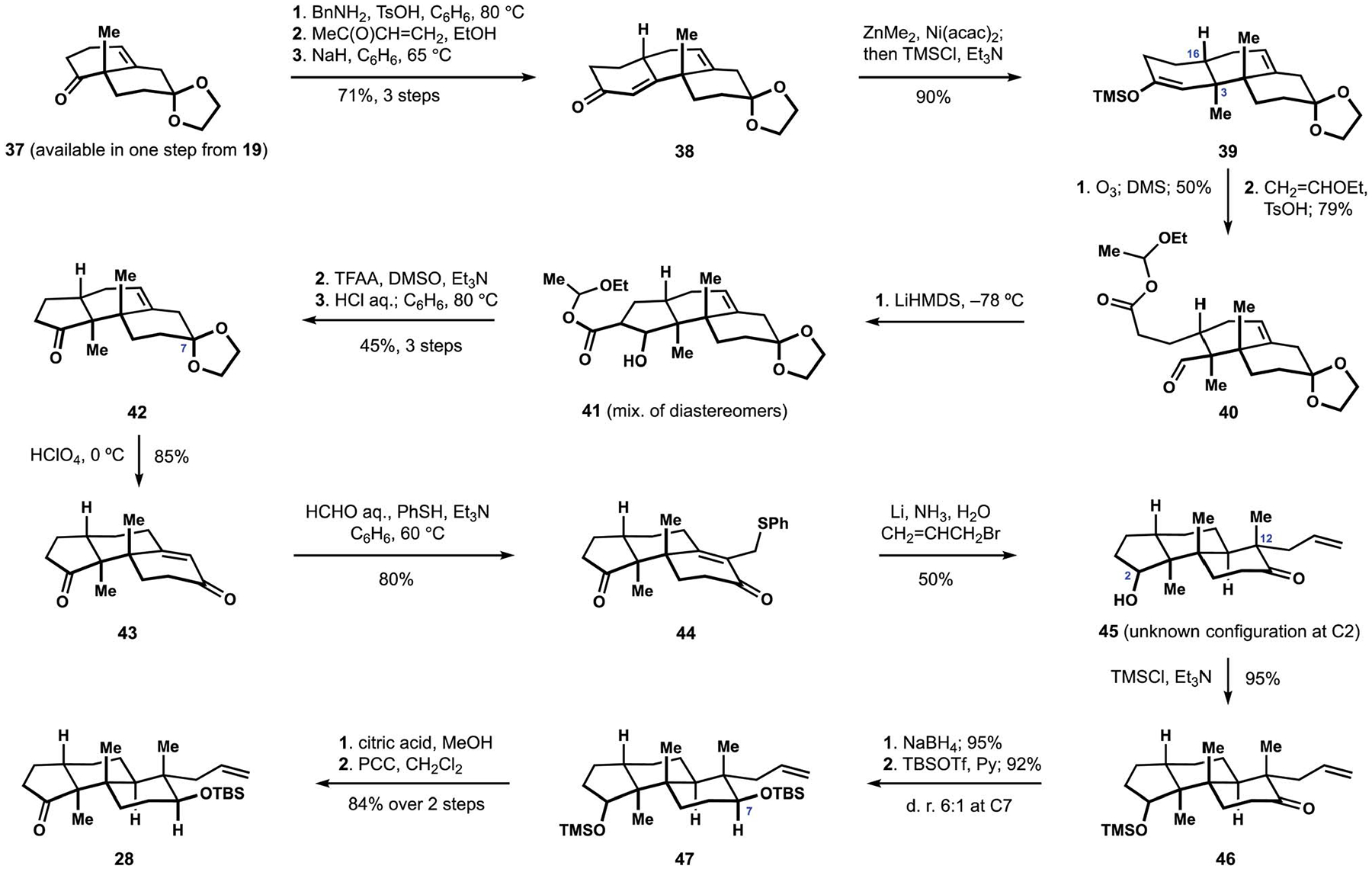
Fragment coupling en route to nodulisporic acids developed by the Smith group.
Scheme 13
Scheme 13
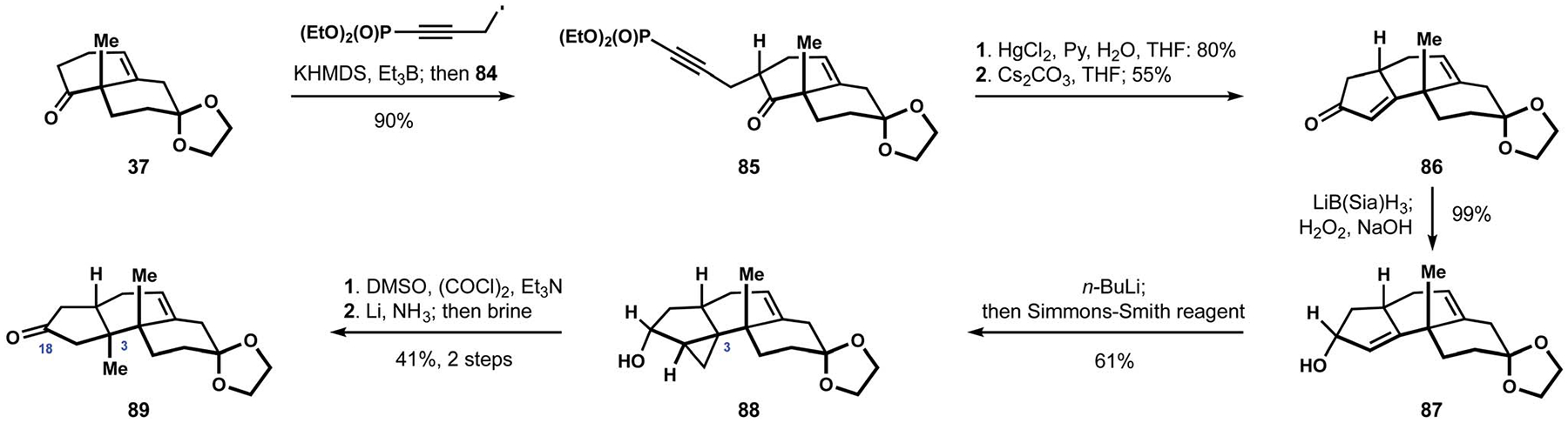
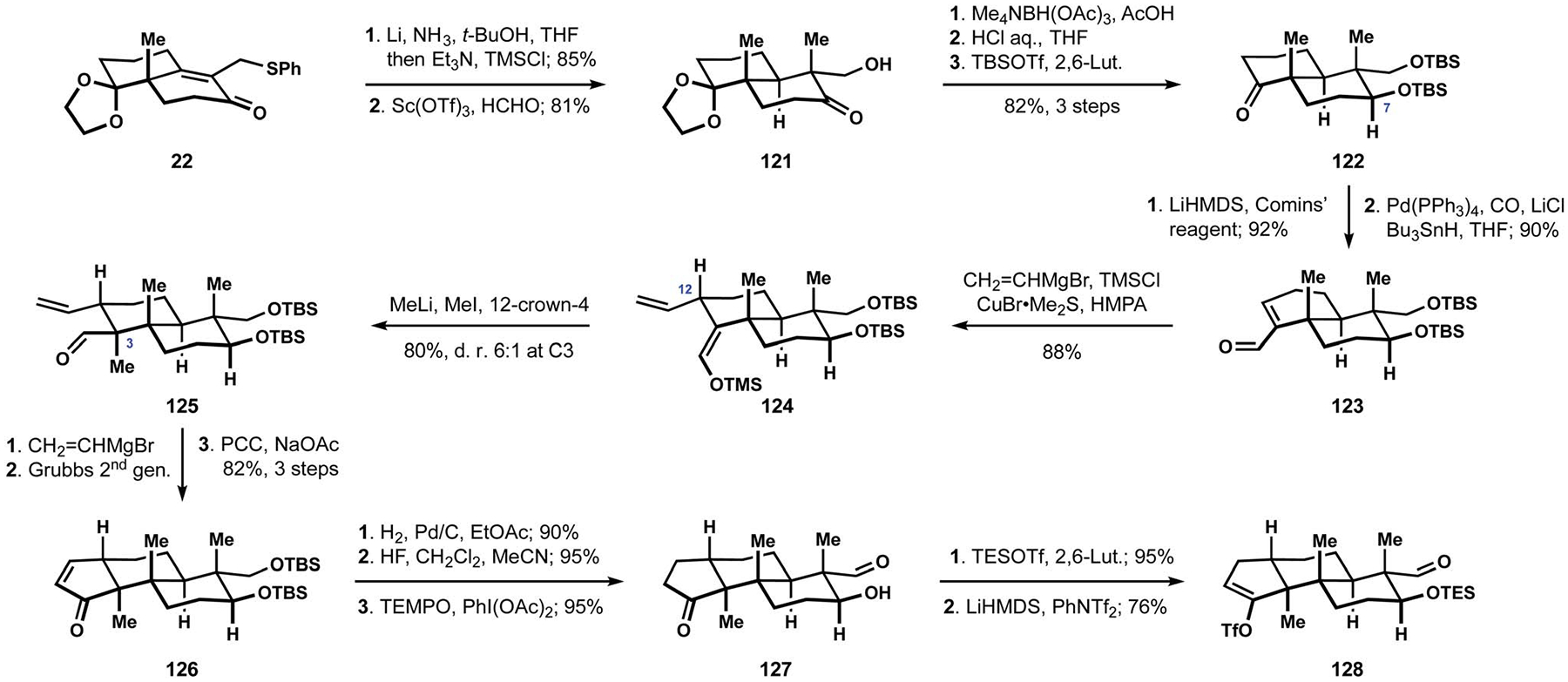
Refined and abbreviated construction of the tricyclic terpenoid motif by the Smith group.
Scheme 14
Scheme 14
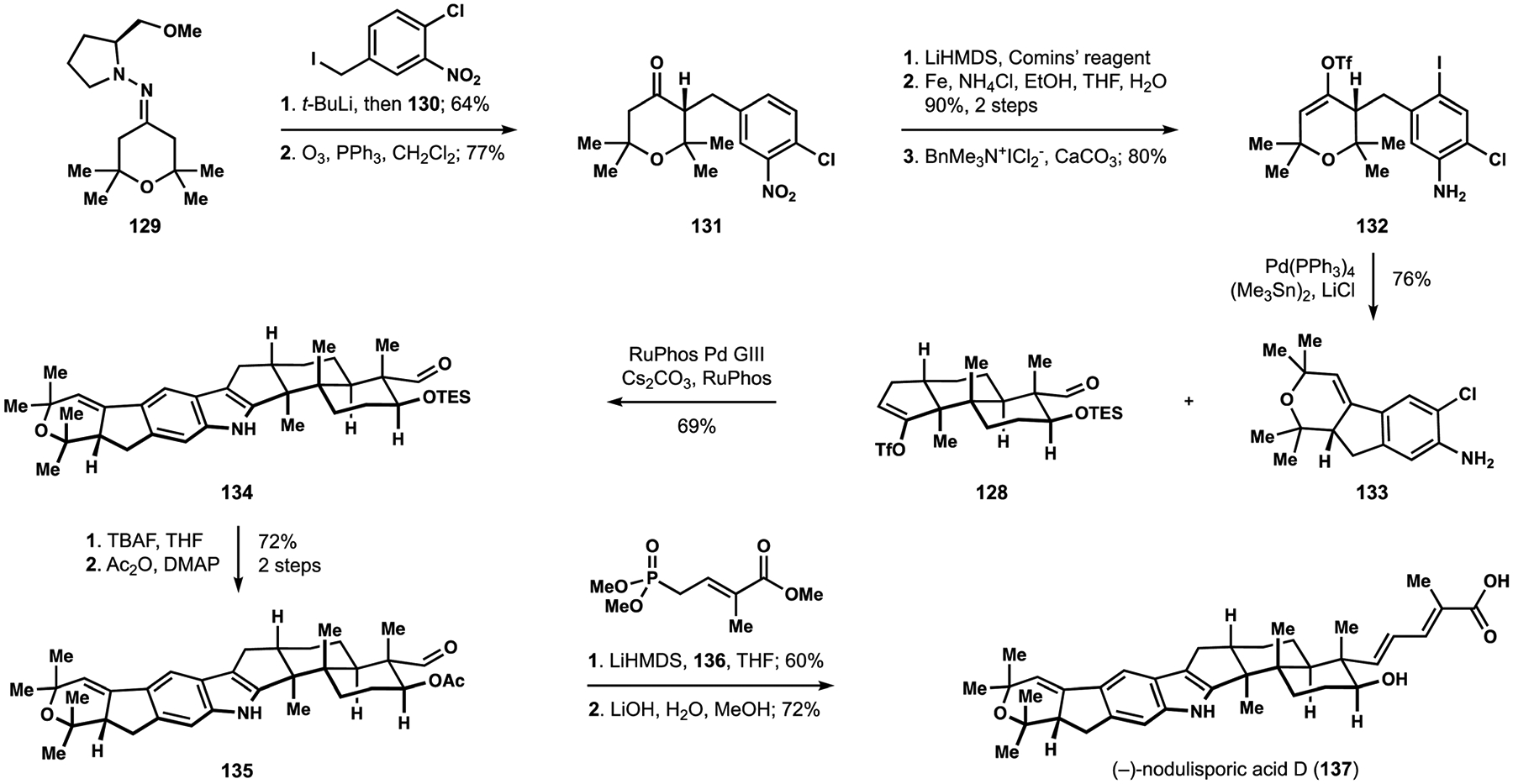
The Smith synthesis of (−)-nodulisporic acid D (137).
Scheme 15
Scheme 15
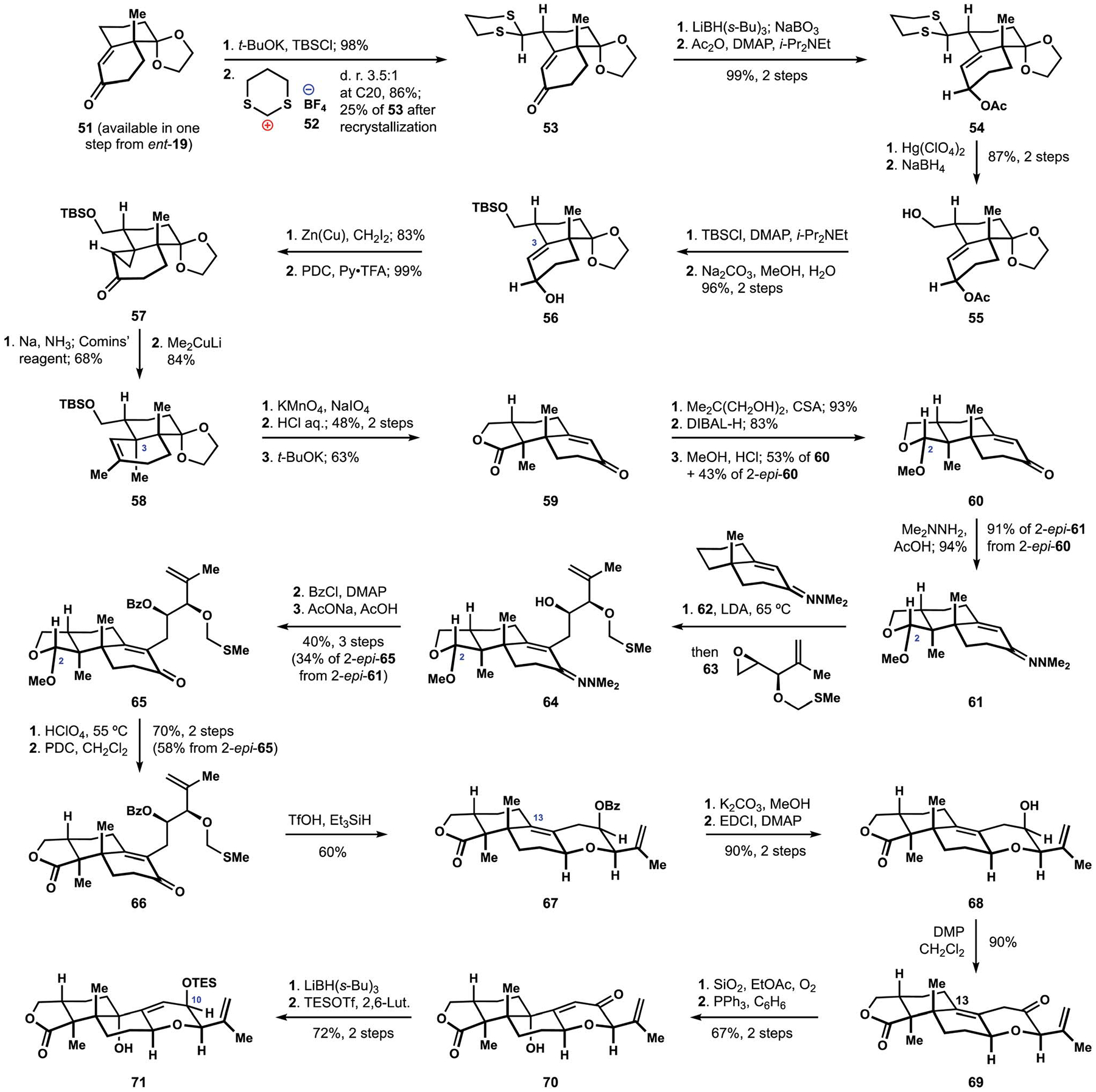
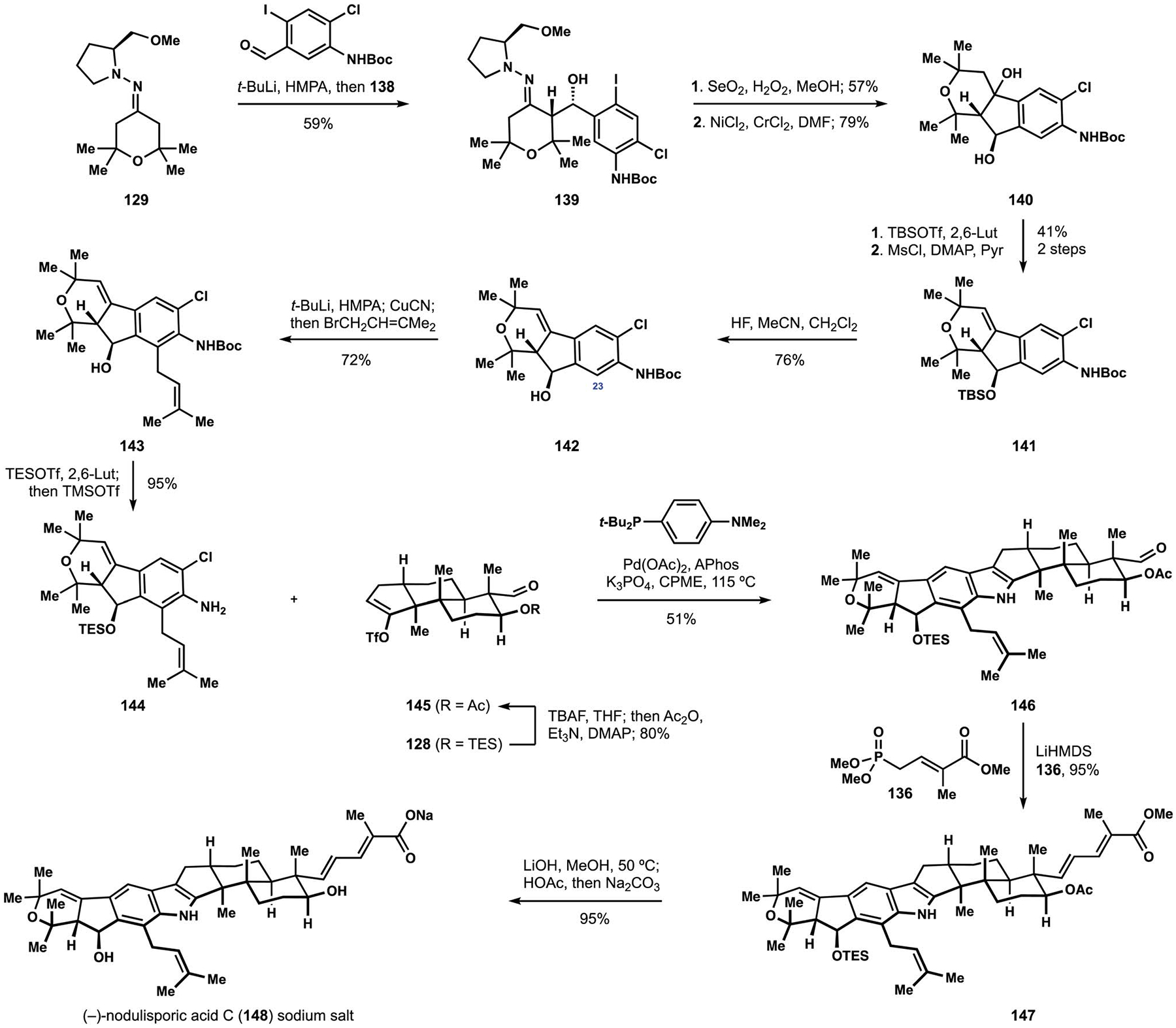
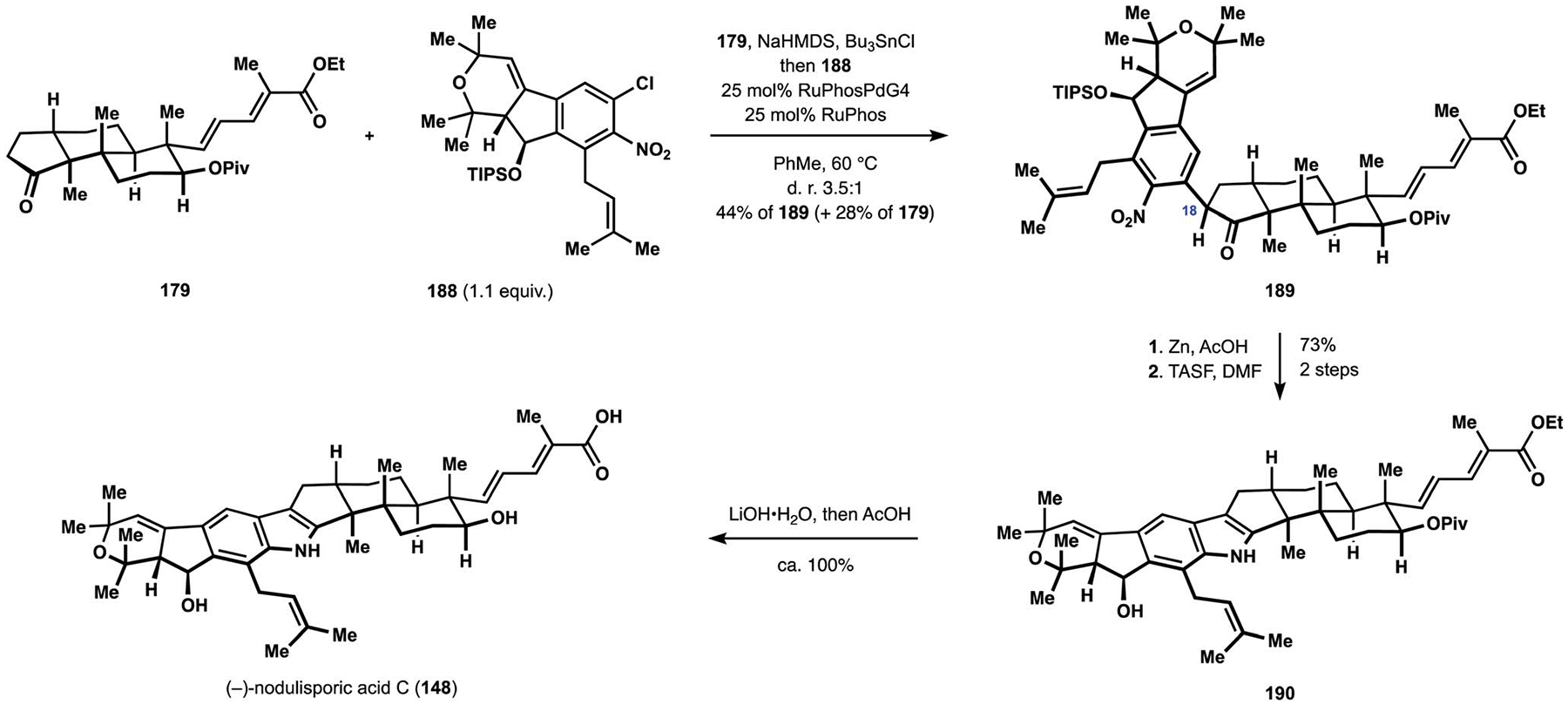
The Smith synthesis of (−)-nodulisporic acid C (148).
Scheme 16
Scheme 16
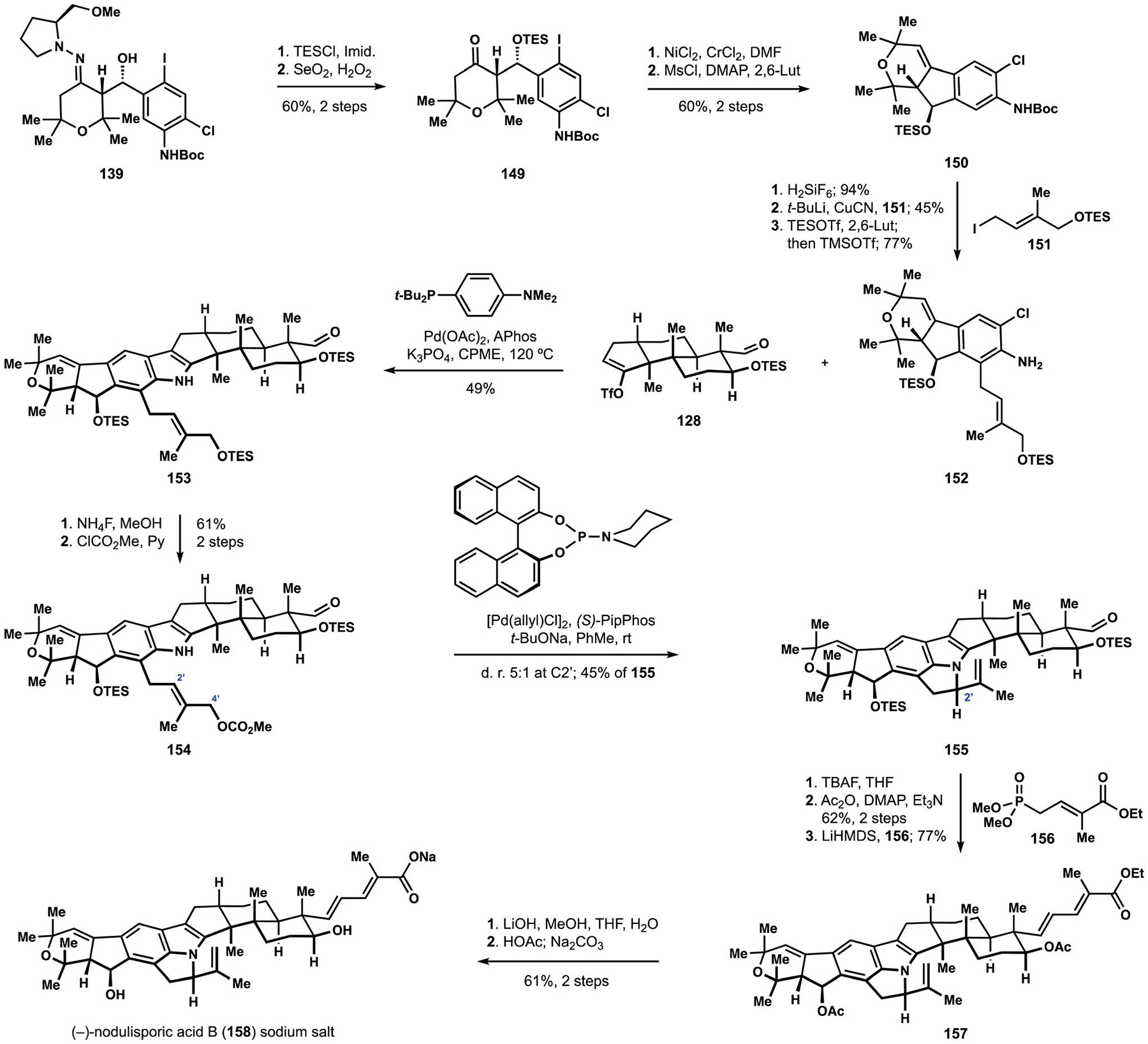
The Smith synthesis of (−)-nodulisporic acid B (158).
Scheme 17
Scheme 17
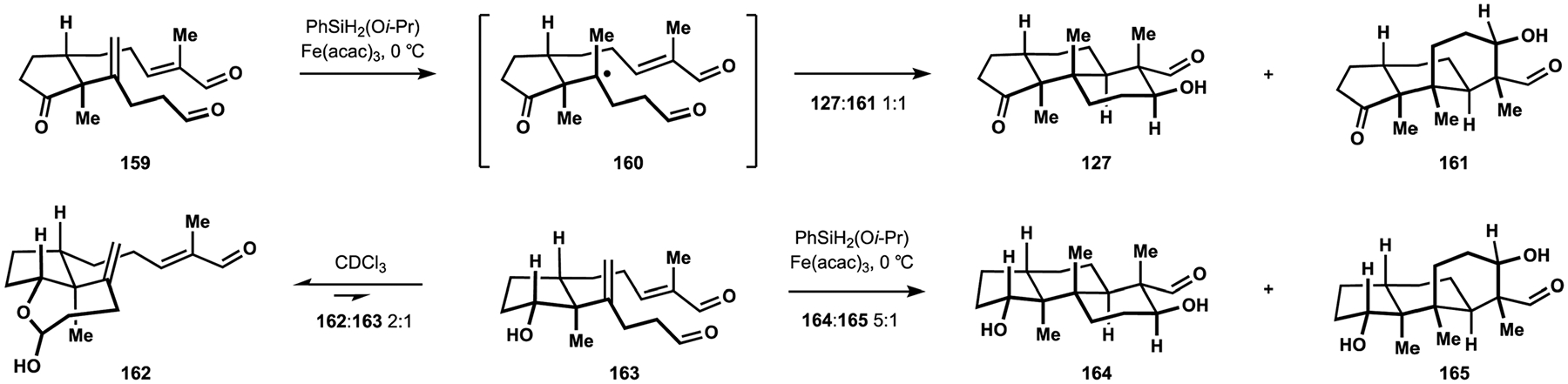
HAT-initiated polycyclization en route to the tricyclic terpenoid core developed by the Pronin group.
Scheme 18
Scheme 18
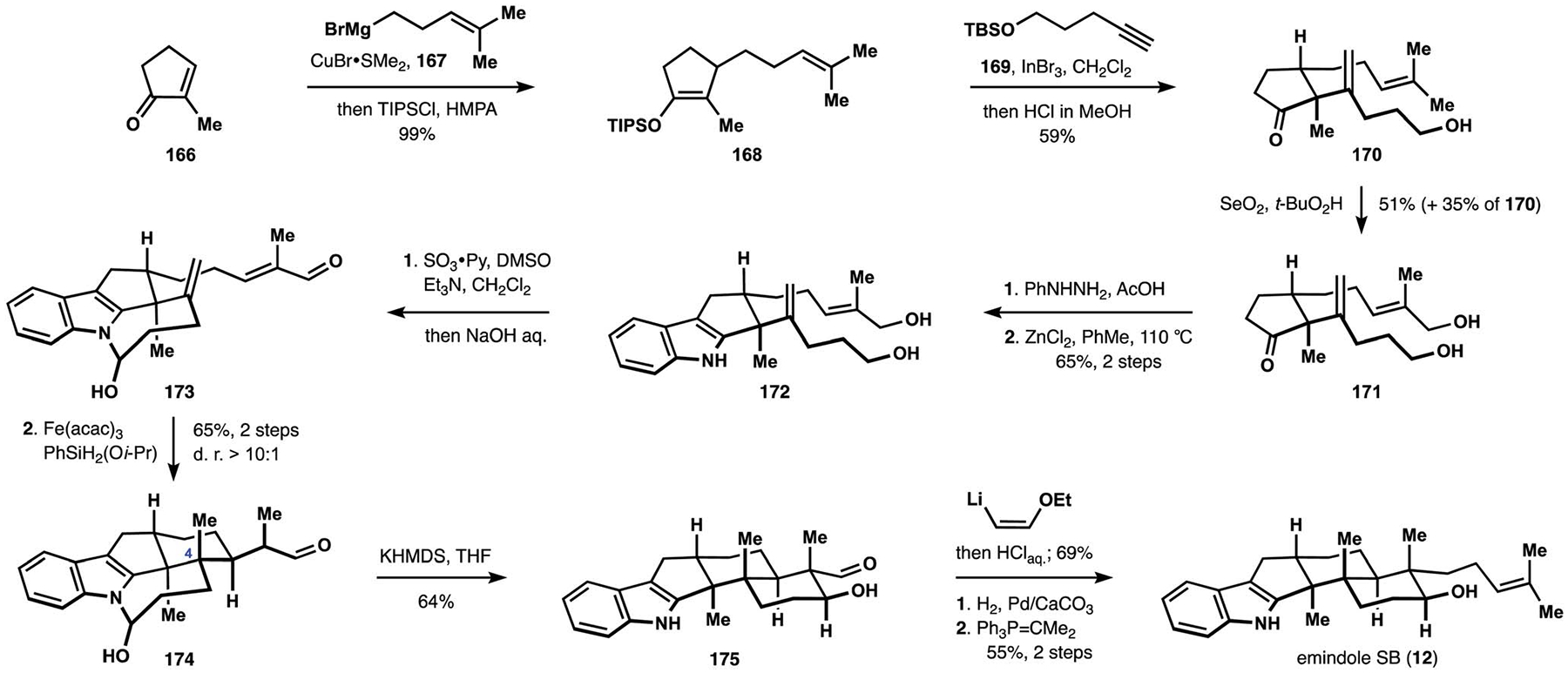
The Pronin synthesis of emindole SB (12).
Scheme 19
Scheme 19
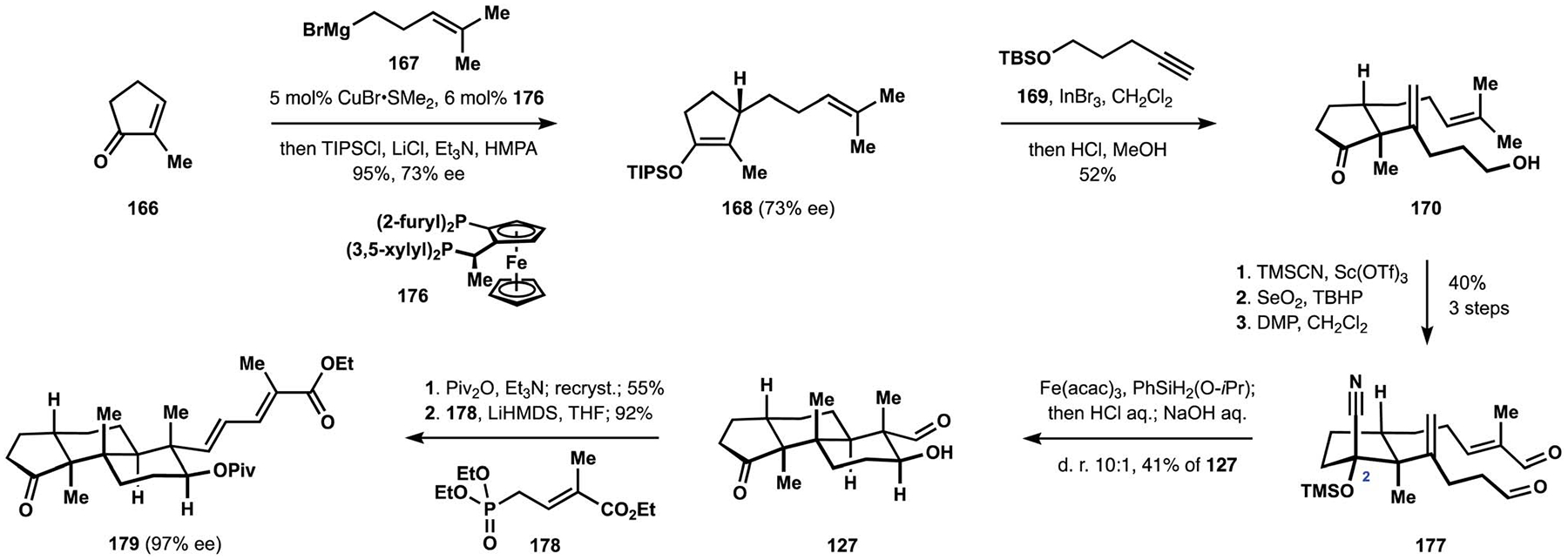
Synthesis of the dienoic acid fragment by the Pronin group.
Scheme 20
Scheme 20
Synthesis of the indenopyran fragment by the Pronin group.
Scheme 21
Scheme 21
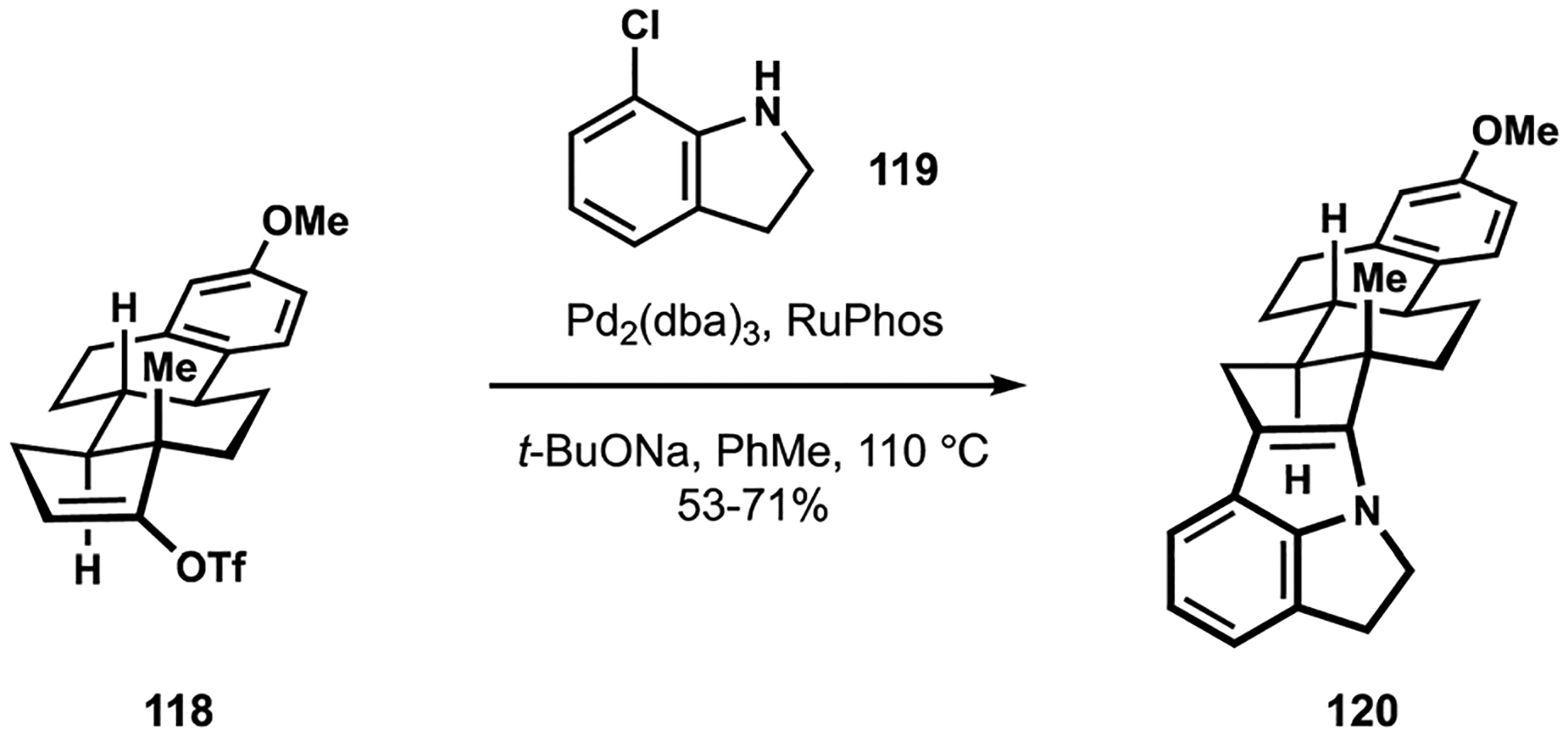
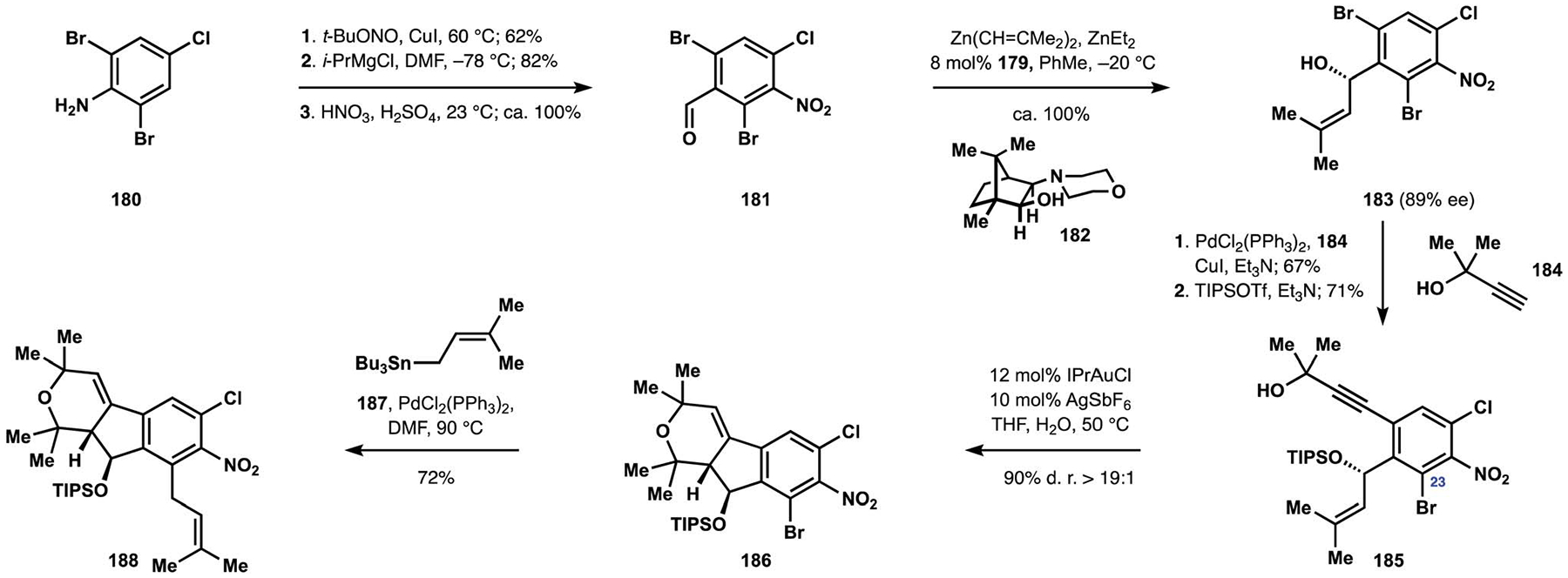
The Pronin synthesis of (−)-nodulisporic acid C (148).
Scheme 22
Scheme 22
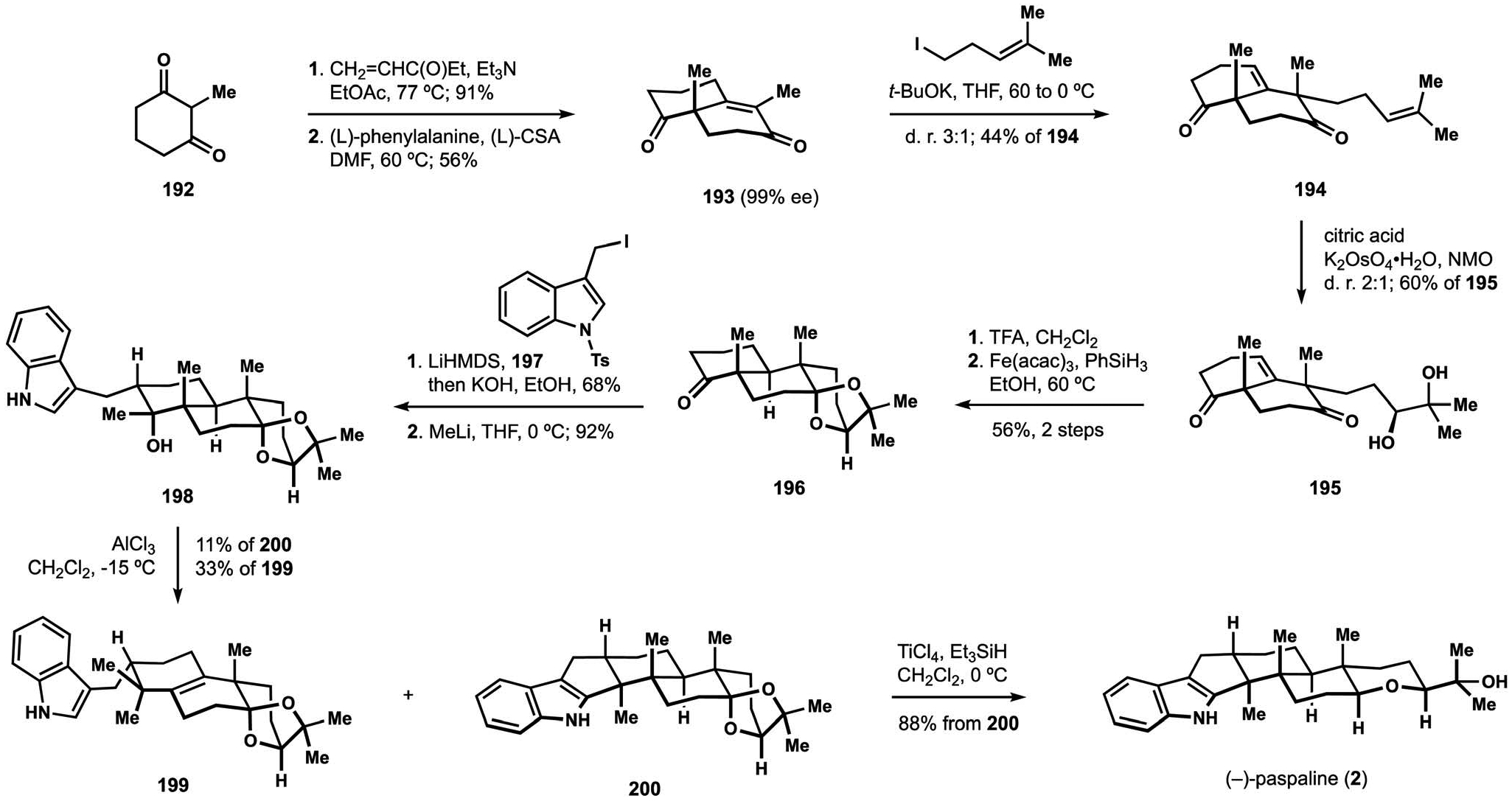
The Newhouse synthesis of (−)-paspaline (2).

References

    1. Springer JP, Clardy J, Wells JM, Cole RJ and Kirksey JW, Tetrahedron Lett., 1975, 16, 2531.
    1. Stamm G, PhD dissertation No. 4418, Eidgenössische Technische Hochschule, Zürich, Switzerland, 1969;
    2. Gysi RP, PhD dissertation No. 4990, Eidgenössische Technische Hochschule, Zürich, Switzerland, 1973;
    3. Leutwiler A, PhD dissertation No. 5163, Eidgenössische Technische Hochschule, Zürich, Switzerland, 1973.
    1. For crystallographic studies, see:

    2. Springer JP and Clardy J, Tetrahedron Lett, 1980, 21, 231;
    3. Gallagher RT, Finer J and Clardy J, Tetrahedron Lett, 1980, 21, 235.
    1. For relevant isolation studies, see:

    2. Fehr Th. and Acklin W, Helv. Chim. Acta, 1966, 49, 1907. - PubMed
    1. To avoid confusion, paxilline numbering will be used whenever possible. See ref. 1.

Publication types

MeSH terms