


Neonatal heart rate variability: a contemporary scoping review of analysis methods and clinical applications
- PMID: 34933863
- PMCID: PMC8710426
- DOI: 10.1136/bmjopen-2021-055209
Neonatal heart rate variability: a contemporary scoping review of analysis methods and clinical applications
Abstract
Background: Neonatal heart rate variability (HRV) is widely used as a research tool. However, HRV calculation methods are highly variable making it difficult for comparisons between studies.
Objectives: To describe the different types of investigations where neonatal HRV was used, study characteristics, and types of analyses performed.
Eligibility criteria: Human neonates ≤1 month of corrected age.
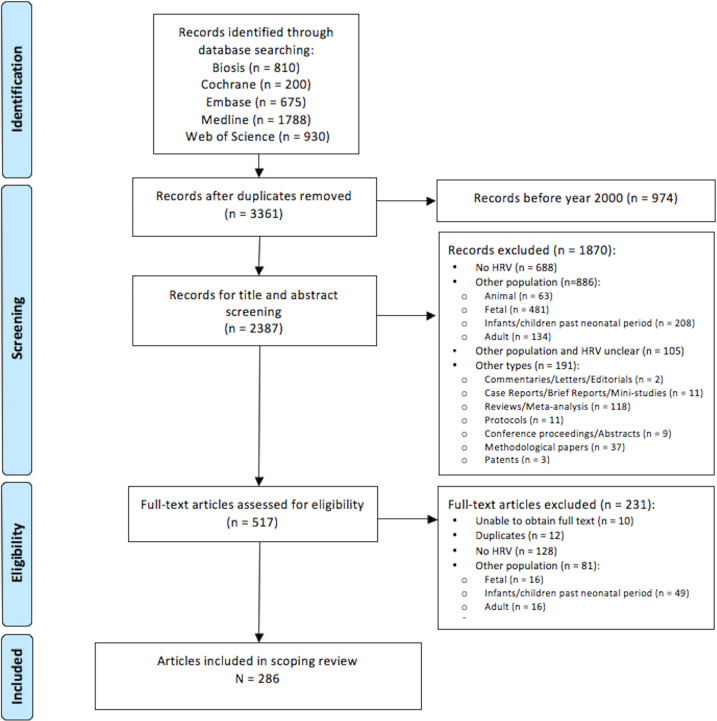
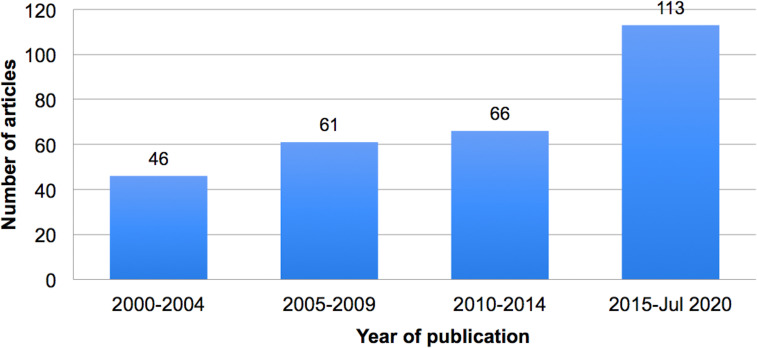
Sources of evidence: A protocol and search strategy of the literature was developed in collaboration with the McGill University Health Center's librarians and articles were obtained from searches in the Biosis, Cochrane, Embase, Medline and Web of Science databases published between 1 January 2000 and 1 July 2020.
Charting methods: A single reviewer screened for eligibility and data were extracted from the included articles. Information collected included the study characteristics and population, type of HRV analysis used (time domain, frequency domain, non-linear, heart rate characteristics (HRC) parameters) and clinical applications (physiological and pathological conditions, responses to various stimuli and outcome prediction).
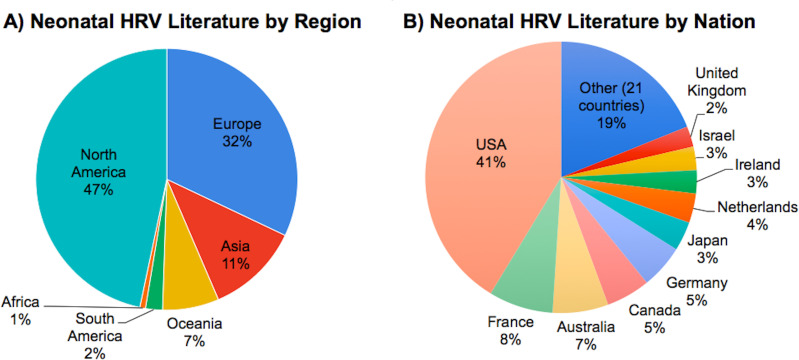
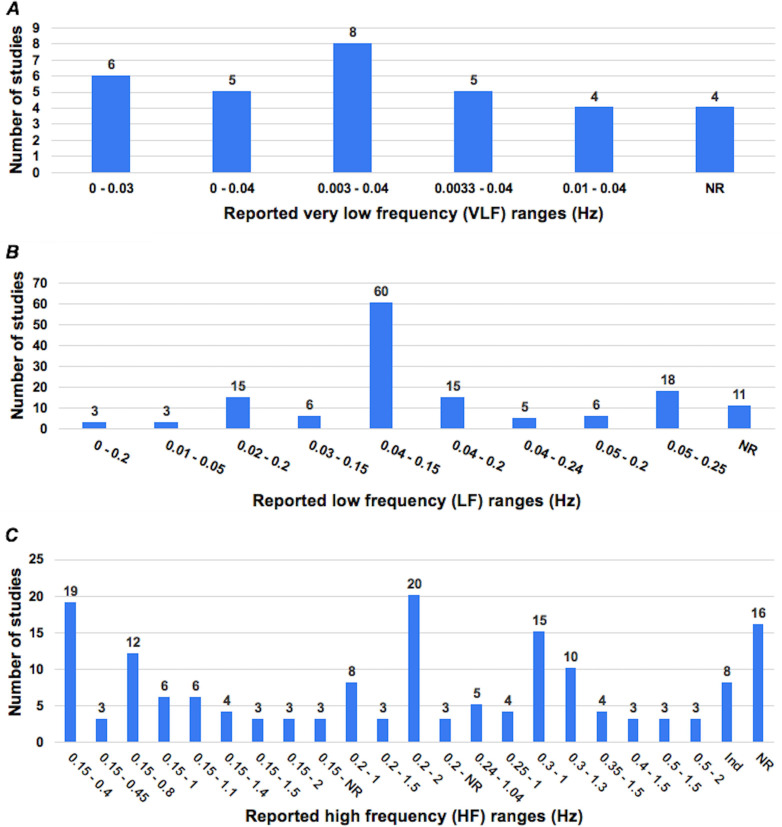
Results: Of the 286 articles included, 171 (60%) were small single centre studies (sample size <50) performed on term infants (n=136). There were 138 different types of investigations reported: physiological investigations (n=162), responses to various stimuli (n=136), pathological conditions (n=109) and outcome predictor (n=30). Frequency domain analyses were used in 210 articles (73%), followed by time domain (n=139), non-linear methods (n=74) or HRC analyses (n=25). Additionally, over 60 different measures of HRV were reported; in the frequency domain analyses alone there were 29 different ranges used for the low frequency band and 46 for the high frequency band.
Conclusions: Neonatal HRV has been used in diverse types of investigations with significant lack of consistency in analysis methods applied. Specific guidelines for HRV analyses in neonates are needed to allow for comparisons between studies.
Keywords: neonatal intensive & critical care; neonatology; pacing & electrophysiology.
© Author(s) (or their employer(s)) 2021. Re-use permitted under CC BY-NC. No commercial re-use. See rights and permissions. Published by BMJ.
Conflict of interest statement
Competing interests: None declared.
Figures
References
-
- Kamath MV, Watanabe MA, Upton A. Heart rate variability (HRV) signal analysis: clinical applications. Boca Raton, Florida: CRC Press, 2012.
-
- Matić V, Cherian PJ, Widjaja D. Heart rate variability in newborns with hypoxic brain injury. Oxygen Transport to Tissue XXXV: Springer, 2013: 43–8. - PubMed
Publication types
MeSH terms
LinkOut - more resources
Full Text Sources
Research Materials
