Review
. 2021 Dec 21;13(1):24.
doi: 10.1038/s41419-021-04472-3.

Deciphering the tRNA-derived small RNAs: origin, development, and future

Affiliations
Review

Deciphering the tRNA-derived small RNAs: origin, development, and future

Bowen Liu et al. Cell Death Dis. .

Abstract

Transfer RNA (tRNA)-derived small RNAs (tsRNAs), a novel category of small noncoding RNAs, are enzymatically cleaved from tRNAs. Previous reports have shed some light on the roles of tsRNAs in the development of human diseases. However, our knowledge about tsRNAs is still relatively lacking. In this paper, we review the biogenesis, classification, subcellular localization as well as action mechanism of tsRNAs, and discuss the association between chemical modifications of tRNAs and the production and functions of tsRNAs. Furthermore, using immunity, metabolism, and malignancy as examples, we summarize the molecular mechanisms of tsRNAs in diseases and evaluate the potential of tsRNAs as new biomarkers and therapeutic targets. At the same time, we compile and introduce several resource databases that are currently publicly available for analyzing tsRNAs. Finally, we discuss the challenges associated with research in this field and future directions.


Conflict of interest statement

The authors declare no competing interests.

Figures
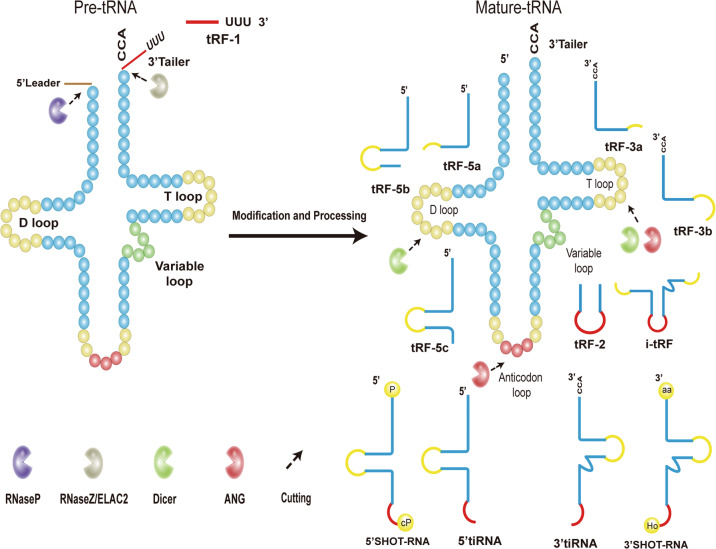
Fig. 1
Fig. 1. Biogenesis and classification of tsRNAs.
tRF-1 is produced by RNaseZ/ELAC2 cleavage of the 3’ trailer sequence of the precursor tRNA. tRF-2 contains the stem sequence and the anticodon loop portion of the mature tRNA. tRF-3 is the 3’ end fragment of tRNA produced by cleavage of the mature tRNA T-loop by nucleases. tRF-5 is produced by Dicer enzyme cleavage of the D-loop of mature tRNA. 5’ tiRNA and 3’ tiRNA are 5’ and 3’ fragments of mature tRNA produced by cleavage from the anticodon loop, respectively. The 5’-SHOT-RNAs are half of the 5’ end of the tRNA with phosphate at the 5’ end and a cyclic phosphate (cP) at the 3’ end. 3’-SHOT-RNAs contain half of the 3’ tRNA with a hydroxyl group at the 5’ end and an amino acid at the 3’ end. The i-tRF is a fragment containing the tRNA anticodon loop and the D- and T-loops.
Fig. 2
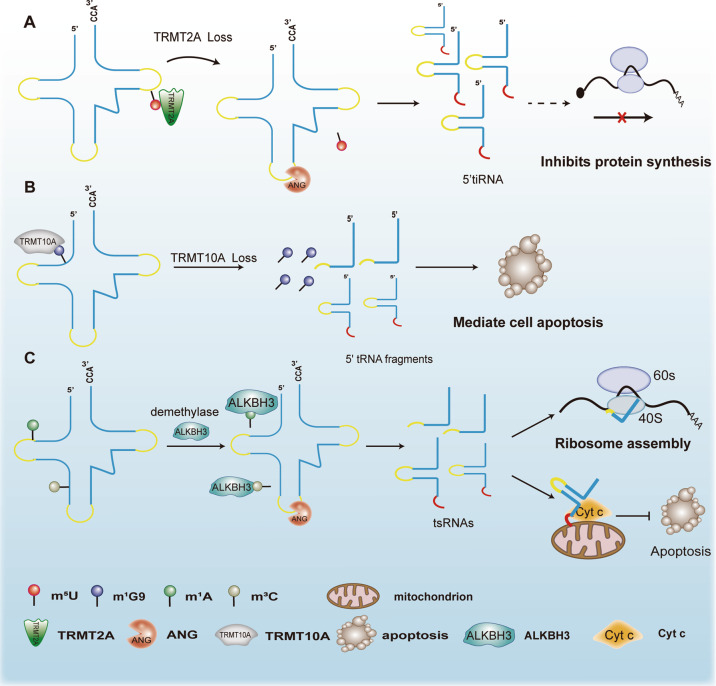
Fig. 2. Regulation of tsRNA production.
A Deletion of the methyltransferase, TRMT2A, induces ANG-dependent production of 5’tiRNA and inhibits the protein synthesis. B The lack of the TRMT10A methyltransferase leads to hypomethylated tRNA cleavage to produce a 5’ tRNA fragment that mediates cell apoptosis. C In the presence of the ALKBH3 demethylase, tRNA hypomethylation produces tsRNAs that can bind to the 40s ribosome to facilitate ribosomal assembly and interact with cytochrome c to inhibit apoptosis, respectively.
Fig. 3
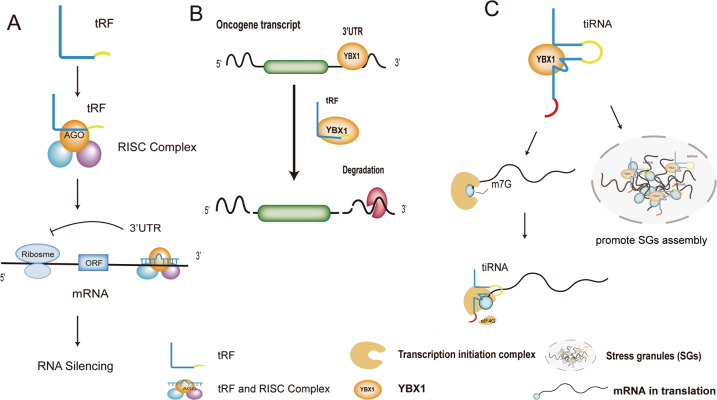
Fig. 3. Action mechanisms of tsRNAs.
A tRF binds AGO proteins to form the RISC complex. The complex performs a miRNA-like action, binding to the 3’ UTR of the target gene transcript through incomplete complementary and suppressing the expression levels of the gene. B tRF competes with the oncogene transcript to bind YBX1, resulting in the degradation of the oncogene transcript. C tiRNAs and YBX1 synergize to prevent eIF4G/A from initiating the translation and promote the SGs assembly.
Fig. 4
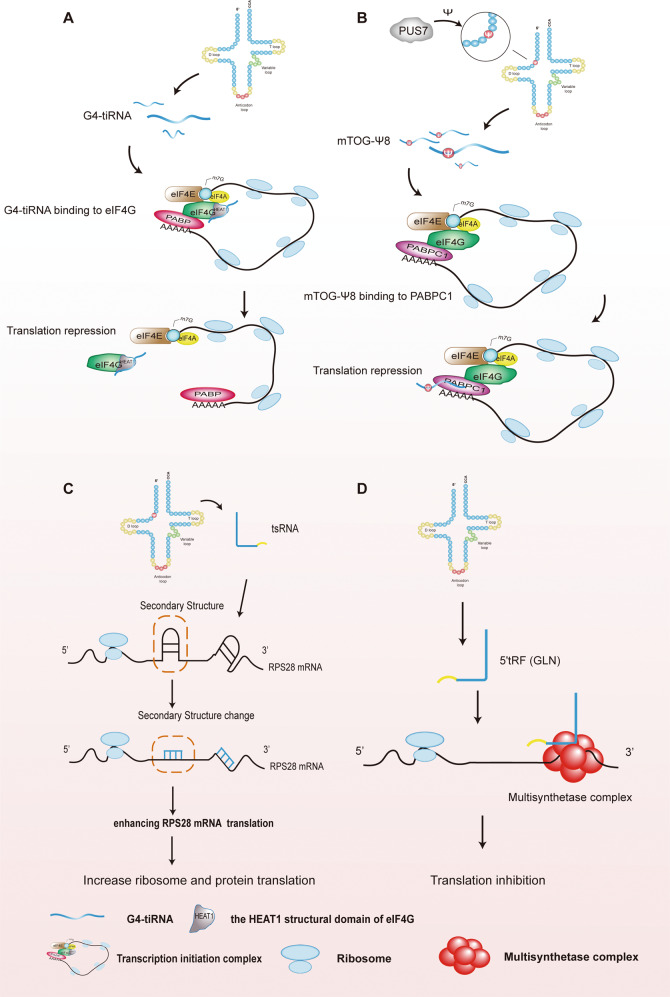
Fig. 4. tsRNAs regulate translation.
A The binding of G4-tiRNA to the HEAT1 domain of the translation initiation factor, eIF4G, inhibits translation initiation. B PUS7 modifies tRNA position 8 containing sequences of mTOGs to pseudouridine (Ψ), and this specific mTOG-Ψ8 is able to bind to the translation initiation factor, PABPC1, thereby inhibiting translation initiation. C tsRNA alters the secondary structures of RPS28 mRNA to enhance its translation and ultimately accelerates protein synthesis. D 5’tRF (GLN) inhibits the translation process by binding to the multisynthetase complex (MSC).
Fig. 5
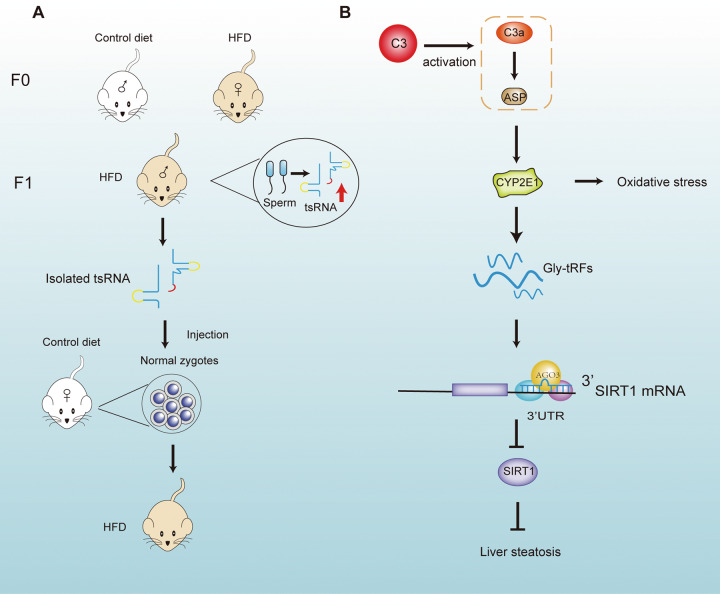
Fig. 5. Representative mechanisms of tsRNAs in metabolic diseases.
A Sperm tsRNA contributes to the intergenerational transmission of maternal HFD-induced addictive behaviors and phenotypes. B Complement C3 is involved in alcohol-induced liver damage and steatosis through the induction of Gly-tRFs.
Fig. 6
Fig. 6. Representative mechanisms of tsRNAs in malignancies.
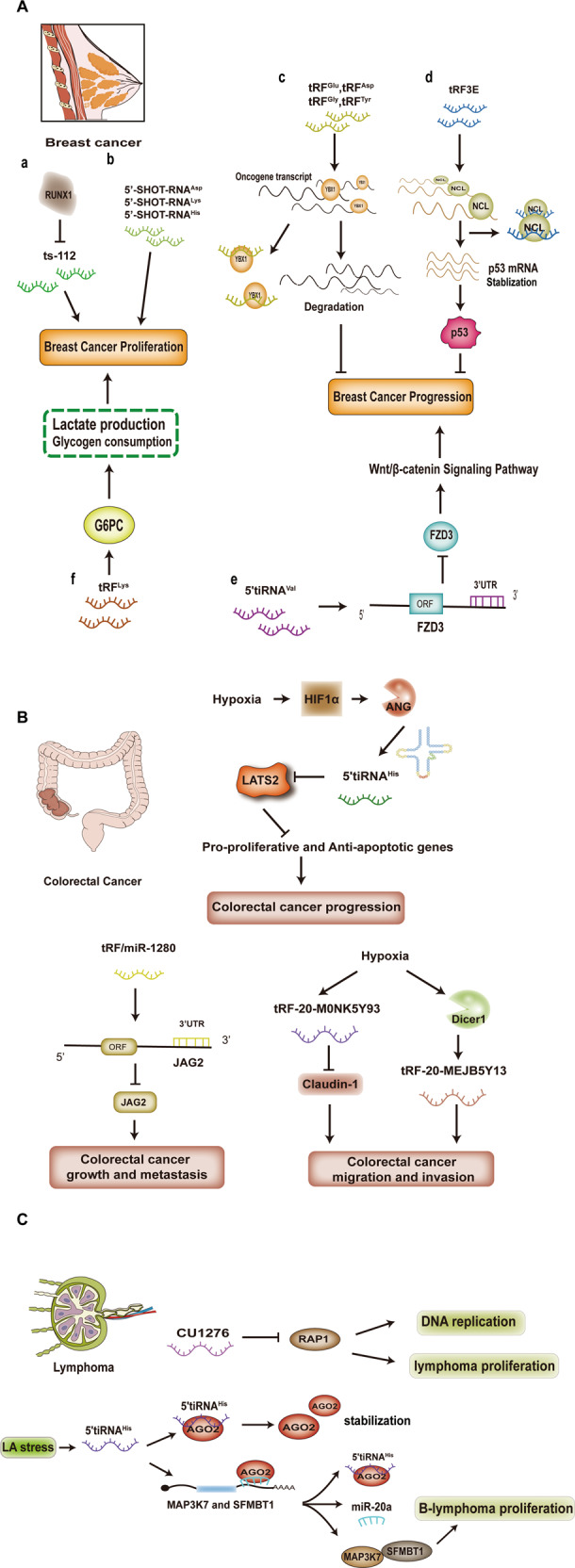
A (a, b) ts-112 and 5’-SHOT-RNAs can promote breast cancer proliferation; c tRFs are able to compete with oncogene transcripts to bind YBX1, suppressing oncogene expression and inhibiting breast cancer progression; d tRF3E inhibits breast cancer progression by binding NCL and disrupting the inhibitory effect of NCL on p53 mRNA; e 5’-tiRNA-Val depresses the Wnt/β-catenin signaling pathway by targeting FZD3 to inhibit breast cancer progression; f tRF-Lys-CTT-010 promotes breast cancer cell proliferation by modulating the glucose metabolic pathway. B Hypoxia-induced 5’tiRNA-His-GTG targets LATS2, dysregulating the Hippo pathway and promoting the progression of colorectal cancer; tRF/miR-1280 inhibits colorectal cancer growth and metastasis by targeting the 3’UTR of the Notch ligand, JAG2 mRNA. Hypoxia-induced tRF-20-M0NK5Y93 inhibits the epithelial mesenchymal transition (EMT)-related molecule Claudin-1, and then suppresses colorectal cancer cell metastasis; Meanwhile, Dicer1-dependent expression of tRF-20-MEJB5Y13 was upregulated in response to hypoxic stimulation, leading to colorectal cancer migration and invasion. C CU1276 inhibits RAP1 to suppress lymphoma proliferation and to regulate DNA damage-induced molecular responses such as DNA replication; Lactate-induced 5’tiRNA binds AGO2 to maintain its stability. Accumulated 5’tiRNA competes with miR-20 to bind the AGO2 protein, resulting in increased expressions of the miR-20 target genes, SFMBT1 and MAP3K7, thereby promoting lymphoma proliferation.

References

    1. Anastasiadou E, Jacob LS, Slack FJ. Non-coding RNA networks in cancer. Nat Rev Cancer. 2018;18:5–18. - PMC - PubMed
    1. Kopp F, Mendell JT. Functional classification and experimental dissection of long noncoding RNAs. Cell. 2018;172:393–407. - PMC - PubMed
    1. Zhang X, Wang W, Zhu W, Dong J, Cheng Y, Yin Z, et al. Mechanisms and functions of long non-coding RNAs at multiple regulatory levels. Int J Mol Sci. 2019;20:5573.. - PMC - PubMed
    1. Zhang J, Lou W. A key mRNA-miRNA-lncRNA competing endogenous RNA triple sub-network linked to diagnosis and prognosis of hepatocellular carcinoma. Front Oncol. 2020;10:340. - PMC - PubMed
    1. Bohmdorfer G, Rowley MJ, Kucinski J, Zhu Y, Amies I, Wierzbicki AT. RNA-directed DNA methylation requires stepwise binding of silencing factors to long non-coding RNA. Plant J. 2014;79:181–91. - PMC - PubMed

Publication types