


Survival benefit of platinum-based regimen in early stage triple negative breast cancer: A meta-analysis of randomized controlled trials
- PMID: 34934050
- PMCID: PMC8692362
- DOI: 10.1038/s41523-021-00367-w
Survival benefit of platinum-based regimen in early stage triple negative breast cancer: A meta-analysis of randomized controlled trials
Abstract
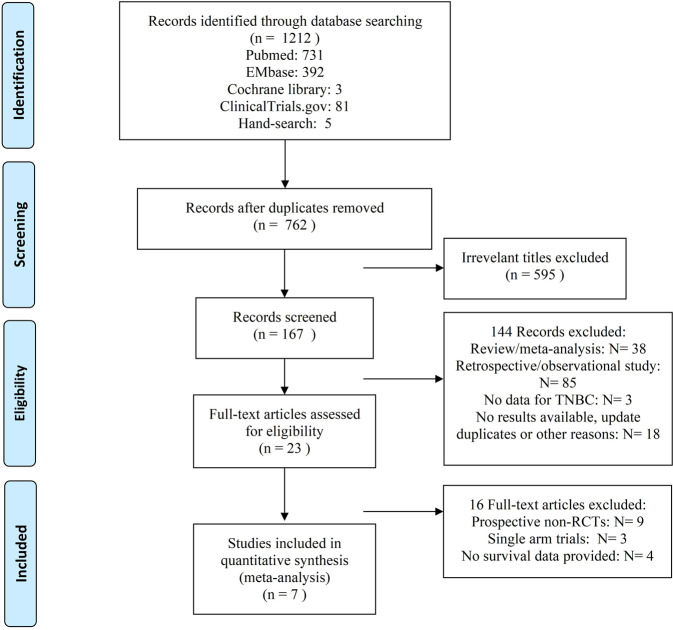
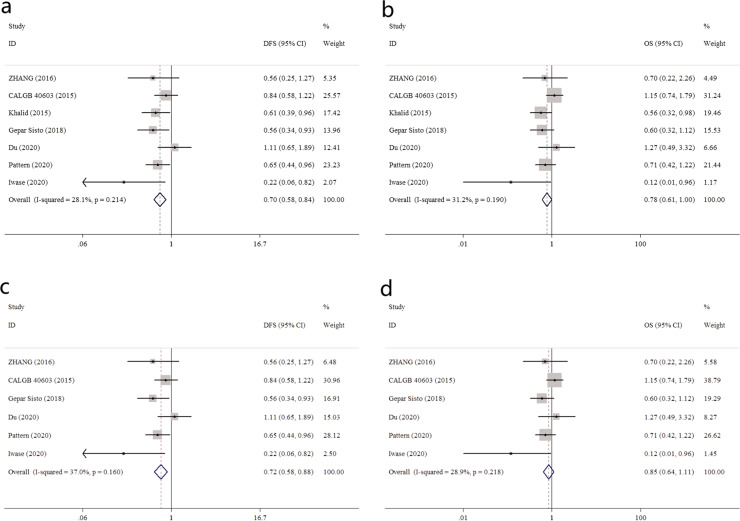
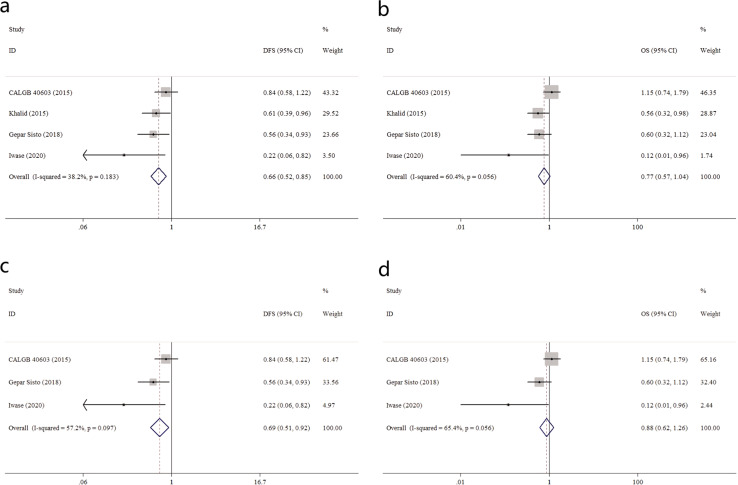
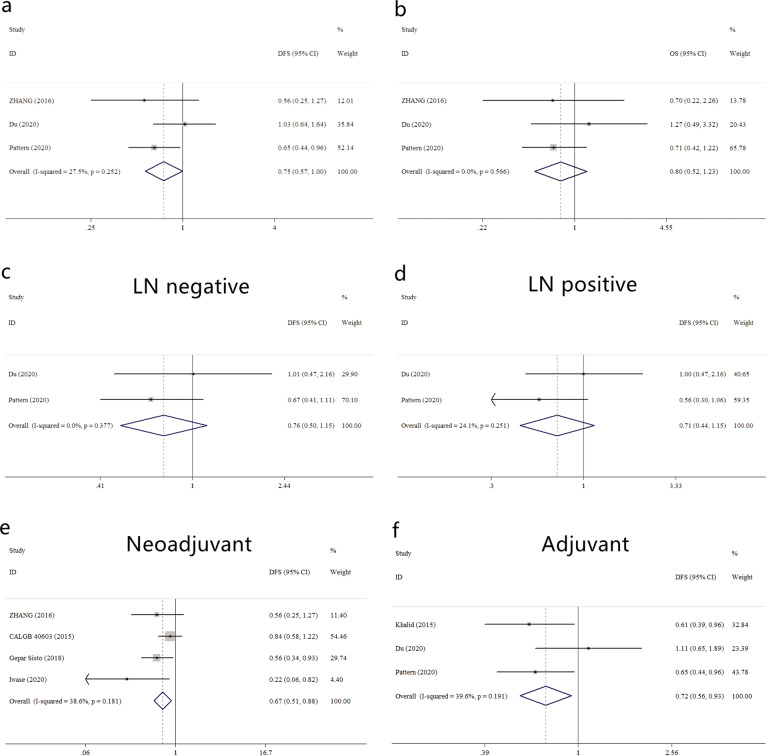
Platinum (Pt)-based chemo-regimens have been proved effective in neoadjuvant and salvage chemotherapy of triple negative breast cancer (TNBC). However, the survival benefit of Pt-based regimens in early stage TNBC(eTNBC) treatment has remained unclear. We conducted a meta-analysis to explore its role in improving the clinical outcomes of eTNBC. We carried out a comprehensive literature search on 15 March 2021 for randomized controlled trials (RCTs) comparing ajuvant/neoadjuvant Pt-based and Pt-free chemo-regimens in eTNBC patients, according to PRISMA 2020. We extracted the survival data and utilized the STATA software to calculate the summarized hazard ratios (HRs) and 95% confidence interval (95% CI) for overall survival (OS) and disease-free survival (DFS). Seven eligible RCTs enrolling a total of 2,027 eTNBC patients were identified in this meta-analysis, with 1,007 receiving Pt-free regimens, and the other 1,020 patients receiving Pt-based regimens, respectively. Patients in Pt-based regimens arm were associated with significant improved DFS (HR = 0.70, 95% CI: 0.58-0.84), and OS (HR = 0.78, 95% CI: 0.61-1.00). The survival benefits of DFS remained consistent in both the two strategies of Pt usage, either adding Pt to standard anthracyclines&taxanes based regimens (A&T + Pt), or combination of Pt and taxanes alone (TPt). The survival benefits also remained consistent in either neoadjuvant or adjuvant use of Pt. The present meta-analysis of RCTs revealed that Pt-based chemo-regimens could significantly improve both DFS and OS for eTNBC patients. Based on efficiency and toxicity, we recommend Pt-based regimens for eTNBC, especially the "A&T + Pt" mode if the toxicities are tolerable, which may lead TNBC therapy into a new era.
© 2021. The Author(s).
Conflict of interest statement
The authors declare no competing interests.
Figures
References
Grants and funding
LinkOut - more resources
Full Text Sources
