


Outcomes of intracranial germinoma-A retrospective multinational Asian study on effect of clinical presentation and differential treatment strategies
- PMID: 34935949
- PMCID: PMC9340637
- DOI: 10.1093/neuonc/noab295
Outcomes of intracranial germinoma-A retrospective multinational Asian study on effect of clinical presentation and differential treatment strategies
Abstract
Background: This multinational study was conducted to report clinical presentations and treatment strategies in patients with intracranial germinomas across selected Asian centers, including failure patterns, risk factors, and outcomes.
Methods: A retrospective data collection and analysis of these patients, treated between 1995 and 2015 from eight healthcare institutions across four countries was undertaken.
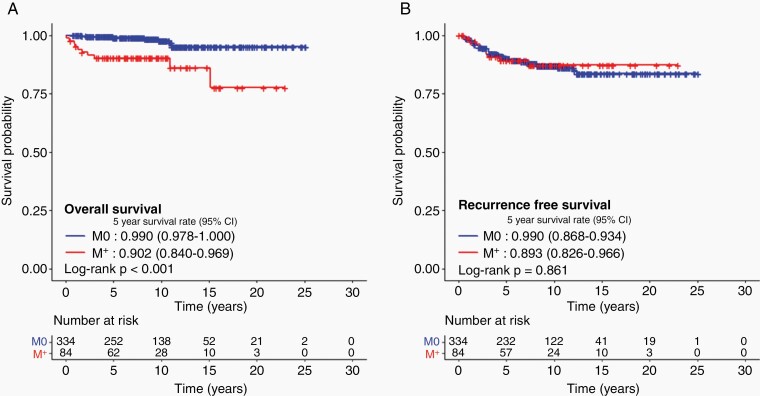
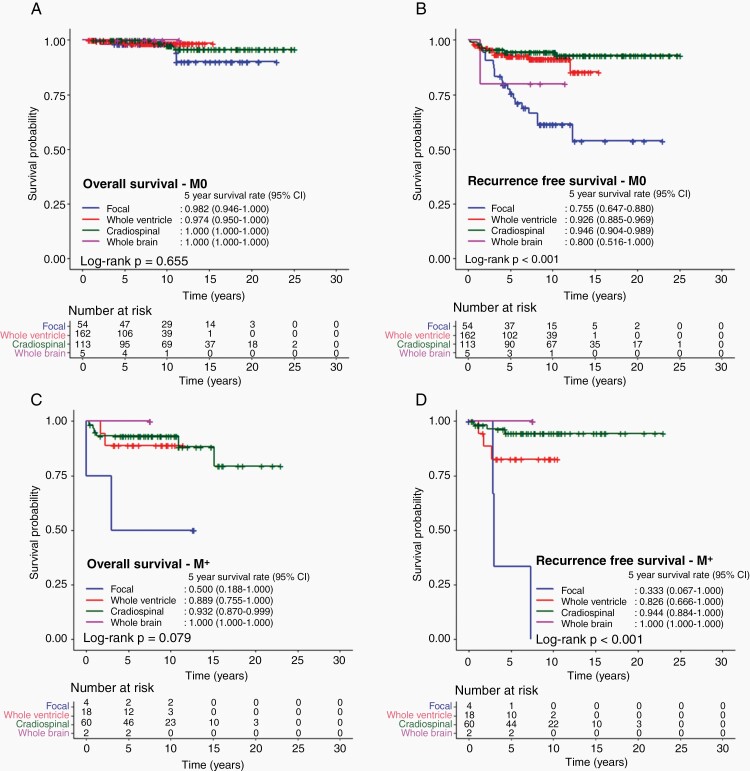
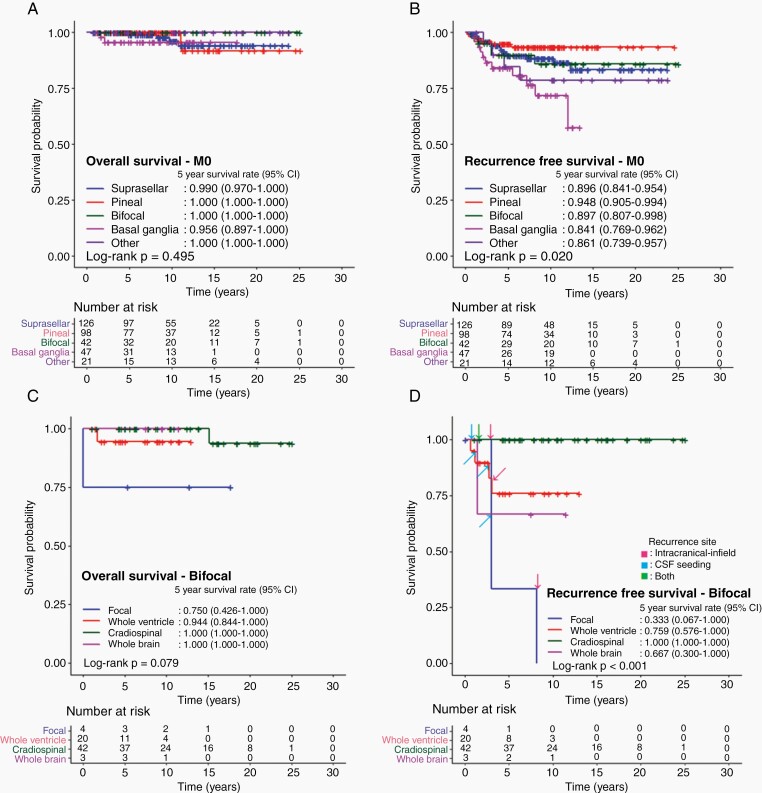
Results: From the results, 418 patients were analyzed, with a median follow-up of 8.9 years; 79.9% of the patients were M0, and 87.6% had β-human chorionic gonadotropin values <50 mIU/mL. The 5/10-year overall survival (OS) and recurrence-free survival (RFS) rates were 97.2%/96.2% and 89.9%/86.9%, respectively. RFS was predicted by the radiotherapy (RT) field, with focal RT having the worst outcome, whereas chemotherapy usage had no impact on survival. Among patients who received chemotherapy, response to chemotherapy did not predict survival outcomes. In M0 patients, primary basal ganglia tumors predicted a worse RFS. In patients with bifocal tumors, an extended field RT was associated with better outcomes. In multivariable analysis, only RT fields were associated with RFS. In relapsed patients, salvage rates were high at 85.7%. Additionally, patients who received salvage RT had a better outcome (91.6% vs. 66.7%).
Conclusions: Survival outcomes of patients with germinoma were excellent. Thus, the focus of treatment for intracranial germinoma should be on survivorship. Further studies are warranted to find the optimal intensity and volume of radiation, including the role of chemotherapy in the survival of patients with intracranial germinomas, considering age, primary tumor location, and extent of disease.
Keywords: chemotherapy; intracranial germinoma; outcomes; radiotherapy; treatment.
© The Author(s) 2021. Published by Oxford University Press on behalf of the Society for Neuro-Oncology. All rights reserved. For permissions, please e-mail: journals.permissions@oup.com.
Figures
References
-
- Echevarria ME, Fangusaro J, Goldman S. Pediatric central nervous system germ cell tumors: a review. Oncologist. 2008;13(6):690–699. - PubMed
-
- Takami H, Perry A, Graffeo CS, et al. . Comparison on epidemiology, tumor location, histology, and prognosis of intracranial germ cell tumors between Mayo Clinic and Japanese consortium cohorts. J Neurosurg. 2020;134(2):446–456. - PubMed
-
- Han J, Koh KN, Kim JE, et al. . Current Trends in Management for Central Nervous System Germ Cell Tumor. Clin Pediatr Hematol Oncol. 2016;23(1):17–27.
-
- Lee DS, Lim DH, Kim IH, et al. . Upfront chemotherapy followed by response adaptive radiotherapy for intracranial germinoma: Prospective multicenter cohort study. Radiother Oncol. 2019;138:180–186. - PubMed
Publication types
MeSH terms
LinkOut - more resources
Full Text Sources
Medical
