A Mobile, Electronic Health Record-Connected Application for Managing Team Workflows in Inpatient Care
- PMID: 34937103
- PMCID: PMC8695057
- DOI: 10.1055/s-0041-1740256
A Mobile, Electronic Health Record-Connected Application for Managing Team Workflows in Inpatient Care
Abstract
Background: Clinical workflows require the ability to synthesize and act on existing and emerging patient information. While offering multiple benefits, in many circumstances electronic health records (EHRs) do not adequately support these needs.
Objectives: We sought to design, build, and implement an EHR-connected rounding and handoff tool with real-time data that supports care plan organization and team-based care. This article first describes our process, from ideation and development through implementation; and second, the research findings of objective use, efficacy, and efficiency, along with qualitative assessments of user experience.
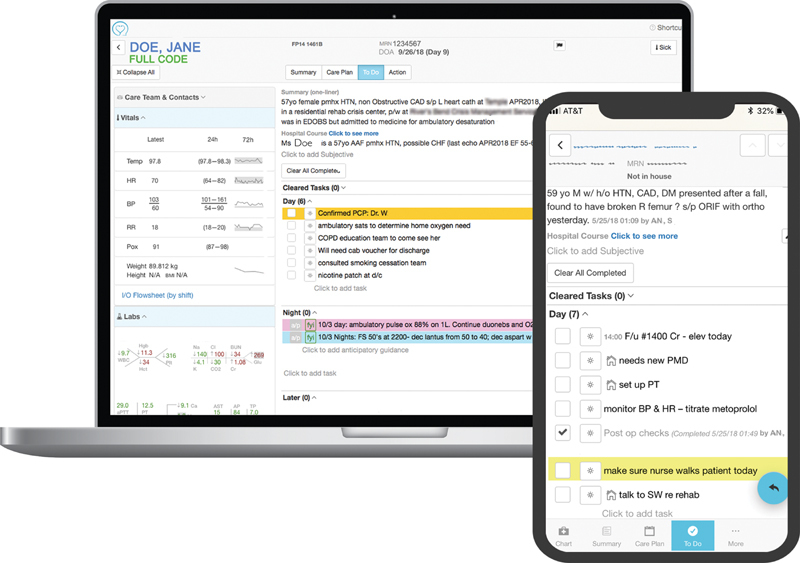
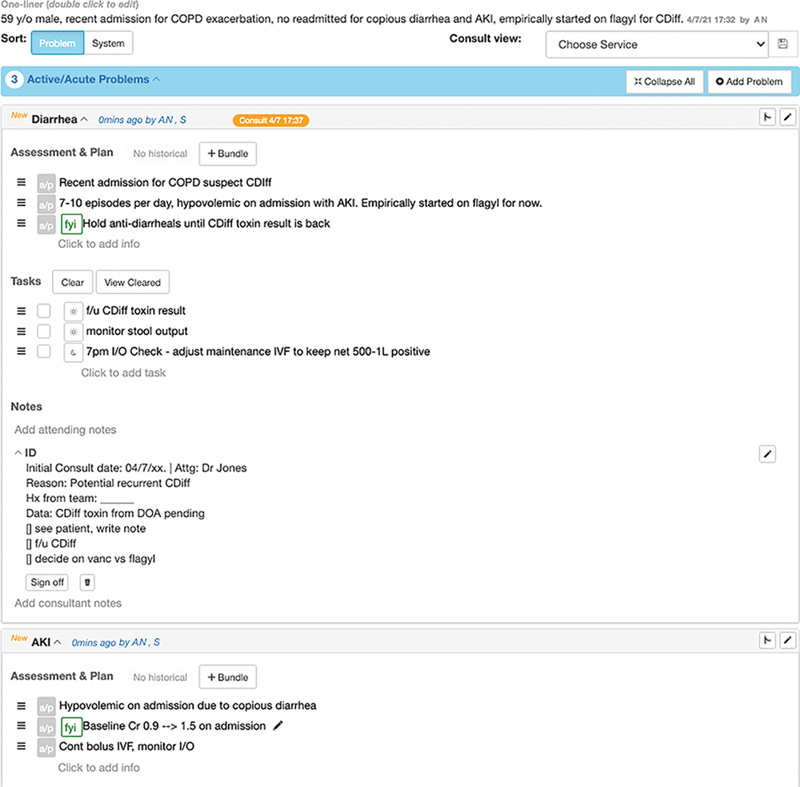
Methods: Guided by user-centered design and Agile development methodologies, our interdisciplinary team designed and built Carelign as a responsive web application, accessible from any mobile or desktop device, that gathers and integrates data from a health care institution's information systems. Implementation and iterative improvements spanned January to July 2016. We assessed acceptance via usage metrics, user observations, time-motion studies, and user surveys.
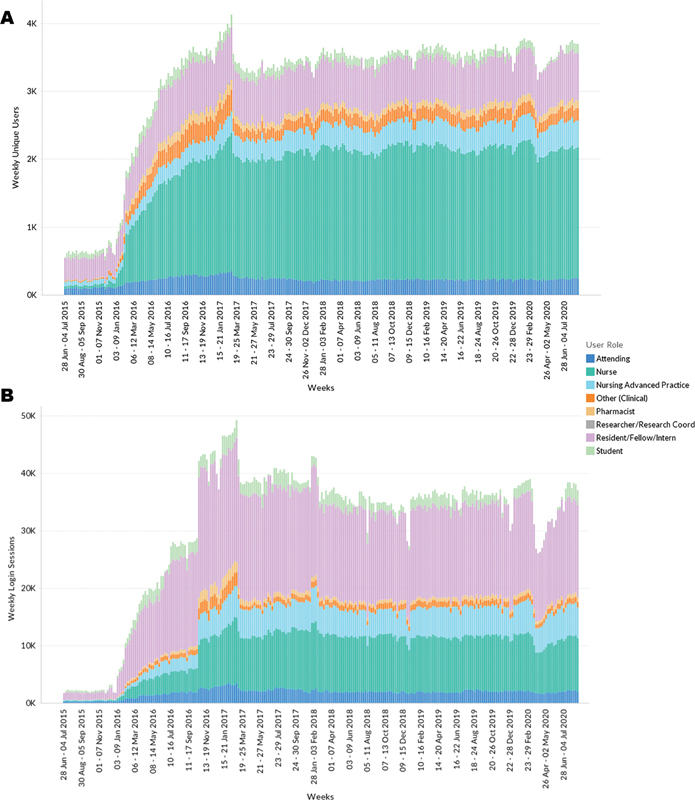
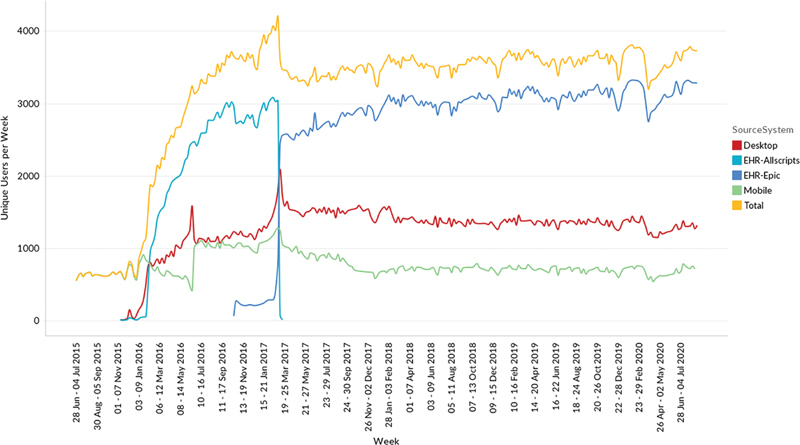
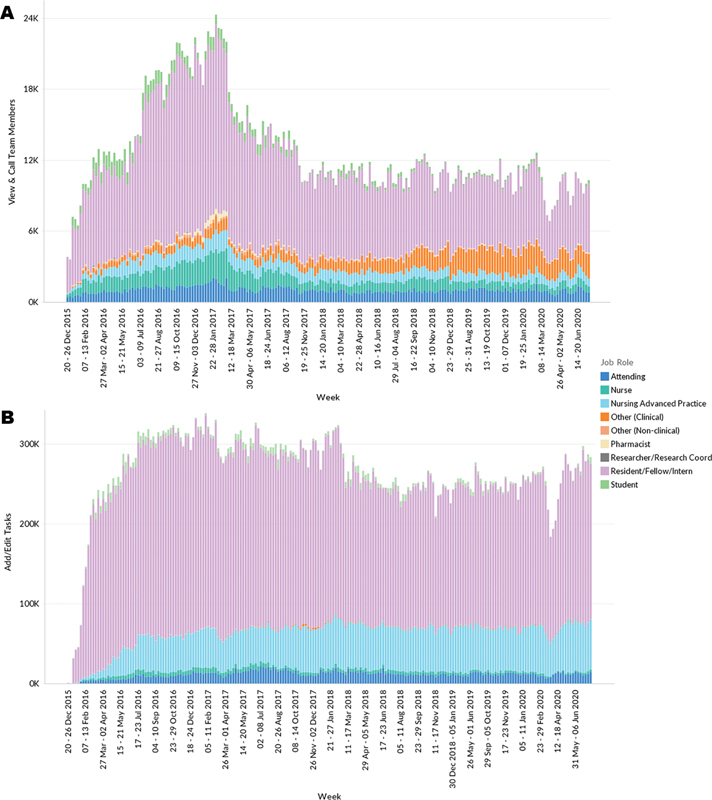
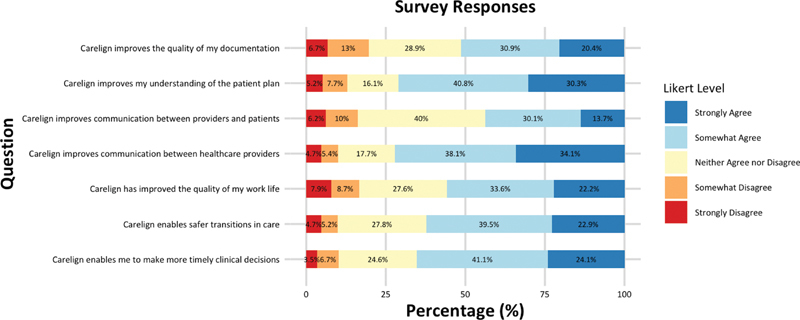
Results: By July 2016, Carelign was implemented on 152 of 169 total inpatient services across three hospitals staffing 1,616 hospital beds. Acceptance was near-immediate: in July 2016, 3,275 average unique weekly users generated 26,981 average weekly access sessions; these metrics remained steady over the following 4 years. In 2016 and 2018 surveys, users positively rated Carelign's workflow integration, support of clinical activities, and overall impact on work life.
Conclusion: User-focused design, multidisciplinary development teams, and rapid iteration enabled creation, adoption, and sustained use of a patient-centered digital workflow tool that supports diverse users' and teams' evolving care plan organization needs.
The Author(s). This is an open access article published by Thieme under the terms of the Creative Commons Attribution-NonDerivative-NonCommercial License, permitting copying and reproduction so long as the original work is given appropriate credit. Contents may not be used for commercial purposes, or adapted, remixed, transformed or built upon. (https://creativecommons.org/licenses/by-nc-nd/4.0/).
Conflict of interest statement
The application described in this manuscript was designed, developed, and implemented by an internal group of clinicians and clinical application developers at Penn Medicine. There were no outside funds used to design, build, implement, or study the application as described in this manuscript. In 2018—after the design, development, and implementation of this application described in the manuscript—the project leader and the last author of the paper, Dr. Subha Airan-Javia, and the Penn Center for Innovation launched a start-up company to bring the application into other health systems (TrekIT Health Inc. d/b/a CareAlign). Both Dr. Airan-Javia and the Board of Trustees of the University of Pennsylvania own equity in the company and receive royalty payments on an annual basis from sales of the company. Dr. Airan-Javia is a full-time salaried employee and CEO of the company, as well as a member of the Board of Directors. No other authors have any involvement in this company, financial or otherwise. The other authors declare that they have no conflicts of interest related to this work. Dr. Airan-Javia reports no salary from TrekIT Health Inc. during the conduct of the study; but as stated above, has received salary from TrekIT Health Inc. outside the submitted work.
Figures
References
-
- Henry J, Pylypchuk Y, Searcy T, Patel V.ONC Data Brief 35: Adoption of Electronic Health Record Systems among U.S. Non-Federal Acute Care Hospitals (2008-2015); 2016. Available at:https://dashboard.healthit.gov/evaluations/data-briefs/non-federal-acute...
-
- Koppel R, Kuziemsky C. Usability across health information technology systems: searching for commonalities and consistency. Stud Health Technol Inform. 2019;264:649–653. - PubMed
-
- Makary M A, Daniel M. Medical error-the third leading cause of death in the US. BMJ. 2016;353:i2139. - PubMed
Publication types
MeSH terms
LinkOut - more resources
Full Text Sources