Review
. 2021 Dec 13:2021:7479540.
doi: 10.1155/2021/7479540. eCollection 2021.

An Update of Research Animal Models of Inflammatory Bowel Disease

Affiliations
Review

An Update of Research Animal Models of Inflammatory Bowel Disease

Zineb Baydi et al. ScientificWorldJournal. .

Abstract

Inflammatory bowel disease (IBD) is a group of chronic disorders that includes two main disease forms, Crohn's disease, and ulcerative colitis. The understanding of the intestinal inflammation occurring in IBD has been immeasurably advanced by the development of the now numerous murine models of intestinal inflammation. The usefulness of this research tool in IBD arises from a convergence of underlying genetic susceptibility, immune system dysfunction, environmental factors, and shifts in gut microbiota. Due to the multifactorial feature of these diseases, different animal models have been used to investigate the underlying mechanisms and develop potential therapeutic strategies. The results of preclinical efficacy studies often inform the progression of therapeutic strategies. This review describes the distinct feature and limitations of each murine IBD model and discusses the previous and current lessons from the IBD models.


Conflict of interest statement

The authors declare that the research was conducted in the absence of any competing interests.

Figures
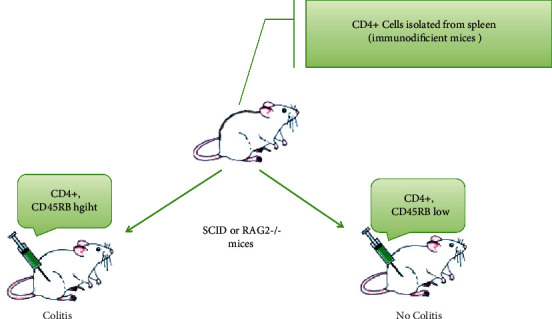
Figure 1
Figure 1
Colitis induction in SCID mice. Experimentally, the adoptive T-cell transfer model induces chronic small bowel and colonic inflammation, which resembles some key aspects of human IBD. To generate the model, CD4+CD45RBhigh T-cells (which are CD25) are sorted and isolated from donor BALB/c splenocytes. Cell transfer to a syngeneic immunodeficient SCID or RAG2–/– recipient generates a model with primary inflammation in the colon.
Figure 2
Figure 2
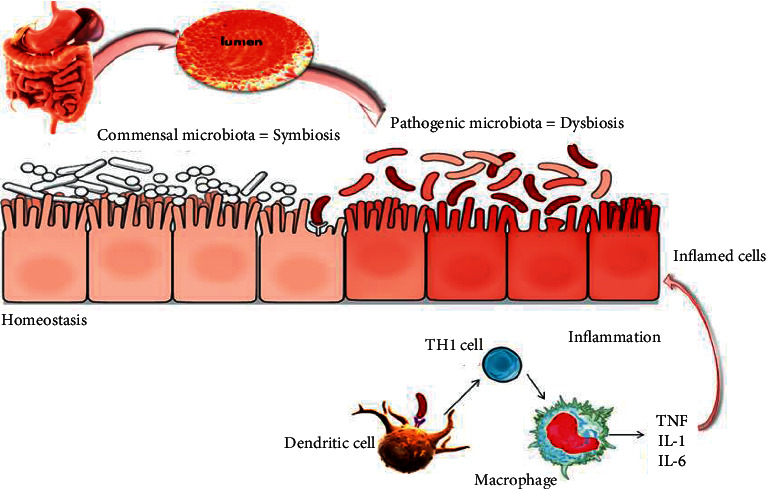
Mechanisms of inflammatory bowel disease. The intestine shelters a large diversity of microbiota that are in perfect balance (symbiosis); sometimes, this balance can be affected by many factors leading to the appearance of pathogenic bacteria that can alter the intestinal barrier and lead to the development of inflammatory bowel disease. The stimulation of the mucosal immune system may occur as a result of the penetration of bacterial products through the mucosal barrier, leading to their direct interaction with immune cells, especially dendritic cells and lymphocyte populations, to promote a classic adaptive immune response. Alternatively, bacterial products may stimulate the surface epithelium, possibly through receptors that are components of the innate immune-response system; the epithelium can, in turn, produce cytokines and chemokines that recruit and activate mucosal immune cells. Activation of classic antigen-presenting cells, such as dendritic cells, or direct stimulation through pattern-recognition receptors promotes the differentiation of type 1 helper T-cells (Th1) in patients with Crohn's disease (shown here) or, possibly, atypical type 2 helper T-cells in patients with ulcerative colitis. The stereotypical products of Th1 promote a self-sustaining cycle of activation with macrophages. In addition to producing the key cytokines that stimulate Th1 (interleukin-12, interleukin-18, and macrophage migration inhibitor factor), macrophages produce a mix of inflammatory cytokines, including interleukin-1, interleukin-6, and most notably tumor necrosis factor, which target a broad variety of other types of cells. The latter include endothelial cells, which then facilitate the recruitment of leukocytes to the mucosa from the vascular space. Most important, these functions may be altered either by genetically determined variants, as exemplified by germ-line mutations in the gene encoding NOD2, the product of the IBD1 locus, in some patients with Crohn's disease, or by environmental factors.

References

    1. Herrinton L. J., Liu L., Lafata J. E., et al. Estimation of the period prevalence of inflammatory bowel disease among nine health plans using computerized diagnoses and outpatient pharmacy dispensings. Inflammatory Bowel Diseases . 2007;13(4):451–461. doi: 10.1002/ibd.20021. - DOI - PubMed
    1. Loftus C. G., Loftus E. V., Jr., Harmsen S. W., et al. Update on the incidence and prevalence of Crohnʼs disease and ulcerative colitis in Olmsted County, Minnesota, 1940-2000. Inflammatory Bowel Diseases . 2007;13(3):254–261. doi: 10.1002/ibd.20029. - DOI - PubMed
    1. Senhaji N., Kojok K., Darif Y., Fadainia C., Zaid Y. The contribution of CD40/CD40L Axis in inflammatory bowel disease: an update. Frontiers in Immunology . 2015;6:p. 529. doi: 10.3389/fimmu.2015.00529. - DOI - PMC - PubMed
    1. Gollop J. H., Phillips S. F., Melton L. J., 3rd, Zinsmeister A. R. Epidemiologic aspects of Crohn’s disease: a population based study in Olmsted County, Minnesota, 1943-1982. Gut . 1988;29(1):49–56. doi: 10.1136/gut.29.1.49. - DOI - PMC - PubMed
    1. Kirsner J. B., Elchlepp J. The production of an experimental ulcerative colitis in rabbits. Transactions of the Association of American Physicians . 1957;70:102–119. - PubMed

MeSH terms

LinkOut - more resources