


How CRISPR/Cas9 Gene Editing Is Revolutionizing T Cell Research
- PMID: 34939826
- PMCID: PMC8787706
- DOI: 10.1089/dna.2021.0579
How CRISPR/Cas9 Gene Editing Is Revolutionizing T Cell Research
Abstract
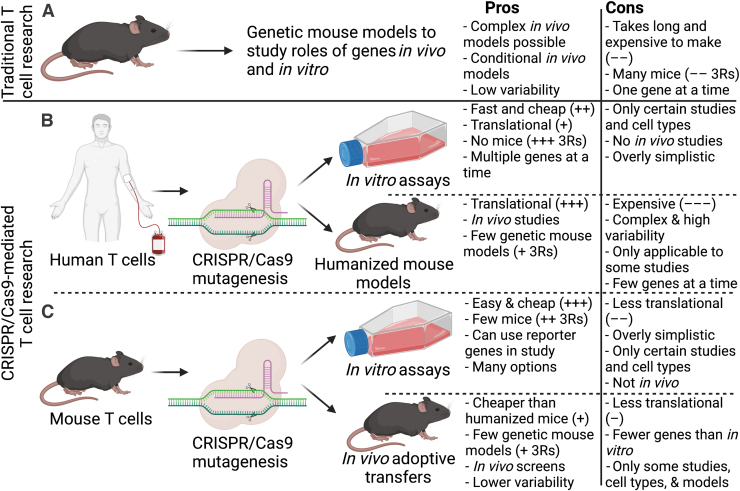
Clustered regularly interspaced short palindromic repeats (CRISPR)/Cas9 allows for precise gene targeting in mammalian cells, including T cells, allowing scientists to disrupt or edit specific genes of interest. This has enabled immunologists to investigate T cell functions as well as opened the path for novel therapeutics involving gene editing of T cells ex vivo before transferring these back to patients to increase T cell efficacy. This review outlines how CRISPR/Cas9 has transformed T cell research allowing immunologists to rapidly probe the roles of genes in T cells thus paving the way for novel therapeutics. Furthermore, this review describes how these tools reduce the requirement for genetic mouse models, while increasing the translational potential of T cell research.
Keywords: 3R; CRISPR/Cas9; T cells; gene editing; screening.
Conflict of interest statement
No competing financial interests exist.
Figures
References
-
- Barrangou, R., Fremaux, C., Deveau, H., Richards, M., Boyaval, P., Moineau, S., et al. (2007). CRISPR provides acquired resistance against viruses in prokaryotes. Science 315, 1709–1712. - PubMed
-
- Cho, S.W., Kim, S., Kim, J.M., and Kim, J.S. (2013). Targeted genome engineering in human cells with the Cas9 RNA-guided endonuclease. Nat Biotechnol 31, 230–232. - PubMed
Publication types
MeSH terms
LinkOut - more resources
Full Text Sources
