Shared decision-making for youth psychotherapy: A preliminary randomized clinical trial on facilitating personalized treatment
- PMID: 34941317
- PMCID: PMC9784837
- DOI: 10.1037/ccp0000702
Shared decision-making for youth psychotherapy: A preliminary randomized clinical trial on facilitating personalized treatment
Abstract
Objective: Engaging youth and caregivers as active collaborators in the treatment planning process is a patient-centered approach with the potential to facilitate the personalization of established evidence-based treatments. This study is the first randomized clinical trial to evaluate shared decision-making (SDM) to plan youth psychotherapy.
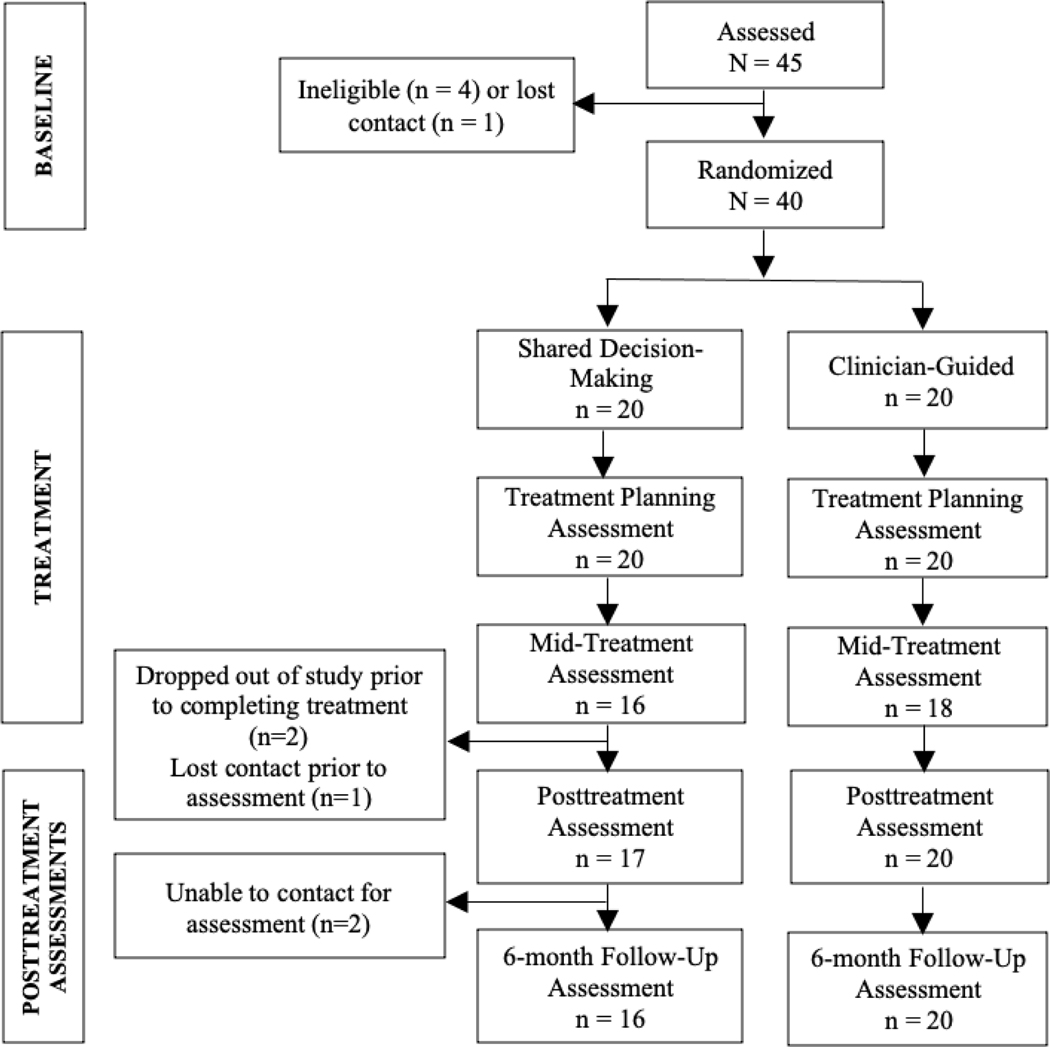
Method: Forty youth (7-15 years; 33% ethnic minority) were randomly assigned to psychosocial treatment planned using SDM (n = 20) or planned primarily by the clinician (n = 20). In the SDM condition, clinicians guided youth and caregivers through a collaborative treatment planning process that relies on research findings to inform three primary decisions: (a) treatment target problem(s), (b) treatment participants, and (c) treatment techniques. Assessments occurred at baseline, following treatment planning, midtreatment, and post-treatment.
Results: Youth and caregivers in the SDM condition reported significantly greater involvement in the treatment planning process compared to their counterparts in the clinician-guided condition (U = 123.00, p = .037; U = 84.50, p = .014, respectively) and SDM caregivers reported significantly lower decisional conflict (U = 72.00, p = .004) and decisional regret (U = 73.50, p = .020). Supporting the feasibility of successful SDM implementation, there were no significant differences between conditions on treatment length, satisfaction with decisions, or engagement. There were no significant diagnostic or symptom differences between conditions.
Conclusions: Planning psychosocial treatments in collaboration with youth and caregivers is a promising way to support youth and caregiver autonomy and plan evidence-based treatments that are responsive to patient preferences, culture, and values. (PsycInfo Database Record (c) 2022 APA, all rights reserved).
Figures
References
-
- American Psychological Association. (2006). Evidence-based practice in psychology: APA presidential task force on evidence-based practice. American Psychologist, 61(4), 271–285. - PubMed
-
- Bickman L, Athay M, Riemer M, Lambert E, Kelley S, Breda C, Tempesti T, Dew-Reeves S, Brannan A, & Vides de Andrade AR (eds.) (2010). Manual of the Peabody Treatment Progress Battery, 2nd ed. Nashville, TN: Vanderbilt University.
-
- Brehaut J, O’Connor A, Wood T, Hack T, Siminoff L, Gordon E, & Feldman-Stewart D. (2003). Validation of a decision regret scale. Medical Decision Making, 23, 281–292. - PubMed
-
- Bruns EJ, Walker JS, Bernstein A, Daleiden E, Pullmann MD, & Chorpita BF (2014). Family voice with informed choice: Coordinating wraparound with research-based treatment for children and adolescents. Journal of Clinical Child & Adolescent Psychology, 43(2), 256–269. 10.1080/15374416.2013.859081 - DOI - PMC - PubMed