Review
. 2021 Nov 26;11(12):1775.
doi: 10.3390/biom11121775.

Therapeutic Approaches in Lysosomal Storage Diseases

Affiliations
Review

Therapeutic Approaches in Lysosomal Storage Diseases

Carlos Fernández-Pereira et al. Biomolecules. .

Abstract

Lysosomal Storage Diseases are multisystemic disorders determined by genetic variants, which affect the proteins involved in lysosomal function and cellular metabolism. Different therapeutic approaches, which are based on the physiologic mechanisms that regulate lysosomal function, have been proposed for these diseases. Currently, enzyme replacement therapy, gene therapy, or small molecules have been approved or are under clinical development to treat lysosomal storage disorders. The present article reviews the main therapeutic strategies that have been proposed so far, highlighting possible limitations and future perspectives.

Keywords: autophagy; enzyme replacement therapy; gene therapy; lysosomal storage diseases; small molecules.


Conflict of interest statement

S.O., J.F.-M. received research founding, honorary, or travel expenses from Takeda, Sanofi-Genzyme and Amicus Therapeutics. B.S.M.-T. and C.M.-C. received travel expenses by Takeda, Sanofi Genzyme and Amicus Therapeutics.

Figures
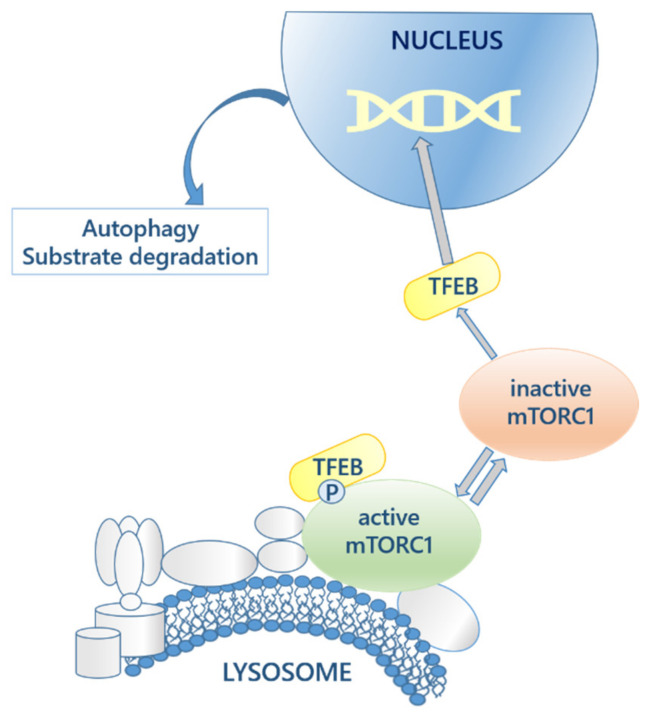
Figure 1
Figure 1
Autophagy activation route and lysosome-nuclei communication. The mTORC1 complex, attached to the lysosomal membrane, controls the activation of TFEB, which is translocated to the nucleus to activate the genes that regulate the autophagic process.
Figure 2
Figure 2
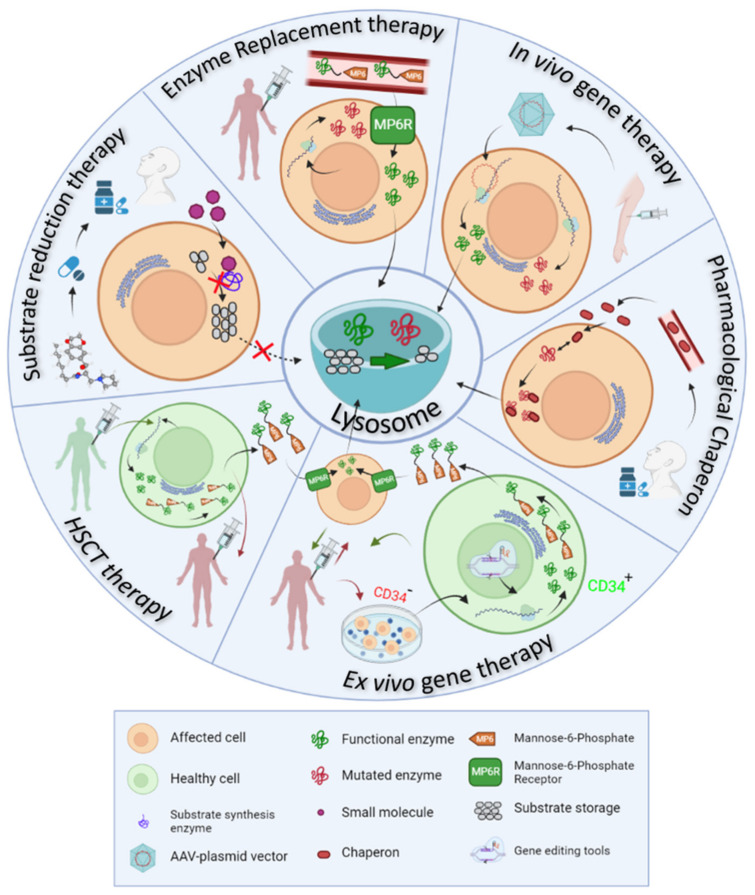
Therapeutic approaches in LSDs. Physiology of the lysosome is at the basis of the therapeutic strategies proposed to treat LSDs. All these approaches aim to restore substrate production/cleavage balance in the lysosome (green semicircle in the center of the image).
Figure 3
Figure 3
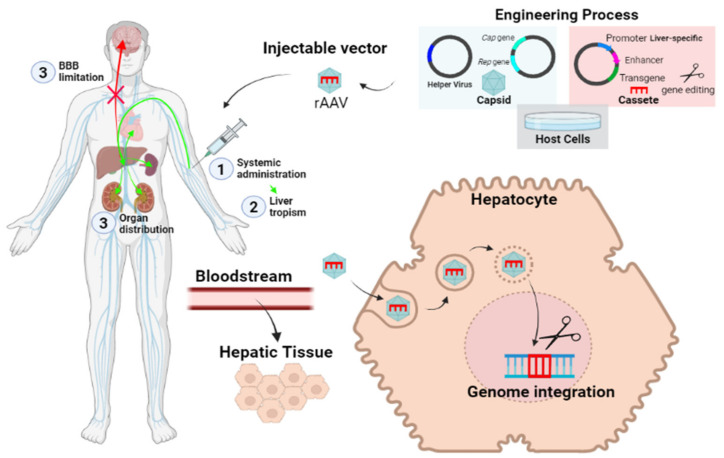
Schematic view of liver targeting in vivo gene therapy.
Figure 4
Figure 4
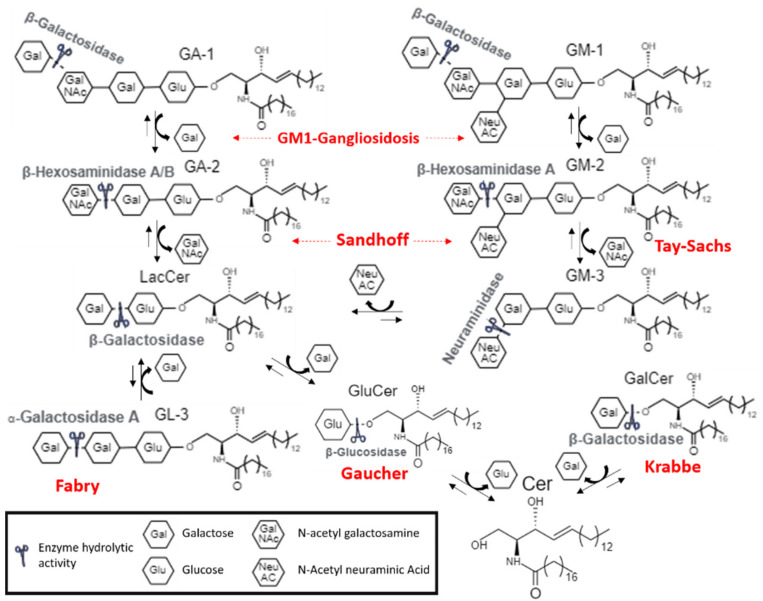
Schematic view of lipid catabolism pathway in the lysosome Enzymes involved in LSDs are indicated.

References

    1. Parkinson-Lawrence E.J., Shandala T., Prodoehl M., Plew R., Borlace G.N., Brooks D.A. Lysosomal storage Disease: Revealing lysosomal function and physiology. Physiology. 2010;25:102–115. doi: 10.1152/physiol.00041.2009. - DOI - PubMed
    1. Parenti G., Andria G., Ballabio A. Lysosomal storage diseases: From pathophysiology to therapy. Annu. Rev. Med. 2015;66:471–486. doi: 10.1146/annurev-med-122313-085916. - DOI - PubMed
    1. Zoncu R., Bar-Peled L., Efeyan A., Wang S., Sancak Y., Sabatini D.M. mTORC1 senses lysosomal amino acids through an inside-out mechanism that requires the vacuolar H+-ATPase. Science. 2011;334:678–683. doi: 10.1126/science.1207056. - DOI - PMC - PubMed
    1. Sancak Y., Bar-Peled L., Zoncu R., Markhard A.L., Nada S., Sabatini D.M. Ragulator-rag complex targets mTORC1 to the lysosomal surface and is necessary for its activation by amino acids. Cell. 2010;141:290–303. doi: 10.1016/j.cell.2010.02.024. - DOI - PMC - PubMed
    1. Sardiello M., Palmieri M., Di Ronza A., Medina D.L., Valenza M., Gennarino V.A., Di Malta C., Donaudy F., Embrione V., Polishchuk R.S., et al. A Gene Network Regulating Lysosomal Biogenesis and Function. Science. 2009;325:473–477. doi: 10.1126/science.1174447. - DOI - PubMed

MeSH terms

LinkOut - more resources