


SARS-CoV-2 Infection in Patients on Dialysis: Incidence and Outcomes in the Lazio Region, Italy
- PMID: 34945114
- PMCID: PMC8708577
- DOI: 10.3390/jcm10245818
SARS-CoV-2 Infection in Patients on Dialysis: Incidence and Outcomes in the Lazio Region, Italy
Abstract
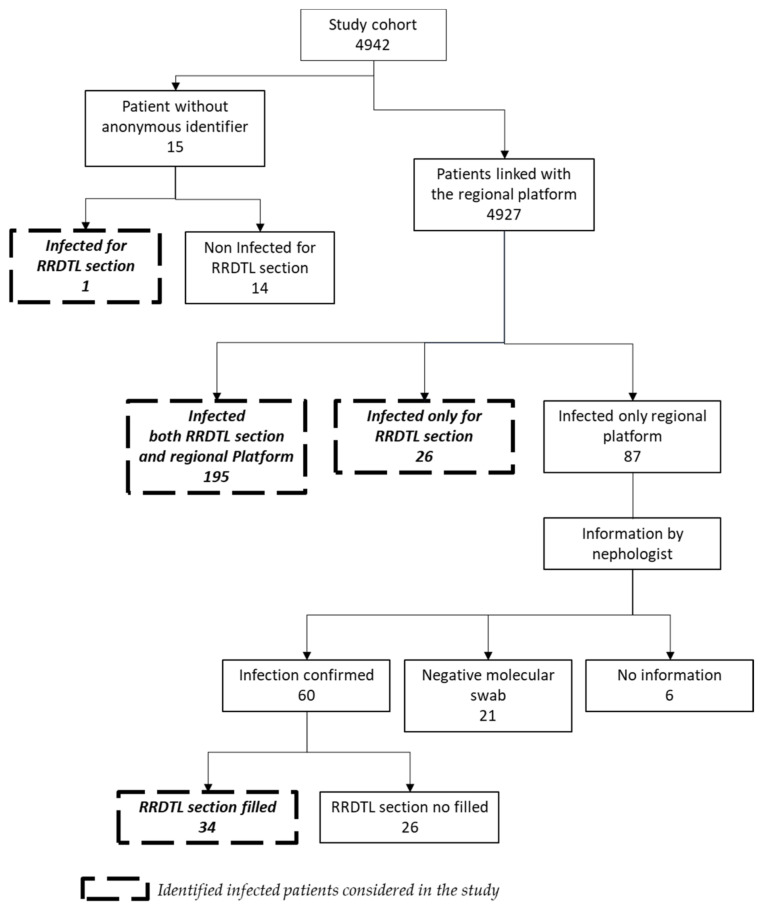
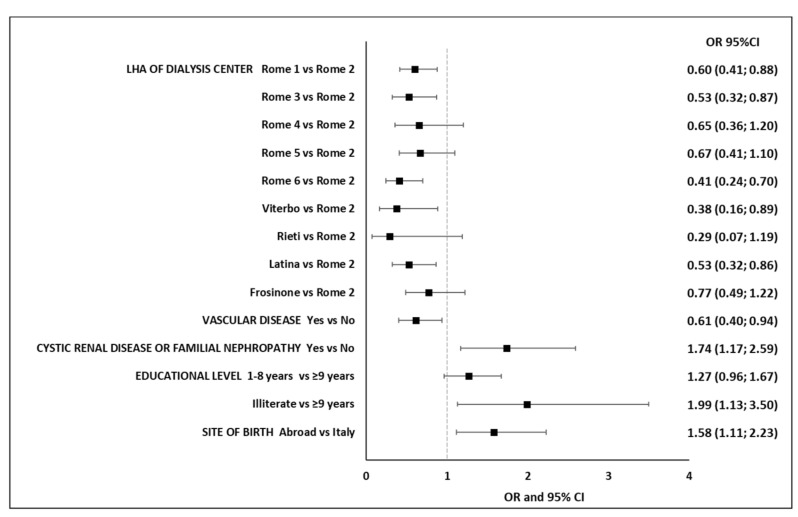
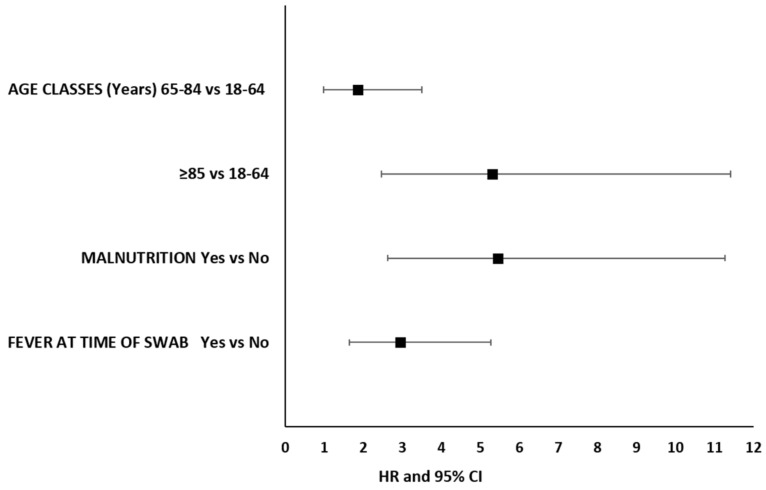
Patients with end-stage kidney disease represent a frail population and might be at higher risk of SARS-CoV-2 infection. The Lazio Regional Dialysis and Transplant Registry collected information on dialysis patients with a positive swab. The study investigated incidence of SARS-CoV-2 infection, mortality and their potential associated factors in patients undergoing maintenance hemodialysis (MHD) in the Lazio region. Method: The occurrence of infection was assessed among MHD patients included in the RRDTL from 1 March to 30 November 2020. The adjusted cumulative incidence of infection and mortality risk within 30 days of infection onset were estimated. Logistic and Cox regression models were applied to identify factors associated with infection and mortality, respectively. Results: The MHD cohort counted 4942 patients; 256 (5.2%) had COVID-19. The adjusted cumulative incidence was 5.1%. Factors associated with infection included: being born abroad, educational level, cystic renal disease/familial nephropathy, vascular disease and being treated in a dialysis center located in Local Health Authority (LHA) Rome 2. Among infected patients, 59 (23.0%) died within 30 days; the adjusted mortality risk was 21.0%. Factors associated with 30-day mortality included: age, malnutrition and fever at the time of swab. Conclusions: Factors associated with infection seem to reflect socioeconomic conditions. Factors associated with mortality, in addition to age, are related to clinical characteristics and symptoms at the time of swab.
Keywords: COVID-19; SARS-CoV-2 infection; end-stage kidney disease; hemodialysis; incidence; mortality; outcome.
Conflict of interest statement
The authors declare that they have no conflicts of interests.
Figures
References
-
- WHO Novel Coronavirus—China. [(accessed on 17 May 2020)]. Available online: https://www.who.int/csr/don/12-january2020-novel-coronavirus-china/en/
-
- Ghinai I., McPherson T.D., Hunter J.C., Kirking H.L., Christiansen D., Joshi K., Rubin R., Morales-Estrada S., Black S.R., Pacilli M., et al. First known person-to-person transmission of severe acute respiratory syndrome coronavirus 2 (SARS-CoV-2) in the USA. Lancet. 2020;395:1137–1144. doi: 10.1016/S0140-6736(20)30607-3. - DOI - PMC - PubMed
-
- Chan J.F.W., Yuan S., Kok K.H., To K.K.W., Chu H., Yang J., Xing F., Liu J., Yip C.C.Y., Poon R.W.S., et al. A familial cluster of pneumonia associated with the 2019 novel coronavirus indicating person-to-person transmission: A study of a family cluster. Lancet. 2020;395:514–523. doi: 10.1016/S0140-6736(20)30154-9. - DOI - PMC - PubMed
-
- WHO Statement on the Second Meeting of the International Health Regulations (2005) Emergency Committee Regarding the Outbreak of Novel Coronavirus (2019nCoV) [(accessed on 2 May 2020)]. Available online: https://www.who.int/newsroom/detail/30012020statementonthesecondmeetingo....
-
- Johns Hopkins University Coronavirus Resource Centre. Johns Hopkins University. 2020. [(accessed on 1 December 2020)]. Available online: https://coronavirus.jhu.edu/map.html.
LinkOut - more resources
Full Text Sources
Miscellaneous
