


Objectively Measured Physical Activity, Sedentary Behavior and Functional Performance before and after Lower Limb Joint Arthroplasty: A Systematic Review with Meta-Analysis
- PMID: 34945181
- PMCID: PMC8709318
- DOI: 10.3390/jcm10245885
Objectively Measured Physical Activity, Sedentary Behavior and Functional Performance before and after Lower Limb Joint Arthroplasty: A Systematic Review with Meta-Analysis
Abstract
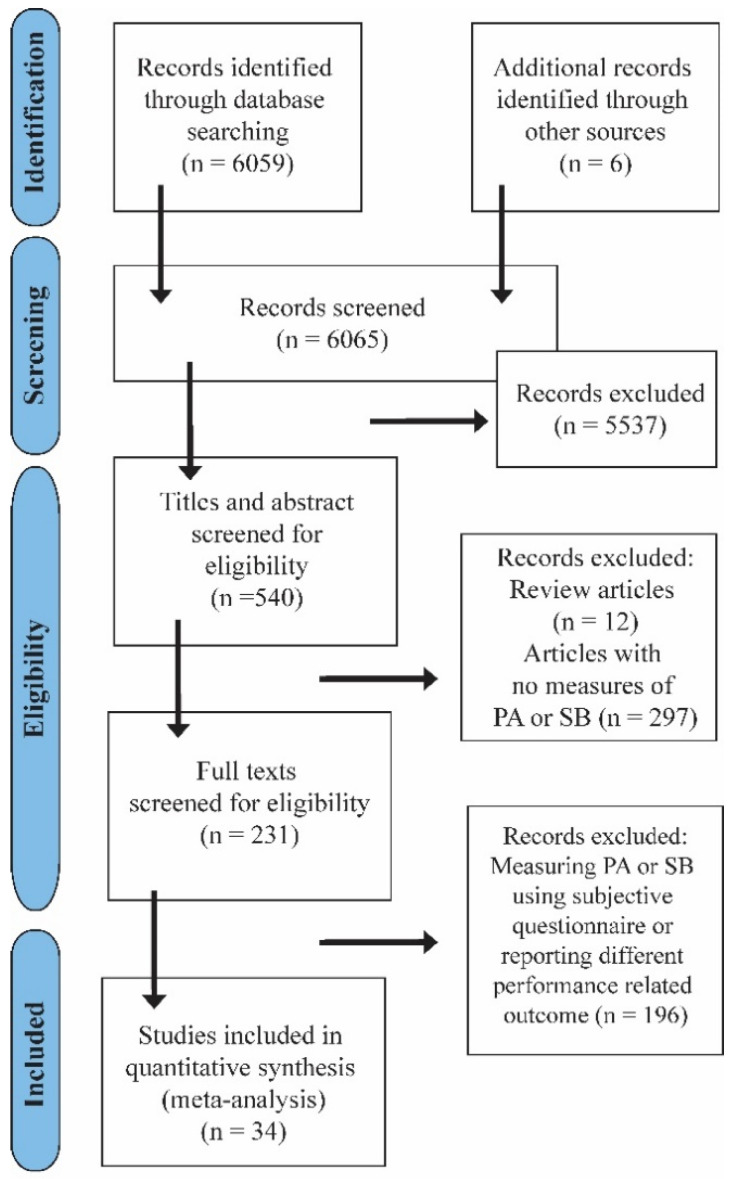
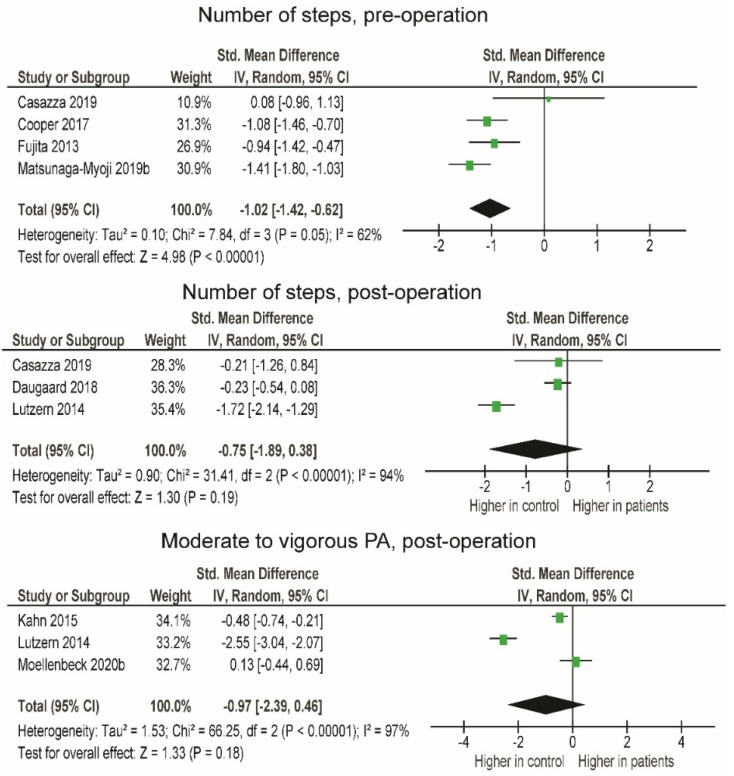
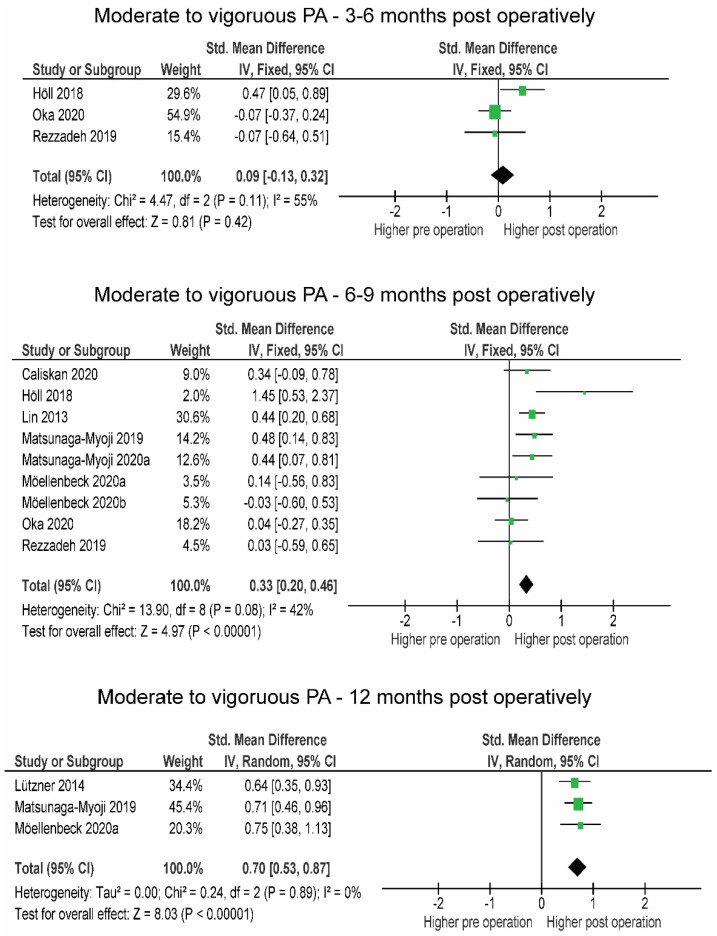
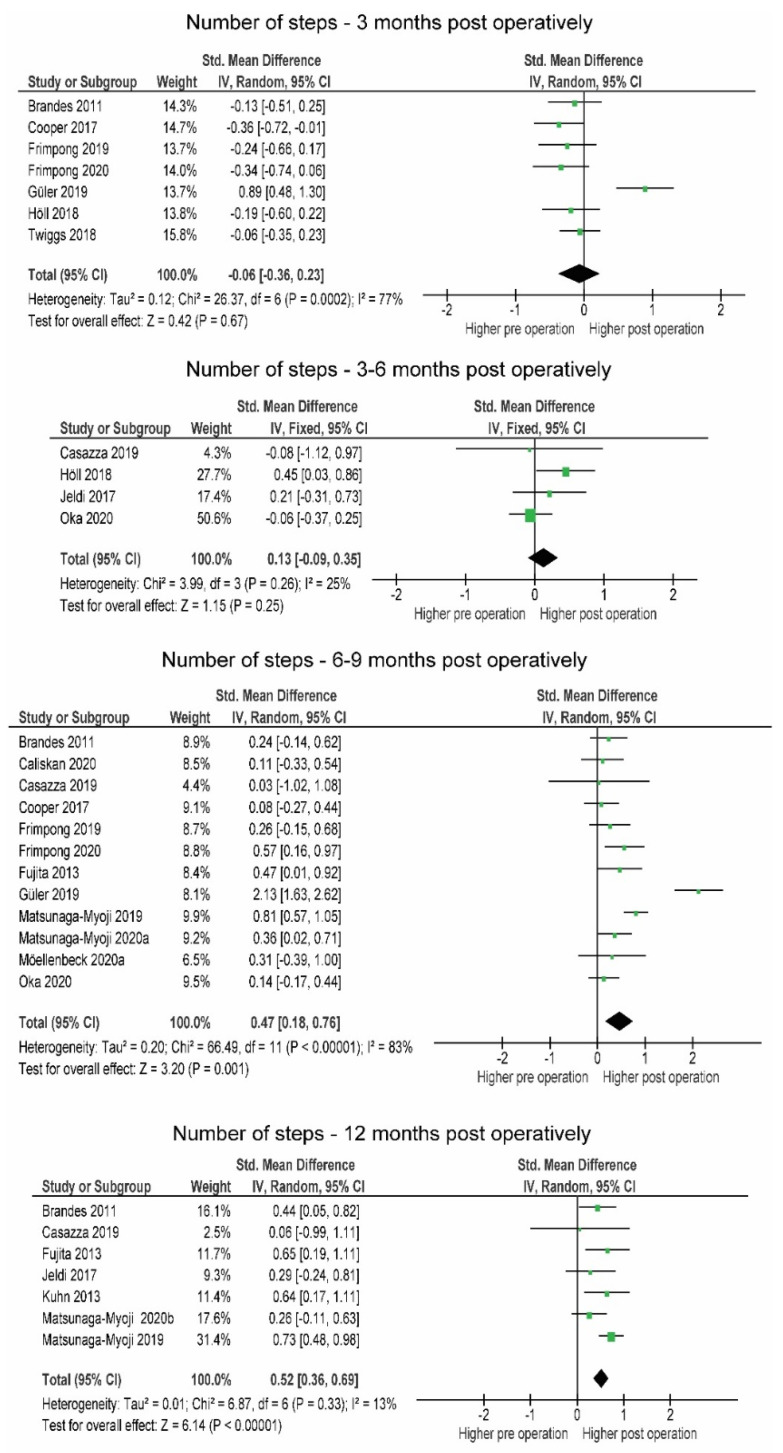
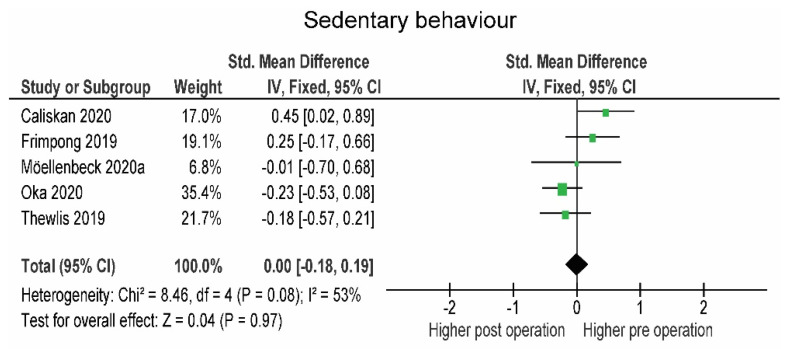
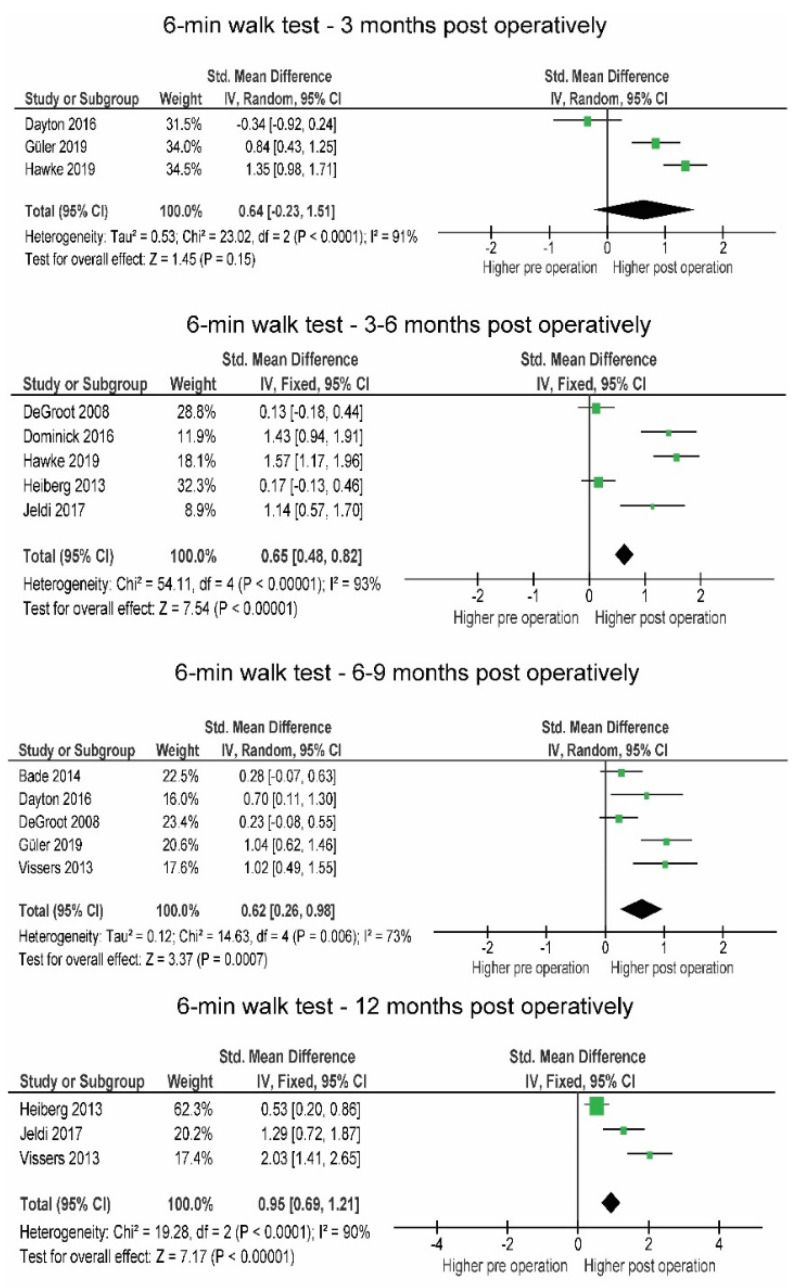
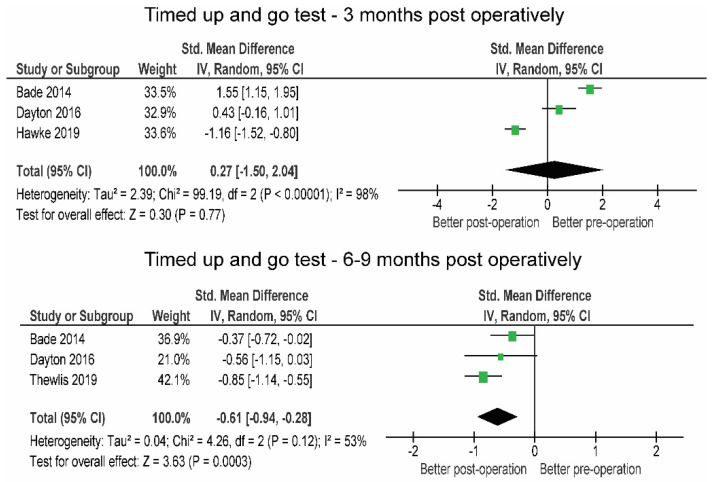
Patients after joint arthroplasty tend to be less physically active; however, studies measuring objective physical activity (PA) and sedentary behavior (SB) in these patients provide conflicting results. The aim of this meta-analysis was to assess objectively measured PA, SB and performance at periods up to and greater than 12 months after lower limb arthroplasty. Two electronic databases (PubMed and Medline) were searched to identify prospective and cross-sectional studies from 1 January 2000 to 31 December 2020. Studies including objectively measured SB, PA or specific performance tests in patients with knee or hip arthroplasty, were included in the analyses both pre- and post-operatively. The risk of bias was assessed using the Scottish Intercollegiate Guidelines Network (SIGN). After identification and exclusion, 35 studies were included. The data were analyzed using the inverse variance method with the random effects model and expressed as standardized mean difference and corresponding 95% confidence intervals. In total, we assessed 1943 subjects with a mean age of 64.9 (±5.85). Less than 3 months post-operative, studies showed no differences in PA, SB and performance. At 3 months post-operation, there was a significant increase in the 6 min walk test (6MWT) (SMD 0.65; CI: 0.48, 0.82). After 6 months, changes in moderate to vigorous physical activity (MVPA) (SMD 0.33; CI: 0.20, 0.46) and the number of steps (SMD 0.45; CI: 0.34, 0.54) with a large decrease in the timed-up-and-go test (SMD -0.61; CI: -0.94, -0.28) and increase in the 6MWT (SMD 0.62; CI: 0.26-0.98) were observed. Finally, a large increase in MVPA (SMD 0.70; CI: 0.53-0.87) and a moderate increase in step count (SMD 0.52; CI: 0.36, 0.69) were observed after 12 months. The comparison between patients and healthy individuals pre-operatively showed a very large difference in the number of steps (SMD -1.02; CI: -1.42, -0.62), but not at 12 months (SMD -0.75; -1.89, 0.38). Three to six months after knee or hip arthroplasty, functional performance already exceeded pre-operative levels, yet PA levels from this time period remained the same. Although PA and functional performance seemed to fully restore and exceed the pre-operation levels at six to nine months, SB did not. Moreover, PA remained lower compared to healthy individuals even longer than twelve months post-operation. Novel rehabilitation protocols and studies should focus on the effects of long-term behavioral changes (increasing PA and reducing SB) as soon as functional performance is restored.
Keywords: lower limb; orthopedics; rehabilitation; replacement; sitting; surgery.
Conflict of interest statement
The authors declare no conflict of interest.
Figures
References
Publication types
Grants and funding
LinkOut - more resources
Full Text Sources
