


Distal Radial Artery Access for Coronary and Peripheral Procedures: A Multicenter Experience
- PMID: 34945269
- PMCID: PMC8707635
- DOI: 10.3390/jcm10245974
Distal Radial Artery Access for Coronary and Peripheral Procedures: A Multicenter Experience
Abstract
Introduction: Distal radial access (dRA) has recently gained global popularity as an alternative access route for vascular procedures. Among the benefits of dRA are the low risk of entry site bleeding complications, the low rate of radial artery occlusion, and improved patient and operator comfort. The aim of this large multicenter registry was to demonstrate the feasibility and safety of dRA in a wide variety of routine procedures in the catheterization laboratory, ranging from coronary angiography and percutaneous coronary intervention to peripheral procedures.
Methods: The study comprised 1240 patients who underwent coronary angiography, PCI or noncoronary procedures through dRA in two Hungarian centers from January 2019 to April 2021. Baseline patient characteristics, number and duration of arterial punctures, procedural success rate, crossover rate, postoperative compression time, complications, hospitalization duration, and different learning curves were analyzed.
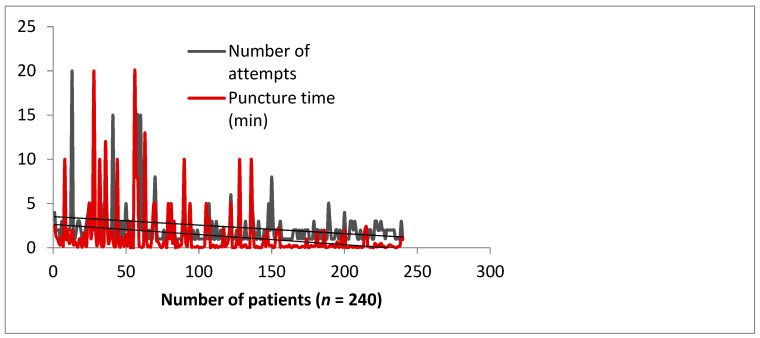
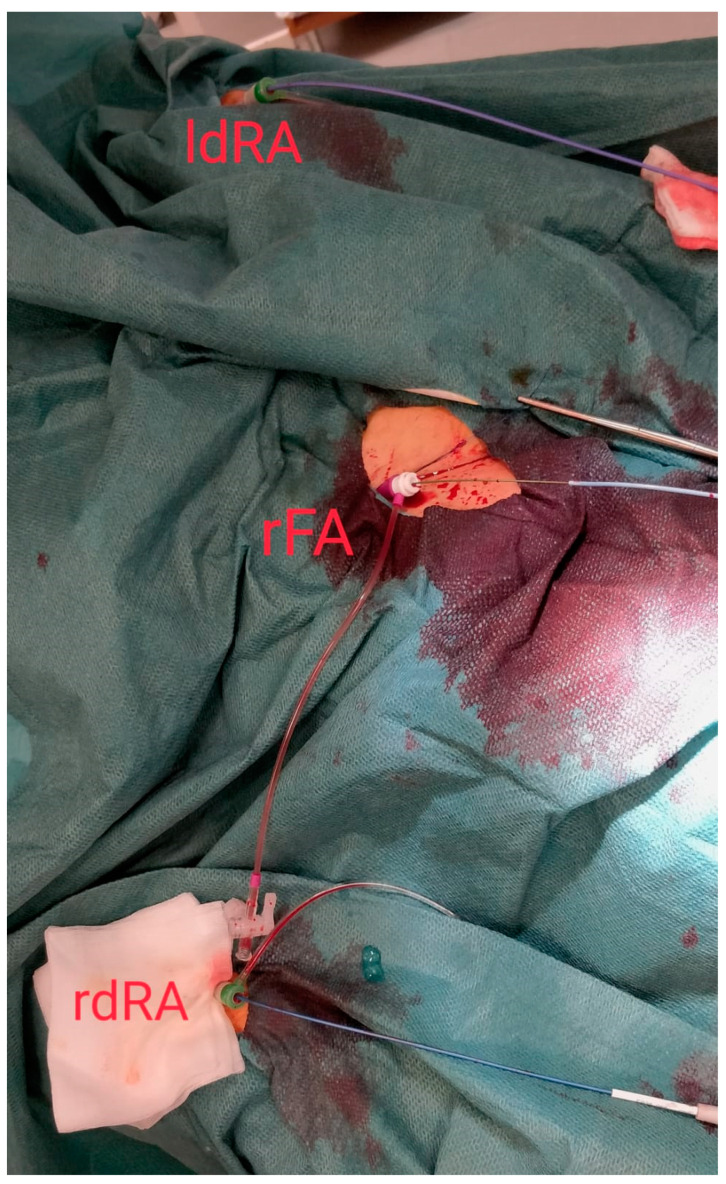
Results: The average patient age was 66.4 years, with 66.8% of patients being male. The majority of patients (74.04%) underwent a coronary procedure, whereas 25.96% were involved in noncoronary interventions. dRA was successfully punctured in 97% of all patients, in all cases with ultrasound guidance. Access site crossover was performed in 2.58% of the patients, mainly via the contralateral dRA. After experiencing 150 cases, the dRA success rate plateaued at >96%. Our dedicated dRA step-by step protocol resulted in high open radial artery (RA) rates: distal and proximal RA pulses were palpable in 99.68% of all patients at hospital discharge. The rate of minor vascular complications was low (1.5%). A threshold of 50 cases was sufficient for already skilled radial operators to establish a reliable procedural method of dRA access.
Conclusion: The implementation of distal radial artery access in the everyday routine of a catheterization laboratory for coronary and noncoronary interventions is feasible and safe with an acceptable learning curve.
Keywords: anatomical snuffbox; distal radial access; distal radial artery; radial approach; radial artery; vascular access learning curve; vascular complications.
Conflict of interest statement
The authors report no financial relationships or conflicts of interest regarding the content herein. Current study received the proper ethical oversight.
Figures
References
LinkOut - more resources
Full Text Sources
Medical
Miscellaneous
