


Anti-Inflammatory Activity of Four Triterpenoids Isolated from Poriae Cutis
- PMID: 34945705
- PMCID: PMC8700795
- DOI: 10.3390/foods10123155
Anti-Inflammatory Activity of Four Triterpenoids Isolated from Poriae Cutis
Abstract
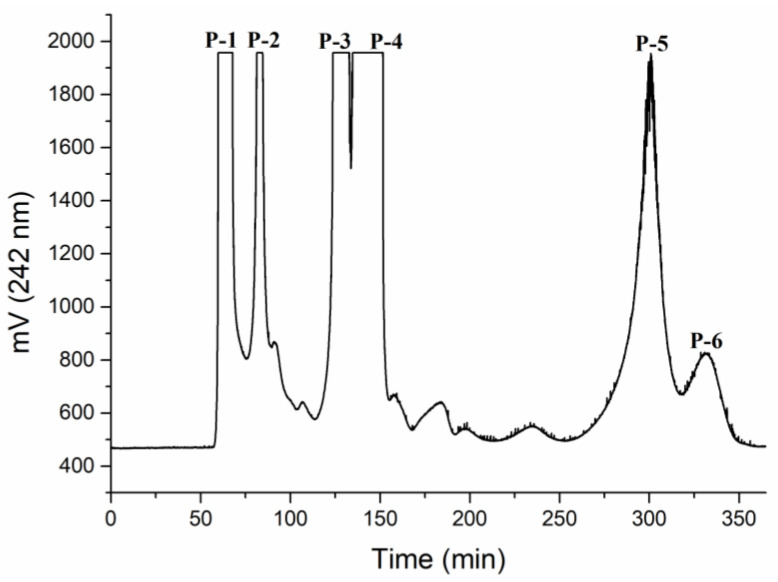
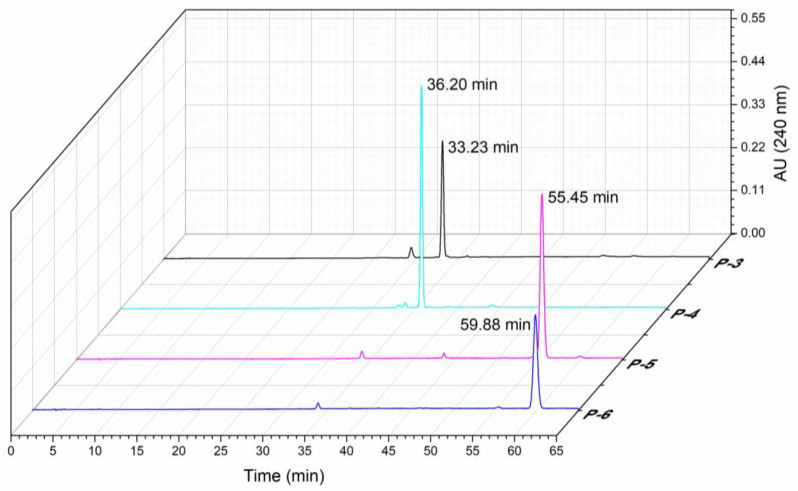
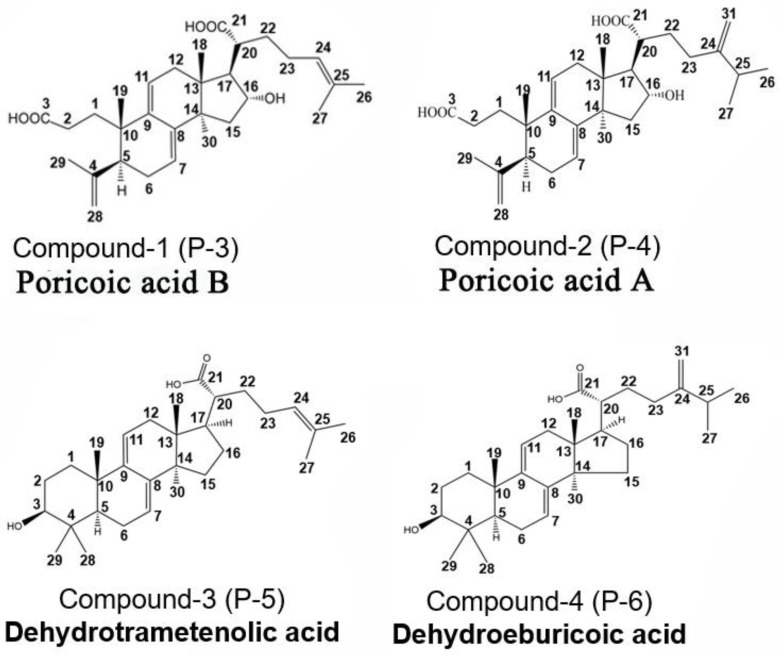
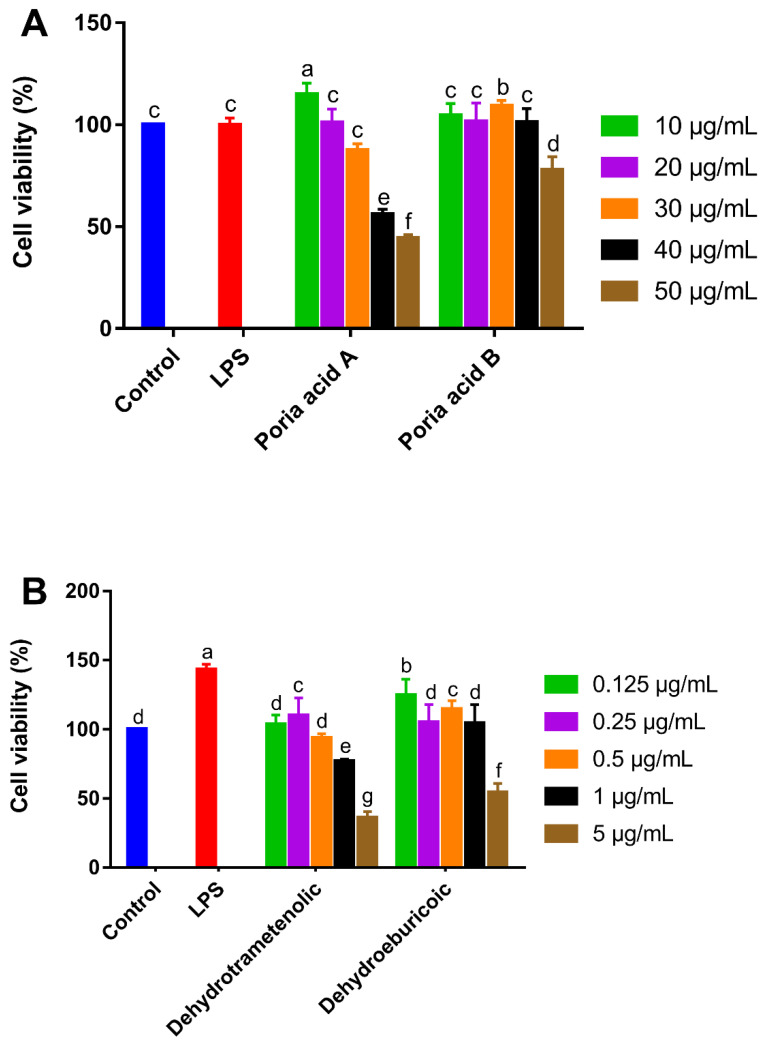
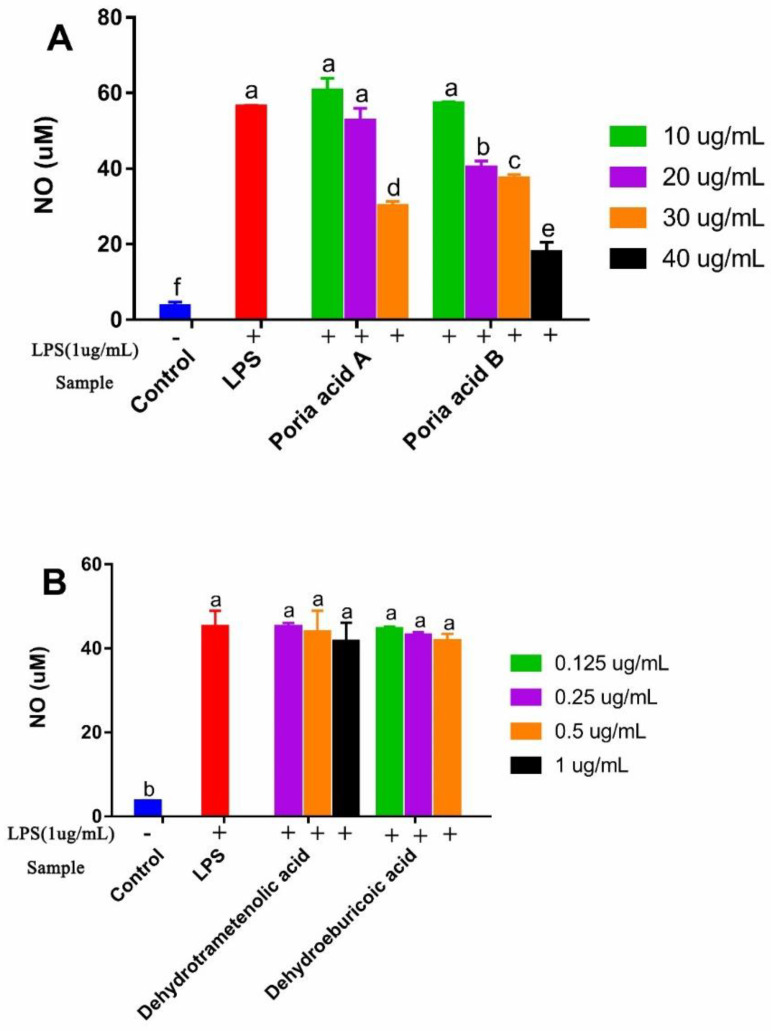
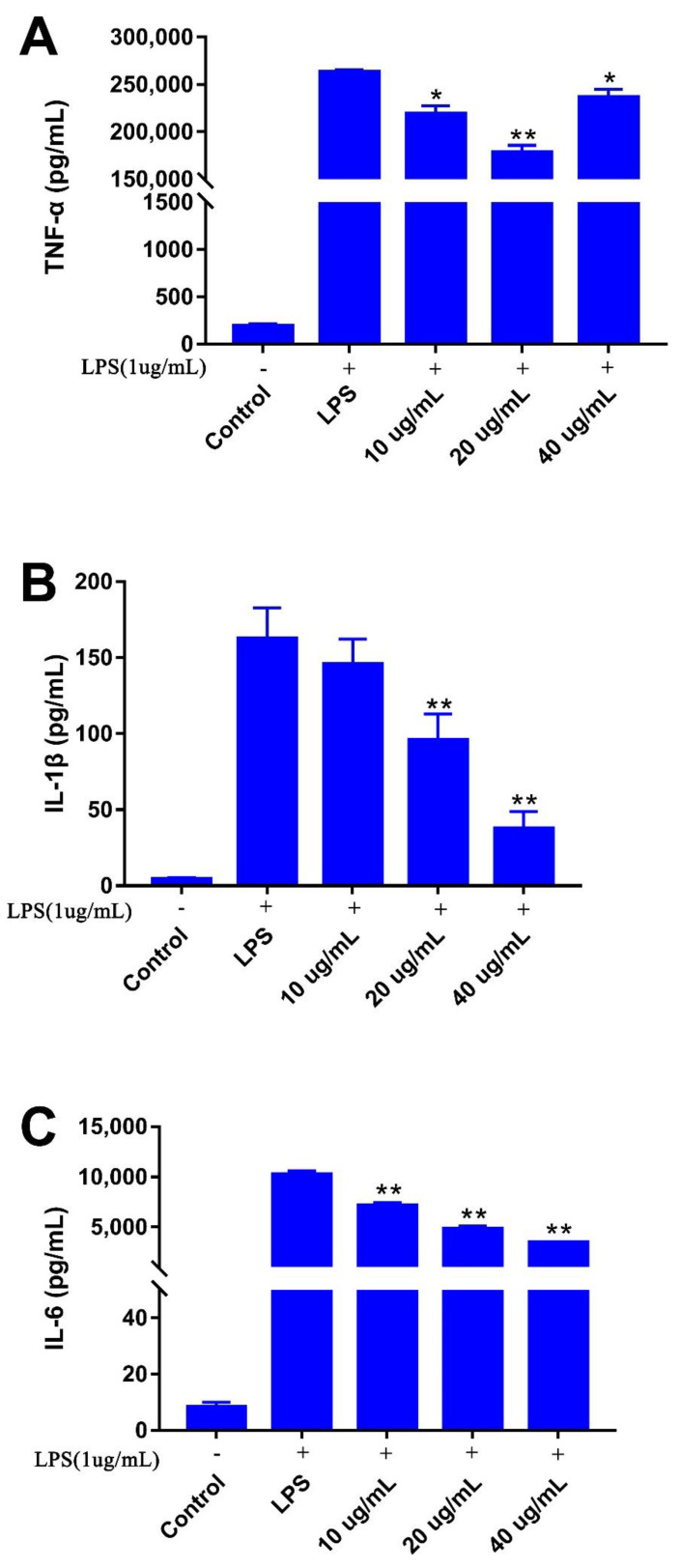
In this study, triterpenoid compounds from Poriae Cutis were separated by high-speed countercurrent chromatography (HSCCC) and identified using ultra-high performance liquid chromatography quadrupole time-of-flight tandem mass spectrometry (UHPLC-QTOF-MS/MS) and nuclear magnetic resonance (NMR). The in vitro anti-inflammatory activities of the purified triterpenoids on RAW 264.7 cells were also investigated. Triterpenoids, poricoic acid B, poricoic acid A, dehydrotrametenolic acid, and dehydroeburicoic acid were obtained; their levels of purity were 90%, 92%, 93%, and 96%, respectively. The results indicated that poricoic acid B had higher anti-inflammatory activity than those of poricoic acid A by inhibiting the generation of NO in lipopolysaccharide (LPS)-induced RAW 264.7 cells. However, dehydrotrametenolic acid and dehydroeburicoic acid had no anti-inflammatory activity. In addition, the production of cytokines (TNF-α, IL-1β, and IL-6) in cells treated with poricoic acid B decreased in a dose-dependent manner in the concentration range from 10 to 40 μg/mL. The results provide evidence for the use of Poriae Cutis as a natural anti-inflammatory agent in medicines and functional foods.
Keywords: Poriae Cutis; anti-inflammatory; identification; purification; triterpenoid.
Conflict of interest statement
The authors declare no conflict of interest.
Figures
References
-
- Wang W.H., Dong H.J., Yan R.Y., Li H., Li P.Y., Chen P., Yang B., Wang Z.M. Comparative study of lanostane-type triterpene acids in different parts of Poria cocos (Schw.) Wolf by UHPLC-Fourier transform MS and UHPLC-triple quadruple MS. J. Pharm. Biomed. Anal. 2015;102:203–214. doi: 10.1016/j.jpba.2014.09.014. - DOI - PubMed
-
- Zhang G., Wang H., Xie W., Wang Q., Wang X., Wang C., Du Y., Huo C., Wang Q. Comparison of triterpene compounds of four botanical parts from Poria cocos (Schw.) wolf using simultaneous qualitative and quantitative method and metabolomics approach. Food Res. Int. 2019;121:666–677. doi: 10.1016/j.foodres.2018.12.036. - DOI - PubMed
-
- Zhu L.X., Xu J., Zhang S.J., Wang R.J., Huang Q., Chen H.B., Dong X.P., Zhao Z.Z. Qualitatively and quantitatively comparing secondary metabolites in three medicinal parts derived from Poria cocos (Schw.) Wolf using UHPLC-QTOF-MS/MS-based chemical profiling. J. Pharm. Biomed. Anal. 2018;150:278–286. doi: 10.1016/j.jpba.2017.11.066. - DOI - PubMed
Grants and funding
LinkOut - more resources
Full Text Sources
