


Relationship between the Chemical Composition and the Biological Functions of Coffee
- PMID: 34946716
- PMCID: PMC8704863
- DOI: 10.3390/molecules26247634
Relationship between the Chemical Composition and the Biological Functions of Coffee
Abstract
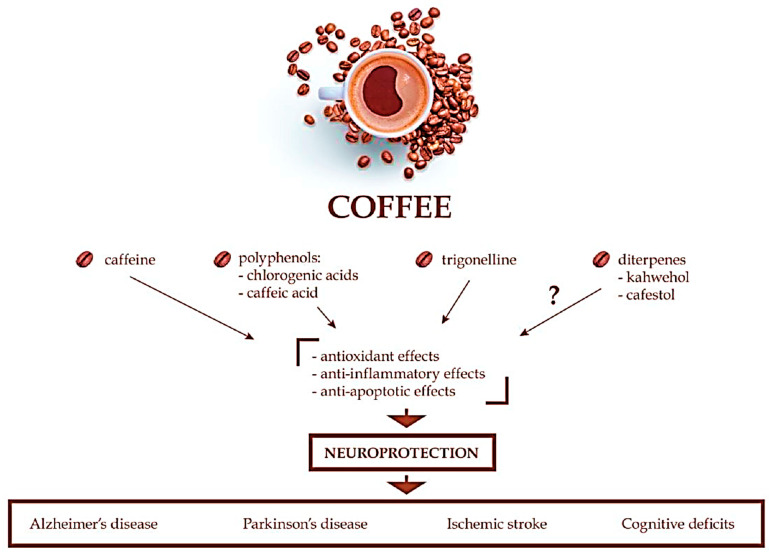
Coffee is a Rubiaceae coffee plant ranked as the first of the three most important beverages in the world, with effects including lowering blood sugar, protecting the liver, and protecting the nerves. Coffee contains many chemical components, including alkaloids, phenolic acids, flavonoids, terpenoids, and so on. Chemical components in coffee are the basis of its biological function and taste. The chemical components are the basis of biological activities and form the characteristic aroma of coffee. The main chemical components and biological activities of coffee have been extensively studied, which would provide a relevant basis and theoretical support for the further development of the coffee industry.
Keywords: biological activities; chemical constituents; coffee; flavonoids; phenolic acids.
Conflict of interest statement
There are no known conflicts of interest associated with this publication and there has been no significant financial support for this work that could have influenced its outcome.
Figures
References
-
- Catalkaya G., Venema K., Lucini L., Rocchetti G., Delmas D., Daglia M., De Filippis A., Xiao H., Quiles J.L., Xiao J., et al. Interaction of dietary polyphenols and gut microbiota: Microbial metabolism of polyphenols, influence on the gut microbiota, and implications on host health. Food Front. 2020;1:109–133. doi: 10.1002/fft2.25. - DOI
-
- Iglesias-Aguirre C.E., Cortés-Martín A., Ávila-Gálvez M.Á., Giménez-Bastida J.A., Selma M.V., González-Sarrías A., Espín J.C. Main drivers of (poly) phenol effects on human health: Metabolite production and / or gut microbiota-associated metabotypes? Food Funct. 2021;12:10324–10355. doi: 10.1039/D1FO02033A. - DOI - PubMed
Publication types
MeSH terms
Substances
LinkOut - more resources
Full Text Sources
