


New Frontiers in Peripheral Nerve Regeneration: Concerns and Remedies
- PMID: 34948176
- PMCID: PMC8703705
- DOI: 10.3390/ijms222413380
New Frontiers in Peripheral Nerve Regeneration: Concerns and Remedies
Abstract
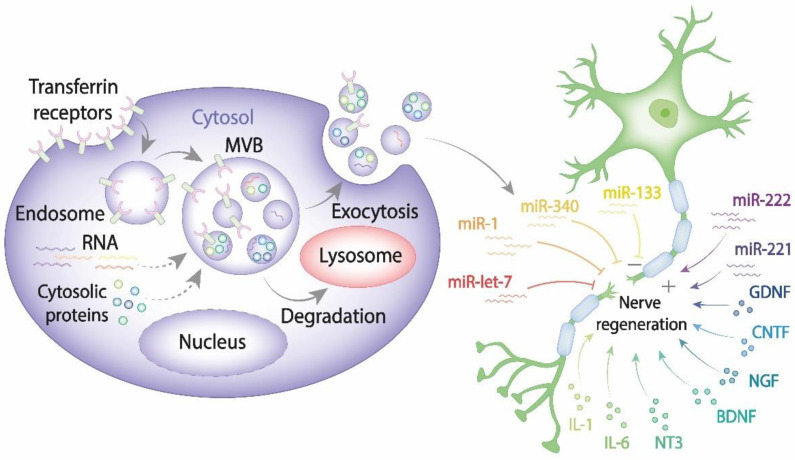
Topical advances in studying molecular and cellular mechanisms responsible for regeneration in the peripheral nervous system have highlighted the ability of the nervous system to repair itself. Still, serious injuries represent a challenge for the morphological and functional regeneration of peripheral nerves, calling for new treatment strategies that maximize nerve regeneration and recovery. This review presents the canonical view of the basic mechanisms of nerve regeneration and novel data on the role of exosomes and their transferred microRNAs in intracellular communication, regulation of axonal growth, Schwann cell migration and proliferation, and stromal cell functioning. An integrated comprehensive understanding of the current mechanistic underpinnings will open the venue for developing new clinical strategies to ensure full regeneration in the peripheral nervous system.
Keywords: Schwann cells; axon growth; exosomes; microRNA; multipotent stromal cells; peripheral nerve regeneration.
Conflict of interest statement
The authors declare no conflict of interest.
Figures
References
-
- Berdan R.C., Easaw J.C., Wang R. Alterations in membrane potential after axotomy at different distances from the soma of an identified neuron and the effect of depolarization on neurite outgrowth and calcium channel expression. J. Neurophysiol. 1993;69:151–164. doi: 10.1152/jn.1993.69.1.151. - DOI - PubMed
Publication types
MeSH terms
Substances
Grants and funding
LinkOut - more resources
Full Text Sources
