Review
. 2021 Dec 7:8:628370.
doi: 10.3389/fmed.2021.628370. eCollection 2021.

A Review of SARS-CoV2: Compared With SARS-CoV and MERS-CoV

Affiliations
Review

A Review of SARS-CoV2: Compared With SARS-CoV and MERS-CoV

Huan Zhou et al. Front Med (Lausanne). .

Abstract

The outbreak of coronavirus disease 2019 (COVID-19) has been spreading rapidly in China and the Chinese government took a series of policies to control the epidemic. Studies found that severe COVID-19 is characterized by pneumonia, lymphopenia, exhausted lymphocytes and a cytokine storm. Studies have showen that SARS-CoV2 has significant genomic similarity to the severe acute respiratory syndrome (SARS-CoV), which was a pandemic in 2002. More importantly, some diligent measures were used to limit its spread according to the evidence of hospital spread. Therefore, the Public Health Emergency of International Concern (PHEIC) has been established by the World Health Organization (WHO) with strategic objectives for public health to curtail its impact on global health and economy. The purpose of this paper is to review the transmission patterns of the three pneumonia: SARS-CoV2, SARS-CoV, and MERS-CoV. We compare the new characteristics of COVID-19 with those of SARS-CoV and MERS-CoV.

Keywords: COVID-19; MERS-CoV; PHEIC 3; SARS-CoV; WHO.


Conflict of interest statement

The authors declare that the research was conducted in the absence of any commercial or financial relationships that could be construed as a potential conflict of interest.

Figures
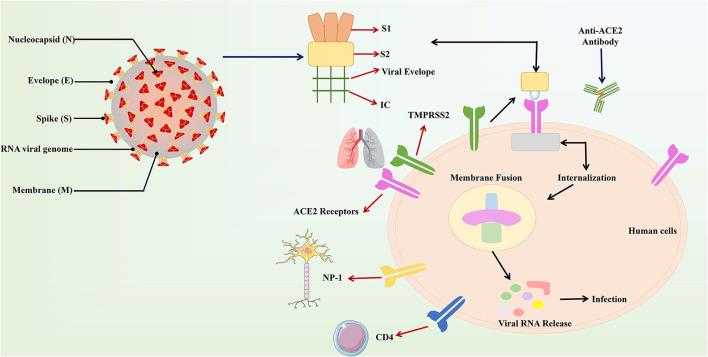
Figure 1
Figure 1
The structure and combination of COVID-19 virus and ACE2. The COVID-19 virus was described in the above figure. In the structure of the virus, the S protein plays a major role in the binding of the virus to the host recipient cell. The S protein is composed of the S1 receptor binding subunit and the S2 membrane fusion subunit. Then S2 subunit is internalized on the ACE2 receptor connected to human host cells and produces the membrane fusion among the viral subunit and the ACE2 receptors. This results in the release of viral RNA into the host cell and causes respiratory infections.
Figure 2
Figure 2
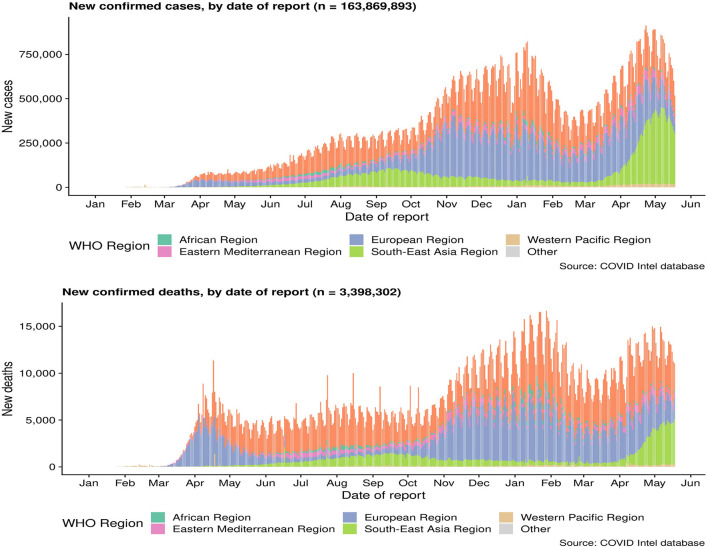
Cumulative confirmed cases and death cases of COVID-19. Data are from the World Health Organization.
Figure 3
Figure 3
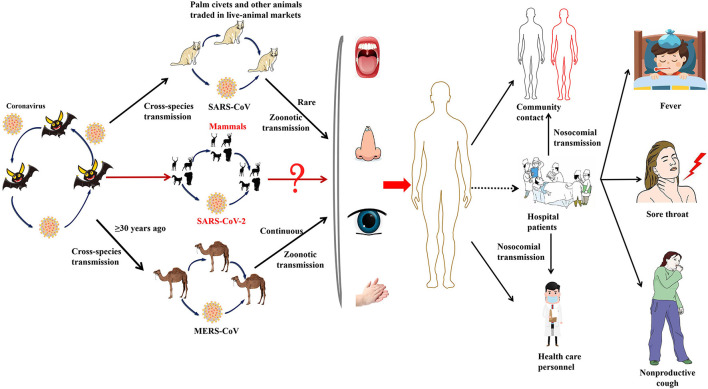
The emergence of SARS-CoV-2, SARS-CoV, and MERS-CoV. Bats harbor a wide range of coronaviruses, including SARS-CoV-like and MERS-CoV-like viruses. SARS-CoV crossed the species barrier into masked palm civets and other animals in live-animal markets in China; genetic analysis suggests that this occurred in late 2002. Several people in close proximity to palm civets became infected with SARS-CoV. A MERS-CoV ancestral virus crossed the species barrier into dromedary camels; serological evidence suggests that this happened more than 30 years ago. Abundant circulation of MERS-CoV in dromedary camels results in frequent zoonotic transmission of this virus. SARS-CoV-2, SARS-CoV, and MERS-CoV spread between humans. However, the main mode of transmission of COVID-19 is unclear.
Figure 4
Figure 4
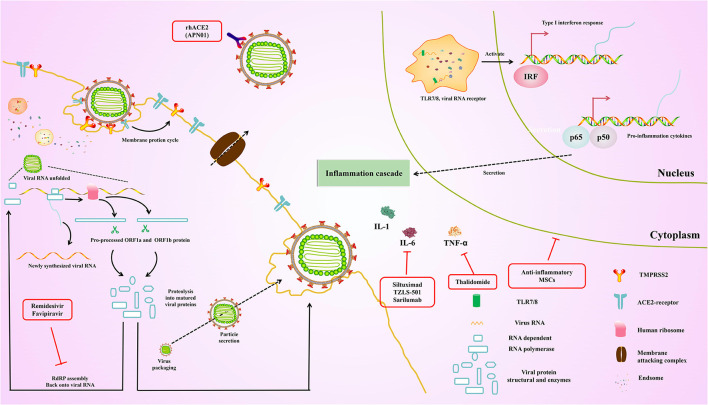
Overview of the repurposed therapeutic drugs undergoing clinical trial against COVID-19 in the context of host pathways and virus replication mechanisms.

References

    1. Lai MM, Cavanagh D. The molecular biology of coronaviruses. Adv Virus Res. (1997) 48:1–100. 10.1016/S0065-3527(08)60286-9 - DOI - PMC - PubMed
    1. Masters PS. The molecular biology of coronaviruses. Adv Virus Res. (2006) 66:193–292. 10.1016/S0065-3527(06)66005-3 - DOI - PMC - PubMed
    1. Stadler K, Masignani V, Eickmann M, Becker S, Abrignani S, Klenk HD, et al. . SARS–beginning to understand a new virus. Nat Rev Microbiol. (2003) 1:209–18. 10.1038/nrmicro775 - DOI - PMC - PubMed
    1. Woo PC, Lau SK, Chu CM, Chan KH, Tsoi HW, Huang Y, et al. . Characterization and complete genome sequence of a novel coronavirus, coronavirus HKU1, from patients with pneumonia. J Virol. (2005) 79:884–95. 10.1128/JVI.79.2.884-895.2005 - DOI - PMC - PubMed
    1. van der Hoek L, Pyrc K, Jebbink MF, Vermeulen-Oost W, Berkhout RJ, Wolthers KC, et al. . Identification of a new human coronavirus. Nat Med. (2004) 10:368–73. 10.1038/nm1024 - DOI - PMC - PubMed