


Natural history and patterns of treatment change in Parkinson's disease: A retrospective chart review
- PMID: 34950865
- PMCID: PMC8671728
- DOI: 10.1016/j.prdoa.2021.100125
Natural history and patterns of treatment change in Parkinson's disease: A retrospective chart review
Abstract
Background: Parkinson's disease (PD) management seeks to balance the benefits and harms of current medications and evolves as the disease progresses. The natural history of PD and associated patterns of treatment change were analyzed to identify unmet needs in treatment of PD symptoms.
Methods: Medical charts of patients from clinics across the US diagnosed on or before June 30th, 2014 were retrospectively reviewed. Index date was the first clinic visit, and the post-index period was through study end (June 30th, 2019). Outcomes included the frequency of therapy changes in the post-index period, reasons for therapy change, and adverse events (AE).
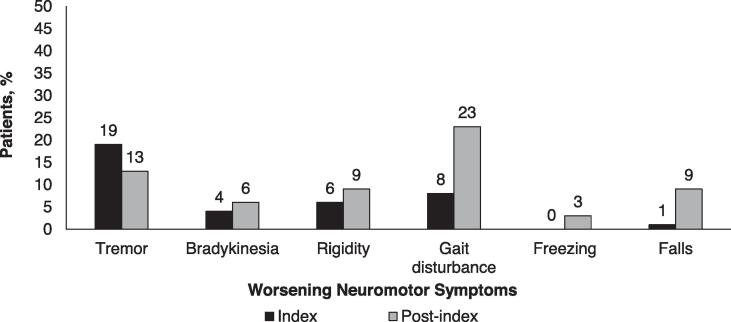
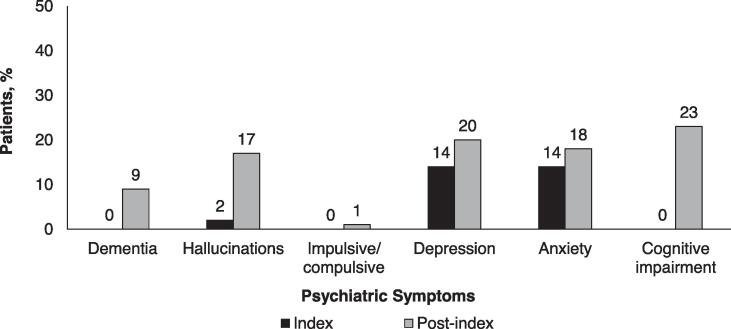
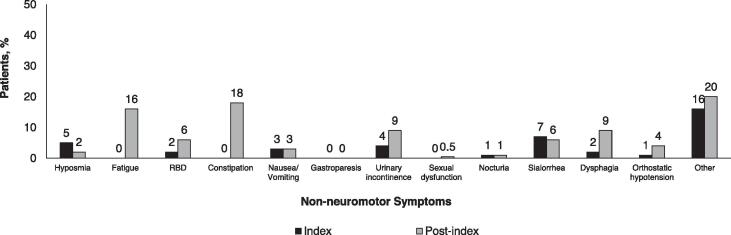
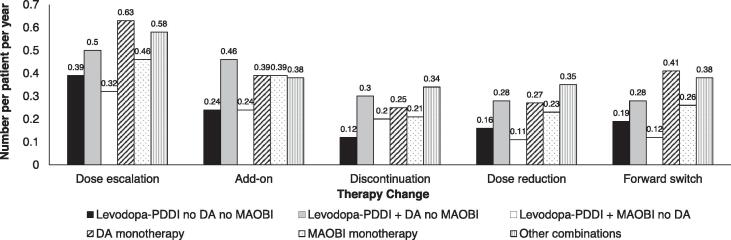
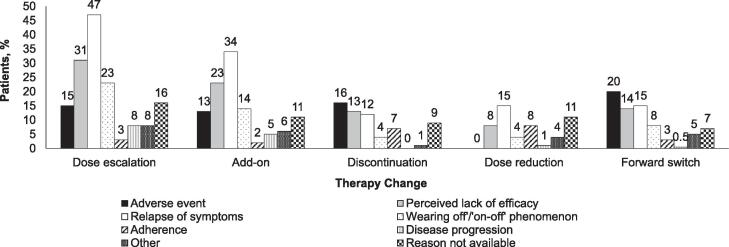
Results: Patients (n = 203) at index were receiving levodopa-peripheral dopa decarboxylase inhibitor (PDDI) monotherapy (47%), dopaminergic agonist (DA) monotherapy (15%), monoamine oxidase B inhibitor (MAOBI) monotherapy (14%), or combination therapies. The percentage of patients in Hoehn-Yahr disease Stage 1-2 was 52% at index and 20% by the end of the study. Frequencies of motor, non-motor, and neuropsychiatric symptoms increased during the enrollment. Levodopa-PDDI monotherapy and levodopa-PDDI + MAOBI had the lowest rates of therapy changes. Symptom relapse was the most common reason for dose escalation, add-on, and dose reduction, whereas AEs were the most common reason for discontinuation and switching. Dose escalation, add-on, and forward switch were most likely to occur in the first 6 months of treatment.
Conclusions: Therapy changes during the study period reflected the challenging and evolving management of PD as the disease progresses. New or add-on symptomatic treatments are needed that are well-tolerated and able to control PD symptoms.
Keywords: Discontinuation; Disease progression; Dopaminergic agonists; Levodopa; Monoamine oxidase B; Parkinson’s disease; Patterns; Switch.
© 2021 Published by Elsevier Ltd.
Conflict of interest statement
The authors declare that they have no known competing financial interests or personal relationships that could have appeared to influence the work reported in this paper.
Figures
References
-
- Weintraub D., Comella C.L., Horn S. Parkinson's disease–Part 1: Pathophysiology, symptoms, burden, diagnosis, and assessment. Am J Manag Care. 2008;14:S40–S48. - PubMed
-
- Sveinbjornsdottir S. The clinical symptoms of Parkinson's disease. J Neurochem. 2016;139(Suppl 1):318–324. - PubMed
-
- Meder D., Herz D.M., Rowe J.B., Lehéricy S., Siebner H.R. The role of dopamine in the brain - lessons learned from Parkinson's disease. Neuroimage. 2019;190:79–93. - PubMed
LinkOut - more resources
Full Text Sources
Medical
